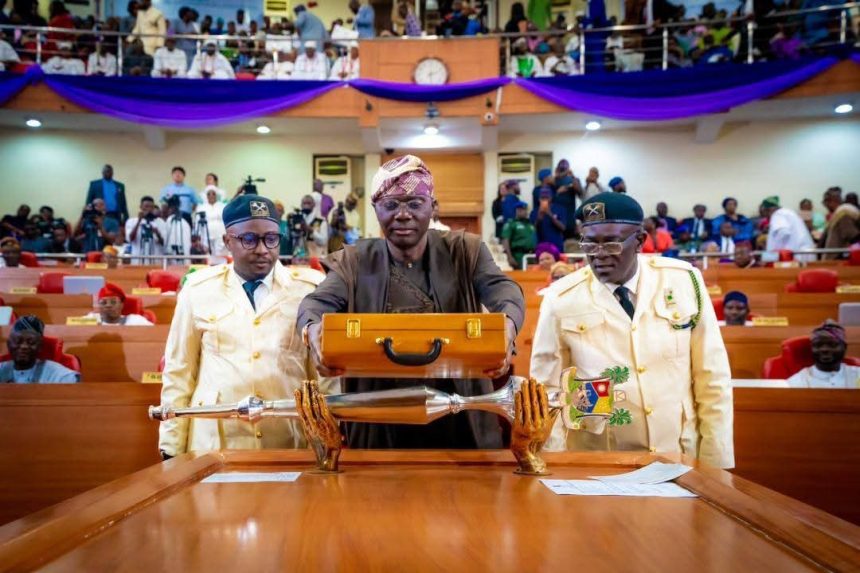
The Lagos State House of Assembly, on Thursday, passed a ₦4.4 trillion 2026 Appropriation Bill, offering a clear numerical picture of the state’s fiscal priorities in the final full budget cycle of Governor Babajide Sanwo-Olu’s second term.
Tagged the “Budget of Shared Prosperity,” the spending plan reflects both ambition and tightening fiscal calculations amid uncertain macroeconomic conditions.
EDITOR’S PICKS
Size, Structure and the Numbers That Matter
At ₦4.4 trillion, the 2026 budget represents an increase from the ₦4.237 trillion proposal earlier submitted by the executive, following the Assembly’s addition of ₦171 billion during legislative review.
The final structure shows a near balance between consumption and development spending: ₦2.052 trillion for recurrent expenditure and ₦2.185 trillion for capital projects, signalling a continued push to sustain infrastructure investment while meeting wage and overhead obligations.
Revenue projections stand at about ₦3.99 trillion, with internally generated revenue (IGR) contributing ₦3.12 trillion, underlining Lagos’ heavy reliance on self-generated funds. Federal transfers of ₦874 billion remain secondary. The gap between spending and income leaves a deficit of roughly ₦243.3 billion, which the government plans to finance through borrowing and other approved instruments, raising familiar questions about debt sustainability versus growth needs.
Macroeconomic Assumptions Behind the Budget
The budget framework is anchored on bold but measurable assumptions: an exchange rate of ₦1,512 to the dollar, inflation at 14.7 per cent, oil production of 2.06 million barrels per day, and a benchmark oil price of $64 per barrel. These figures shape revenue expectations, especially federal allocations, and influence how realistic expenditure targets will be over the fiscal year.
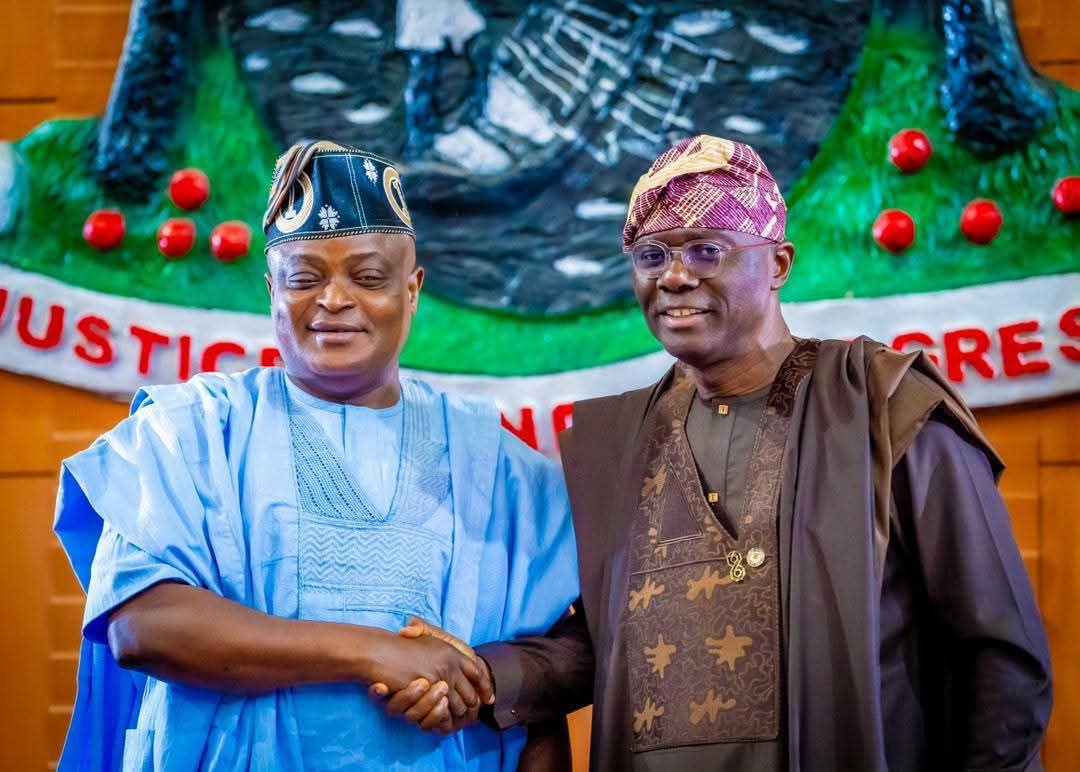
Assembly
While the assumptions reflect a more conservative oil price outlook, the inflation and exchange rate benchmarks remain optimistic, given recent volatility. Any deviation could pressure both projected revenues and the cost of ongoing projects.
Sectoral Allocations and Policy Priorities
A breakdown of spending shows Economic Affairs taking the largest share at ₦1.372 trillion, directed at infrastructure renewal, transport expansion, agriculture and growth-driving initiatives. This dominance reinforces Lagos’ long-standing strategy of using capital investment as a growth engine.
Social sectors also feature prominently: Health receives ₦338 billion, Education ₦249 billion, Environment ₦235 billion, and Housing ₦123 billion, reflecting a stated focus on human capital, environmental resilience and livability. Other allocations include Public Order and Safety (₦147 billion), Social Protection (₦70 billion), and Recreation, Culture and Religion (₦54 billion), underscoring attention to security, welfare and social cohesion.
FURTHER READING
Overall, the 2026 budget presents a numbers-driven snapshot of Lagos’ fiscal direction, one that balances infrastructure ambition with revenue realities, and leaves its success largely dependent on IGR performance, macroeconomic stability and disciplined execution.
Philip Ibitoye is a Special Correspondent with EKO HOT BLOG. Click here to find daily analysis and critical insight on trending issues in Lagos and other parts of Nigeria.
Click here to watch the video of the week below: