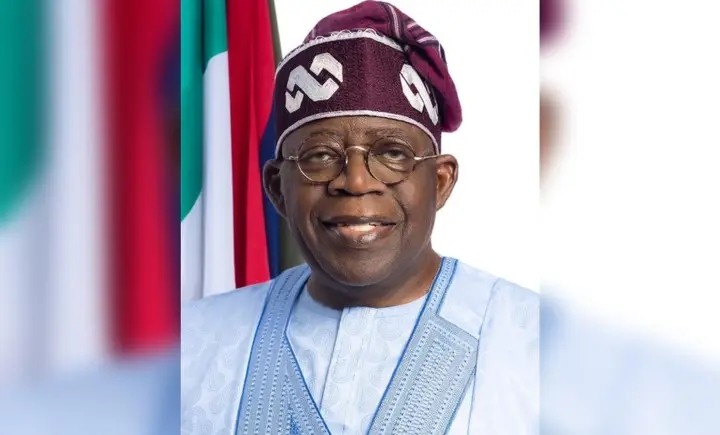
- President Bola Tinubu used his fourth Democracy Day address to draw a definitive line in the sand, warning active bandits, kidnappers, and their corporate financial backers to surrender immediately or be systematically wiped out by the military.
- The President disclosed that state forces have aggressively neutralized over 13,000 terrorists within the last 12 months, leveraging advanced precision targeting developed alongside Western allies to smash central command posts like the ISWAP base in Arege.
- A staggering, record-breaking ₦5.41 trillion defense budget has been locked in for 2026, alongside an emergency directive to immediately inject 50,000 new boots on the ground to police Nigeria’s expanding population of 230 million.
The traditional pomp and pageantry of Nigeria’s 27th consecutive Democracy Day was met with a grim, uncompromising message from the State House on Friday, June 12, 2026.
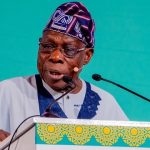
Eko Hot Blog reports delivering a high-stakes national broadcast, President Bola Tinubu bypassed standard political pleasantries to issue a fierce, time-bound ultimatum to the criminal syndicates terrorizing the federation.
EDITOR’S PICK
- Hamzat Appoints Obanikoro as Campaign DG Ahead of 2027 Lagos Governorship Race
- Tinubu’s State Police Plan Gains Momentum as Amendment Looms
- Residents Raise Alarm After Two Bodies Found in Lagos Waterway
Declaring that the government’s window for amnesty and peaceful rehabilitation will not remain open forever, Tinubu warned that the full, crushing weight of the Nigerian state will be unleashed on anyone trading in the blood of its citizens.
The President candidly admitted that this year’s anniversary is deeply overshadowed by a sobering reality: the mass abductions of school children and educators in Oyo and Borno states, a crisis that has now dragged into its fourth week.
Insisting that liberty cannot exist without absolute safety, Tinubu detailed an aggressive shift from defensive military training to highly targeted, precision combat operations.
Over the past year, these strategic operations have successfully eliminated more than 13,000 insurgents and dismantled major terror hubs, including the Islamic State West Africa Province (ISWAP) headquarters in Arege.
Concurrently, the administration’s “Operation Safe Corridor” has forced over 124,000 combatants and their dependents to permanently lay down their arms.
To consolidate these battlefield gains, the administration has authorized an unprecedented ₦5.41 trillion security fund within the 2026 budget, the largest defense allocation in the country’s history.
This massive financial muscle will directly bankroll the emergency recruitment of over 50,000 police officers and thousands of military personnel to bridge the severe deficit in manpower required to protect over 230 million people.
Tinubu strongly rebuked the domestic tendency to view criminal acts through ethnic or religious lenses, stating flatly that terrorism possesses no tribal identity and demanding that citizens stand completely united as the military moves to permanently extinguish the decade-long insurgency.
Turning his attention to Nigeria’s crippled industrial spine, the President broke down the systemic rot he inherited in the power sector, which was defined by massive revenue leakages, an unviable gas supply chain, and a fragile transmission grid incapable of distributing its 13,500-megawatt capacity.
Tinubu pointed to the newly operationalized Electricity Act as the structural antidote, an initiative that strips away federal monopolies and empowers individual states to independently generate and distribute their own power.
Furthermore, a ₦4 trillion financial bond has been activated to completely wipe out legacy debts clogging the energy market, while the Rural Electrification Agency aggressively deploys solar mini-grids to underserved rural areas, universities, and health facilities with international backing from the World Bank.
On the macroeconomic front, Tinubu highlighted a sharp rise in federation revenues and a 21 percent surge in non-oil exports, signaling a steady return of foreign investor confidence in manufacturing, tech, and solid minerals.
While validating the acute economic hardships, food inflation, and financial strain currently squeezing Nigerian households, the President maintained that the country is successfully transitioning from institutional uncertainty to long-term stability.
The administration’s next immediate phase, he promised, centers on accelerating localized economic growth, reiterating that true democratic dividends must ultimately be felt directly inside the pockets of ordinary citizens.