By Damilola Ademola
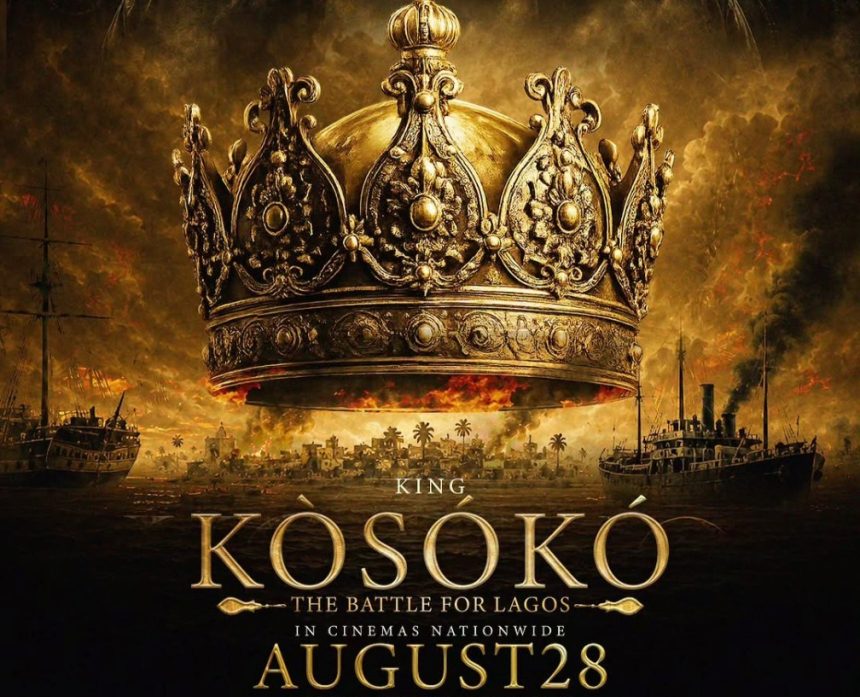
- King Kosoko: The Battle for Lagos joins a limited list of Nollywood films telling Nigeria’s history.
- The cast is led by Femi Adebayo, who plays Oba Kosoko, and opposite him is Odunlade Adekola as Oba Akintoye.
- The film also features the recently deceased late actor, Taiwo Hassan, popularly kniwn as Ogogo.
For years, Nollywood has built its reputation largely around stories of everyday Nigerian life — family, relationships, comedy, crime, politics and social issues. But there has been a growing appetite for films that look further back into the country’s history.
EKO HOT BLOG reports that King Kosoko: The Battle for Lagos arrives as part of that movement.
EDITOR’S PICKS
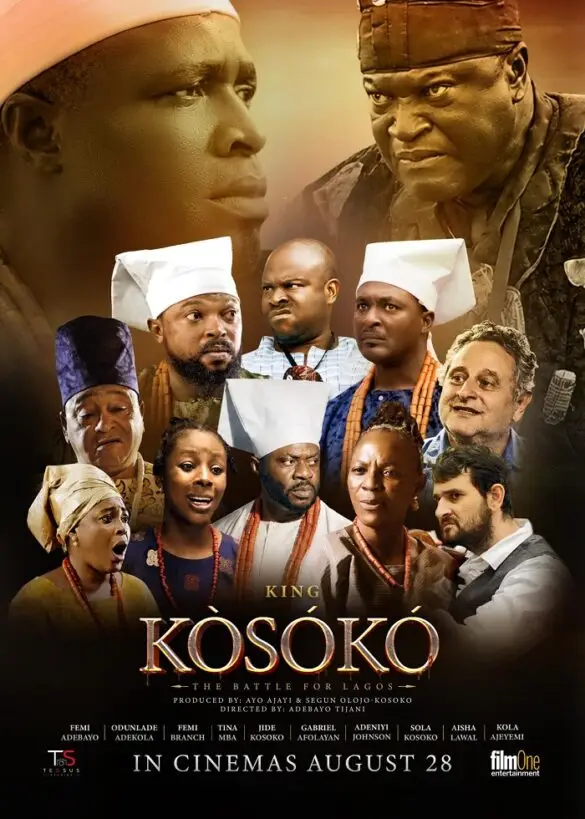
The historical epic, directed by Adebayo Tijani, premiered at IMAX Cinema, Lekki, on August 23 ahead of its nationwide theatrical release on August 28. Produced by Teqsus Studios and distributed by FilmOne Entertainment, the film brings together a large ensemble of established Nigerian actors.
Leading the cast is Femi Adebayo, who plays Oba Kosoko. Opposite him is Odunlade Adekola as Oba Akintoye, while Gabriel Afolayan, Femi Branch, Jide Kosoko, Taiwo Hassan, Yinka Quadri, Tina Mba, Fathia Williams and several other actors taken on important roles. The production is reported to feature more than 70 actors.
That scale is important because historical films require a different level of production commitment.
Unlike contemporary stories that can be filmed around familiar locations and modern settings, a period film has to recreate a world that no longer exists. Costumes, locations, language, props, palace settings, political structures and battle sequences all have to work together to convince the audience that they have been transported to another period.
For King Kosoko, that challenge is even greater because the story is based on a real historical figure and real events surrounding the Lagos kingdom.
The film therefore carries two expectations at the same time: it has to work as entertainment, while also giving audiences a meaningful interpretation of history.
This is where the casting becomes particularly interesting. Bringing together veteran performers and contemporary Nollywood stars allows the production to draw on different generations of acting experience. It also gives the story the star power necessary to attract audiences who may initially be more interested in the actors than the historical subject itself.

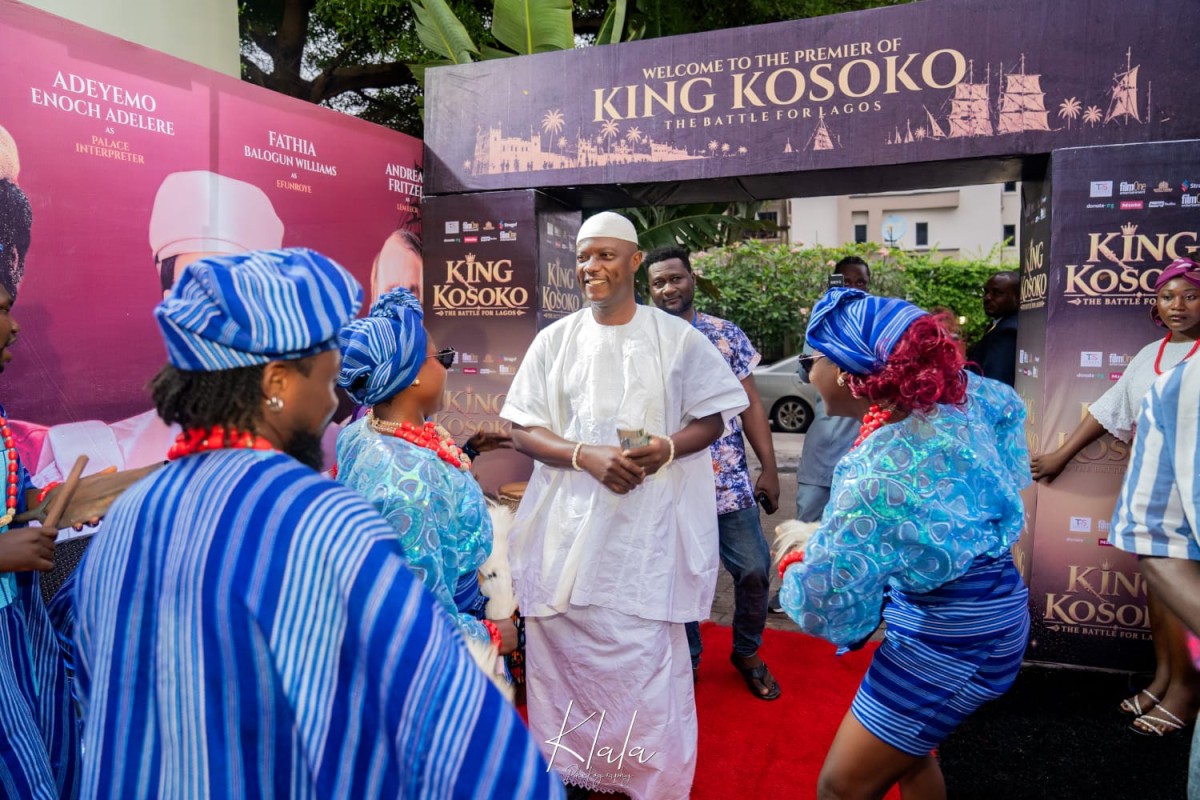
The premiere at IMAX Lekki was consequently an important moment for the project. A film of this nature needs to create anticipation before its theatrical release, and bringing together industry figures, traditional representatives and cultural stakeholders helped establish the production as a major cinematic event.
There is also a larger question about the direction of Nigerian cinema.
Historical films give Nollywood an opportunity to compete in a different storytelling space. Instead of constantly recreating modern Nigeria, filmmakers can explore kingdoms, leaders, conflicts and events that shaped the country long before the present day.
That approach can also make Nigerian history more accessible. A textbook may explain the political struggles surrounding 19th-century Lagos, but a well-made film can allow audiences to see the people, relationships and consequences behind those historical events.
King Kosoko: The Battle for Lagos therefore arrives at an interesting point for Nollywood. It is not simply another star-studded production looking for box-office success. It represents an attempt to combine commercial cinema with indigenous history and cultural storytelling.
The nationwide release on August 28 will ultimately determine how audiences respond. But regardless of its box-office performance, the film’s existence adds to the growing conversation about what Nigerian cinema can do when it looks into its past for stories worth telling.
FURTHER READING
And perhaps that is the real battle behind King Kosoko: not only the battle for Lagos portrayed on screen, but the continuing effort to ensure that important Nigerian stories are not forgotten.
Click to watch the video of the week below: