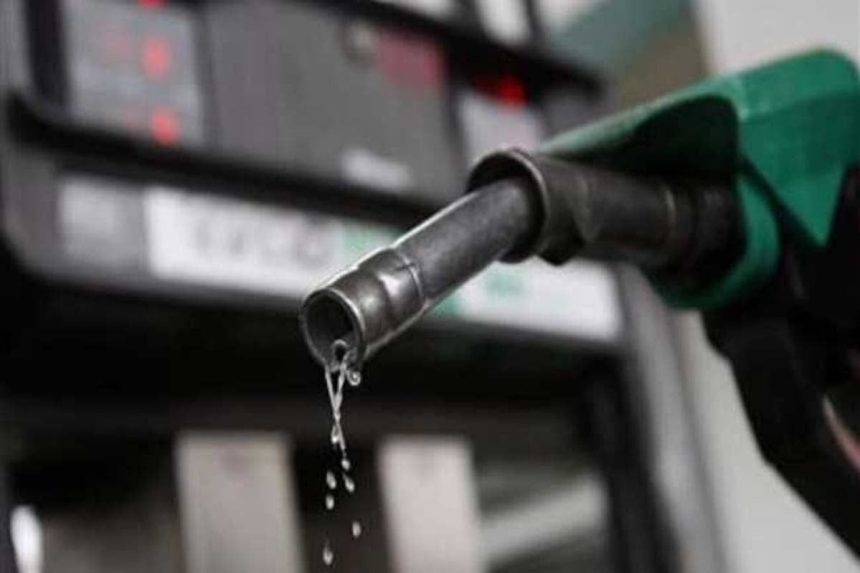
Former Vice President and presidential candidate of the African Democratic Congress (ADC), Atiku Abubakar, has promised to restore fuel subsidy if he wins the 2027 presidential election, reversing a position he held as recently as 2022, when he pledged to embark on a phased removal of the subsidy if elected in 2023.
The promise has drawn sharp attacks from the Presidency, which calls it fiscally reckless, and has exposed confusion within Atiku’s own camp over what “restoring” subsidy actually means.
EDITOR’S PICKS
Beyond the political noise, the harder question is whether such a return is even possible, and what it would take.
A Policy Nigeria Has Already Dismantled
The subsidy Atiku wants to bring back no longer exists in law.
The Petroleum Industry Act (PIA) had scheduled its removal for the end of June 2023, and President Bola Tinubu simply moved that date forward by a few weeks after taking office.
The Presidency argues that going back would mean unwinding legal and structural reforms already built into the downstream oil sector, not just flipping a price switch. It has also disputed Atiku’s claim that removing the subsidy freed up N30 trillion in savings, insisting no such figure exists.
Atiku’s camp has struggled to speak with one voice on the details.
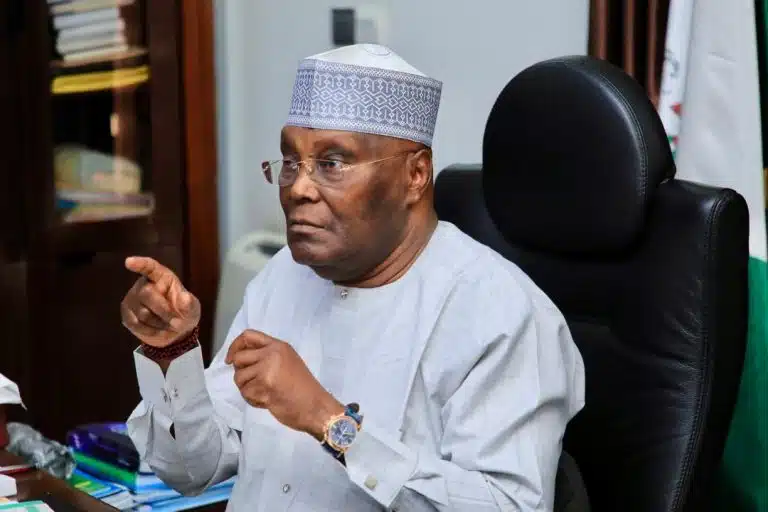
Speaking during a programme on AIT, one of Atiku’s media aides, Paul Ibe, suggested subsidy would be restored and then phased out later, but another senior aide, Phrank Shaibu, quickly disowned that description as unauthorised.
This confusion matters because it is not just a communications problem. It suggests the campaign has not settled on how a restored subsidy would actually work in practice, which is the first requirement for judging whether it is realistic.
“This is not merely a matter of semantics. It is a serious policy contradiction,” President Tinubu’s spokesperson, Bayo Onanuga, said on Wednesday.
The Bigger Obstacle: Dangote and the Market Nigeria Now Has
The most concrete problem with returning to the pre-May 2023 arrangement is that the market itself has changed.
Under the old system, government absorbed the difference between what NNPC paid to import fuel and what it sold at the pump, at massive cost to the treasury.
But Nigeria now has the Dangote Refinery producing petrol domestically, alongside other local refiners. Tinubu has directly asked whether Atiku would pay subsidy on fuel that Dangote refines, a question that goes to the heart of the problem: a subsidy built for an import-dependent market does not map cleanly onto a market with growing local refining capacity.
Atiku’s team has tried to sidestep this by reframing the pitch. Rather than promising to bring back the old NNPC-style subsidy, aides say the plan is to sell crude to domestic refineries at preferential prices, lowering production costs so pump prices fall without government directly footing a subsidy bill.
The Presidency has rejected this too, arguing that selling federation crude below market value would immediately shrink the Federation Account, cutting revenue that flows to federal, state and local governments for schools, hospitals and security.
In effect, the government’s position is that there is no version of this plan, whether called subsidy or preferential crude pricing, that avoids a real fiscal cost somewhere in the system.
Money, Timing and the Politics Underneath
Any honest answer must also reckon with money.
Nigeria’s fiscal space has been shaped by three years without the subsidy burden, and reversing course five months before an election, as the Presidency has pointedly noted, invites suspicion that the promise is aimed more at voters than at a costed plan.
Nothing Atiku’s campaign has released so far explains how a restored subsidy, or its crude-pricing alternative, would be funded without either raising government spending or cutting into revenue Nigeria has only recently recovered.
None of this means Atiku’s underlying complaint is baseless. Fuel prices remain a real burden on households, and questions about where subsidy savings went are fair questions to ask.
But “returning subsidy to what it was in May 2023” is not really on the table. That market no longer exists in the same form, the legal framework has changed, and even Atiku’s own aides have not agreed on what the promise means in practice.
FURTHER READING
What is realistic is a debate over new tools, cheaper crude access, tax relief, or targeted support, not a straightforward reversal to the old regime.
Philip Ibitoye is a Special Correspondent with EKO HOT BLOG. Click here to find daily analysis and critical insight on trending issues in Lagos and other parts of Nigeria.
Click to watch the video of the week below: