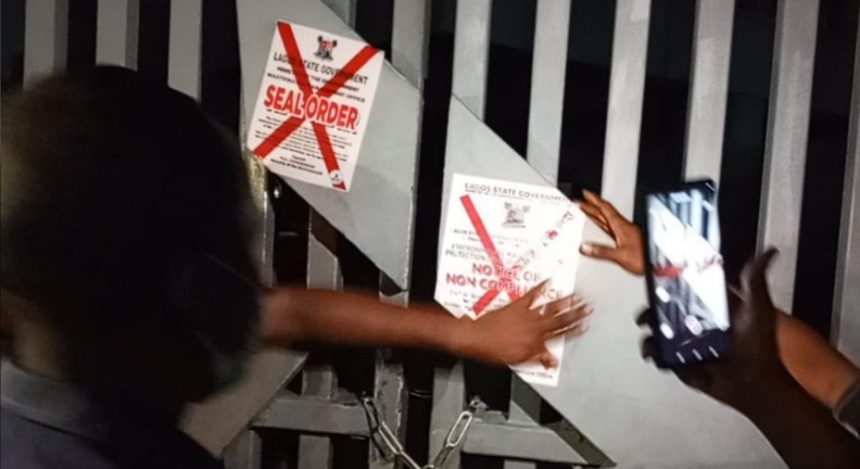
The Lagos State government has moved against one of Nigeria’s largest financial institutions, sealing two branches of Access Bank Plc on Victoria Island after inspections confirmed both facilities were discharging untreated faecal matter into public drainage systems, a development that has put the state’s environmental enforcement machinery in direct confrontation with corporate power.
The action, coordinated by the Lagos State Wastewater Management Office (LSWMO) under Commissioner Tokunbo Wahab, followed separate whistleblower complaints.
EDITOR’S PICKS
At the bank’s Oniru building on Wednesday, inspectors found the wastewater treatment plant non-functional and effluent flowing freely into public drains. Laboratory analysis of samples taken from the site returned positive, confirming the illegal discharge.
Following a whistleblower complaint, I directed the Lagos State Wastewater Management Office team to visit the Access Bank Plc @myaccessbank building at Oniru, Victoria Island, where it was discovered that the wastewater treatment plant at the facility was non-functional,… pic.twitter.com/g2O5C3oG5m
— Tokunbo Wahab (@tokunbo_wahab) April 1, 2026
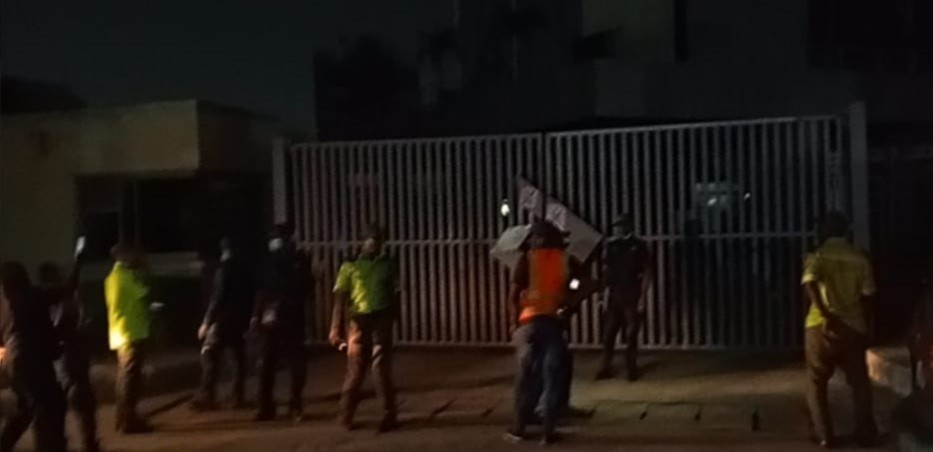
What escalated the matter beyond a routine enforcement case was what happened next. When LSWMO officials moved to seal the Oniru facility, security personnel and management representatives physically blocked them and, in the process, attacked members of the enforcement team. The government is now seeking a court order for the arrest and prosecution of those involved.
A second branch on Land Bridge Avenue, also in Oniru, was subsequently sealed in overnight enforcement after another whistleblower complaint confirmed a similar pattern of raw sewage being discharged into surrounding drains, generating what officials described as a foul smell and worsening environmental conditions in the neighbourhood.
Another Access Bank branch sealed….
Following a tip from another whistle blower, the Lagos State Wastewater Management Office in joint enforcement activities on yesternight sealed off another branch of Access Bank at Land Bridge Avenue, Oniru, Victoria Island having confirmed… pic.twitter.com/pOqV5rSY9G
— Tokunbo Wahab (@tokunbo_wahab) April 2, 2026
Wahab’s statement after the second sealing carried a clear message: “There will be NO SACRED COWS in the enforcement of environmental regulations.”
The phrase is pointed. Access Bank is not a peripheral institution, it is a systemically important bank with deep public and private sector connections. The Lagos government’s willingness to seal its branches, pursue court action, and publicly name the institution signals something more deliberate than standard enforcement.
This fits a broader pattern under Wahab. Since his appointment, the commissioner has become one of the more visible enforcers in the Alausa cabinet, previously making headlines for warnings to street hawkers and enforcement actions targeting corporate and commercial violators alike. The Access Bank case, however, represents an escalation in both the profile of the target and the nature of the offence.
The wastewater problem being exposed here is systemic. Across Lagos, commercial and industrial facilities often rely on treatment plants that are either poorly maintained or left non-functional, with operators calculating that the odds of detection are low and penalties manageable. Whistleblower-driven enforcement, as seen in both Access Bank cases, is increasingly becoming the state’s primary tool for surfacing violations that routine inspection might miss.
The physical resistance by bank officials, however, raises a more uncomfortable question about enforcement power. If a major financial institution can instruct its security apparatus to block, and apparently assault, state officials carrying out lawful duties, what does that say about the practical authority of Lagos environmental regulators in the face of corporate resistance? The government’s decision to go to court, rather than absorb the resistance quietly, is a direct answer to that question, though the legal process will determine whether the accountability rhetoric translates into consequence.
For Access Bank, the reputational exposure is not pretty. Environmental compliance failures at financial institutions are increasingly scrutinised by investors, regulators, and the public. Being publicly named for discharging raw sewage and for allowing staff to obstruct government officials is a different category of corporate governance problem.
FURTHER READING
Wahab has set a marker. Whether the courts, the bank’s management, and the wider business community take it seriously will define what “no sacred cows” actually means in Lagos.
Philip Ibitoye is a Special Correspondent with EKO HOT BLOG. Click here to find daily analysis and critical insight on trending issues in Lagos and other parts of Nigeria.
Click to watch the video of the week below: