The Federal Government, on Wednesday, asked the company handling the Benin-Asaba highway to write a letter asking to be let go. That is how Nigeria is ending one of its most disastrous road concessions.
Minister of Works, David Umahi, told the Benin-Asaba Expressway Concession Company (BAECC) that it should formally request termination of its own contract, after months of failed work left one of the country’s busiest corridors in near-ruin.
EDITOR’S PICKS
The government also ordered BAECC off the project site and said an independent engineer would now value the work done, minus any “negative work” such as the asphalt the company stripped off without approval.
This is how the story should end. But it is not how it should have started, and it is certainly not how future concessions should be managed.
The human cost was avoidable
Before the government acted, ordinary people paid the price.
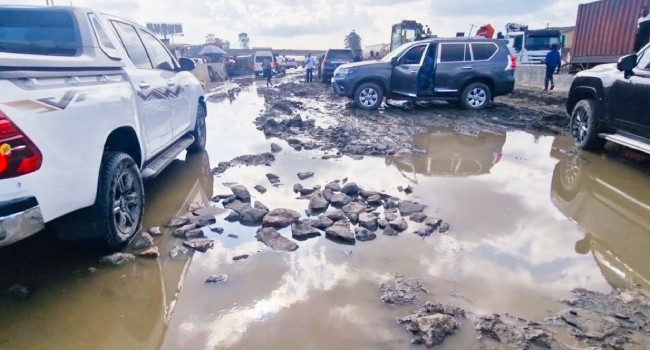
Motorists on the Benin-Agbor-Asaba corridor were stranded for three, sometimes four, days at a stretch. Traders lost goods to spoilage. Passengers slept in vehicles on the road. Some travellers began cutting through bush paths to dodge the worst sections, a dangerous workaround on a route meant to be a modern 10-lane expressway.
Edo State Governor Monday Okpebholo did not hide his frustration, noting that after sixteen months of work, nothing usable had been delivered, calling it a waste of resources.
This suffering was not caused by an act of God. BAECC removed the existing asphalt without first building side drains, against the Ministry of Works’ explicit instructions. When the rains came, as they always do, the road had no protection left. The company blamed weather and traffic for its troubles, but weather does not explain why a firm would tear up a functioning road before it had the drainage in place to handle water.
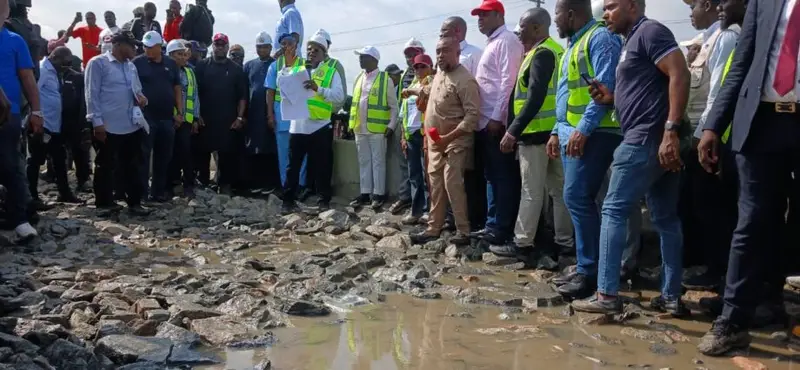
That was a choice, and Nigerians on that road are living with its consequences.
Government needs the power to act fast
The most important lesson from this saga is structural.
Nigeria’s concession agreements should not leave the government waiting, pleading, or negotiating for months while a road falls apart and citizens suffer. There should be a clear, automatic right built into every concession contract, allowing the Federal Government to take over or reassign a project the moment a concessionaire is shown to be failing its obligations, without long legal wrangling.
This is why Umahi’s approach here deserves some credit, even if it came late. Rather than dragging the matter through years of litigation, the minister is pushing BAECC itself to request termination, a path that could unwind the deal faster than an outright legal battle would.
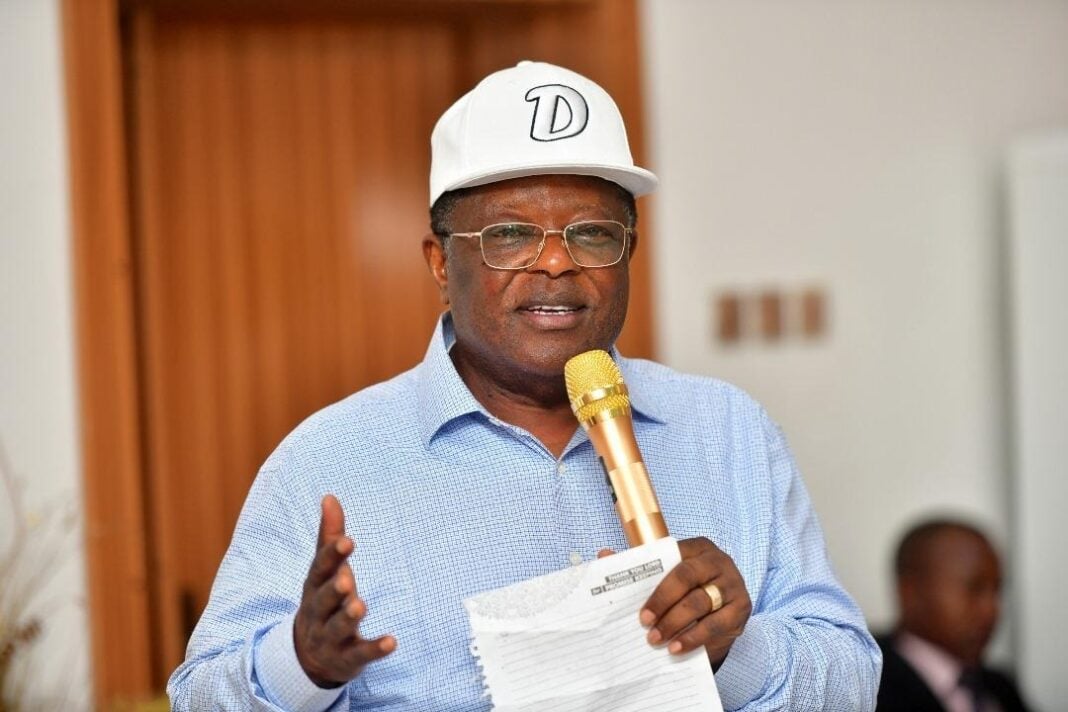
It is not a perfect solution, since it still depends on the concessionaire’s cooperation, but it is a pragmatic way to get a bad actor off a public asset quickly. Going forward, that kind of speed should not depend on a company’s goodwill. It should be written into the contract from day one, as a default government right.
Concession is not a favour, it is a duty
Senator Allwell Onyesoh’s comment during the stakeholders’ meeting was blunt but fair: the people who pushed this concession through did not do Nigeria any favours. Handing a strategic federal highway to a company without properly checking its technical and financial capacity is not partnership, it is negligence dressed up as public-private cooperation.
Concessions can work. Many countries have used them to build and maintain roads without draining public treasuries. But the model only works when government does its homework upfront, on capacity and finances, and keeps real leverage afterward if things go wrong. Nigeria’s Benin-Asaba experience shows what happens when both safeguards are missing: motorists trapped for days, a highway in worse shape than before it was “upgraded,” and a government forced to clean up a mess it should have prevented at the contract stage.
FURTHER READING
The Benin-Asaba road will eventually be fixed. The bigger question is whether the next concession agreement Nigeria signs will actually protect the public from a repeat of this failure.
Philip Ibitoye is a Special Correspondent with EKO HOT BLOG. Click here to find daily analysis and critical insight on trending issues in Lagos and other parts of Nigeria.
Click to watch the video of the week below: