- he noted that the sector continues to face significant challenges, including climate shocks, inadequate financing
- He added that the distribution of more than two million bags of fertiliser to farmers has further boosted soil fertility
- he said the government has launched a national mechanisation programme
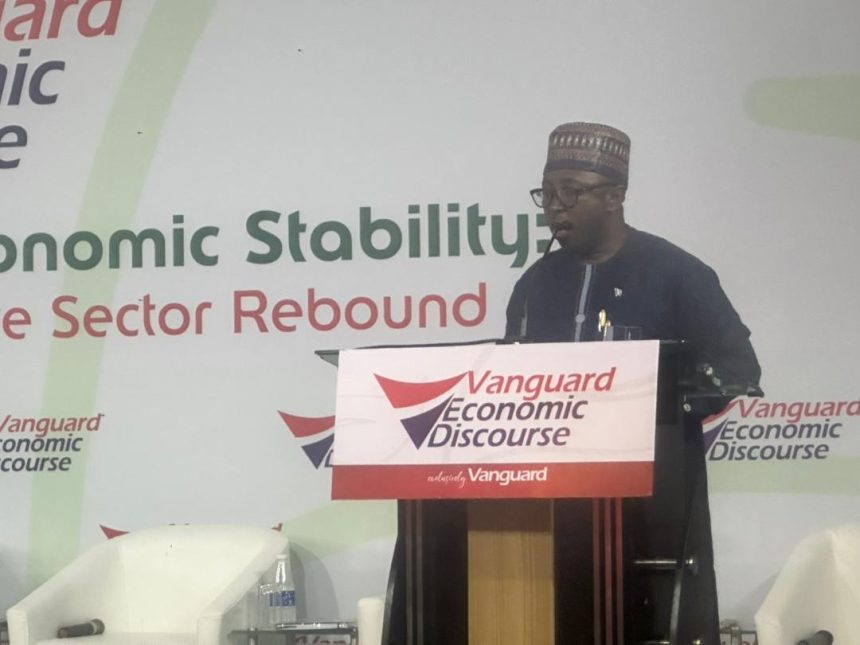
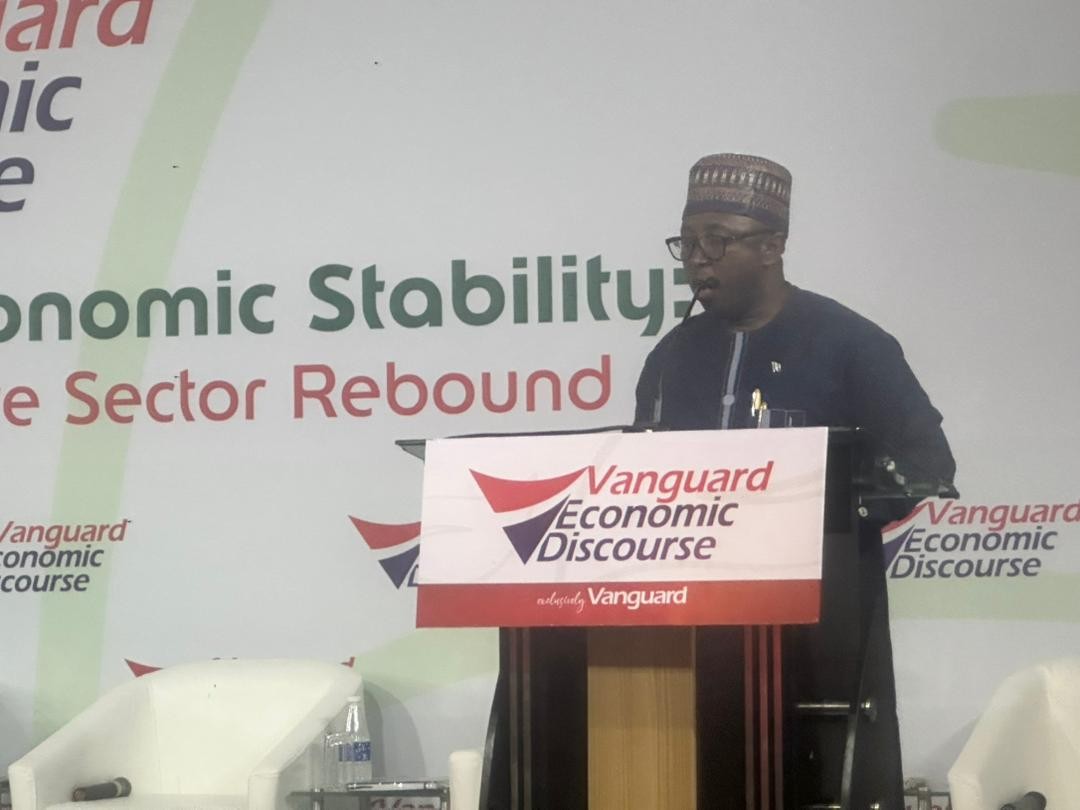
Nigeria’s agricultural sector is showing signs of recovery, with reforms gradually improving food production and price stability, a representative of the Minister of Agriculture and Food Security, Abubakar Kyari, said through Engineer Maruf Ajenifuja Olalekan.
Speaking at the Vanguard Economic Discourse: Food Security and Socioeconomic Stability, Eko Hot Blog gathered that he described food security as a critical foundation for Nigeria’s socioeconomic stability, stressing that agriculture contributes about 23 to 24 per cent to the country’s Gross Domestic Product and employs a large proportion of the workforce.
EDITOR’S PICK
- Benue Mortician Arrested for Using Corpse Part as Walking Stick
- Baba Yusuf: Bandits May Reach National Assembly
- PDP Asks INEC To Withdraw Recognition Of Anyanwu As National Secretary
Despite its importance, he noted that the sector continues to face significant challenges, including climate shocks, inadequate financing, infrastructure deficits, and rising input costs, all of which have affected food availability, accessibility, affordability, and stability.
According to him, the declaration of a state of emergency on food security by President Bola Ahmed Tinubu was a strategic step aimed at reversing the trend and accelerating reforms in the sector.
He said recent interventions by the Federal Ministry of Agriculture and Food Security have begun to yield results, with a noticeable decline in the prices of some essential food commodities and improved productivity among farmers.
The representative disclosed that government programmes, including the National Agricultural Growth Scheme, have supported over 600,000 farmers, leading to increased yields of up to 30 per cent in participating states.
He added that the distribution of more than two million bags of fertiliser to farmers has further boosted soil fertility and crop output across the country.
However, he cautioned that the sector’s recovery remains fragile, noting that high production costs particularly the rising price of fertiliser, continue to pose a major challenge for smallholder farmers.
He also highlighted the low level of mechanisation in Nigeria’s agricultural system, revealing that the majority of farmers still depend on manual labour, which limits productivity and efficiency.
To address this, he said the government has launched a national mechanisation programme, which includes the deployment of about 2,000 tractors and thousands of related equipment to modernise farming operations.
On financing, he acknowledged a significant gap in agricultural funding, stating that access to credit remains limited despite the sector’s contribution to the economy.
He said efforts were underway to strengthen institutions such as the Bank of Agriculture and the National Agricultural Development Fund to improve financing for farmers.
The representative further noted that the government is prioritising value addition and post-harvest management through the establishment of Special Agro-Industrial Processing Zones across the country, in collaboration with development partners including the African Development Bank and the International Fund for Agricultural Development.
He said the initiative is expected to boost agro-processing, create jobs, and reduce post-harvest losses.
He also emphasised the adoption of climate-smart agricultural practices and year-round farming as key strategies to mitigate the impact of climate change on food production.
According to him, food security goes beyond agriculture, as it is directly linked to economic growth, employment generation, and national stability.
He urged stakeholders, including the private sector, development partners, and subnational governments, to collaborate with the federal government in driving the transformation of the sector.
The representative also called on youths and women to take advantage of opportunities in agribusiness, noting that the sector holds significant potential for wealth creation.
He added that Africa’s food and agriculture market is projected to exceed $1tn by 2030, stressing that Nigeria must position itself to benefit from the growing opportunities in the sector.
FURTHER READING