- Lagos Flooding Not Caused By Coastal Highway, Sanwo-Olu Tells Residents
- Umahi Blames Social Media Misinformation
- Sanwo-Olu Says Lagos Will Always Experience Flooding
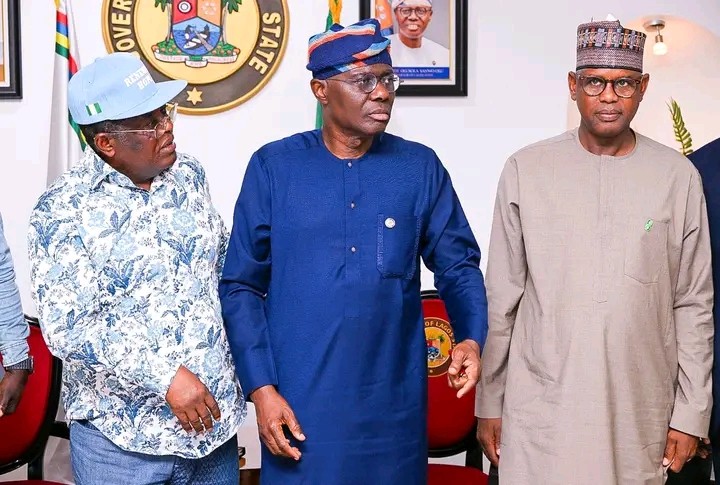
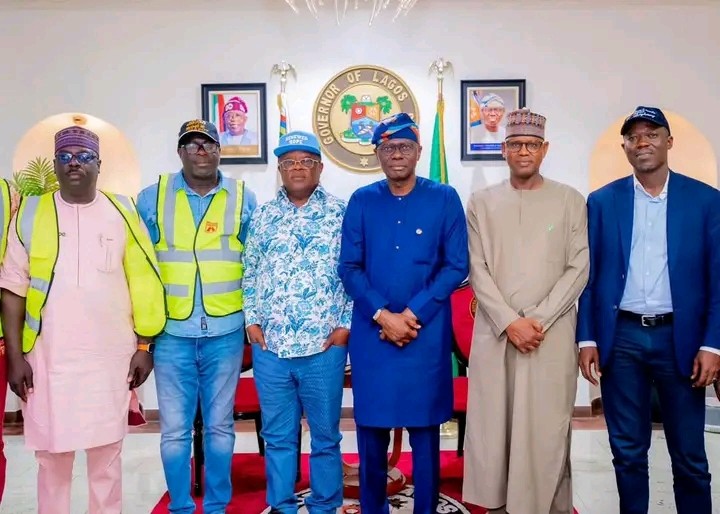
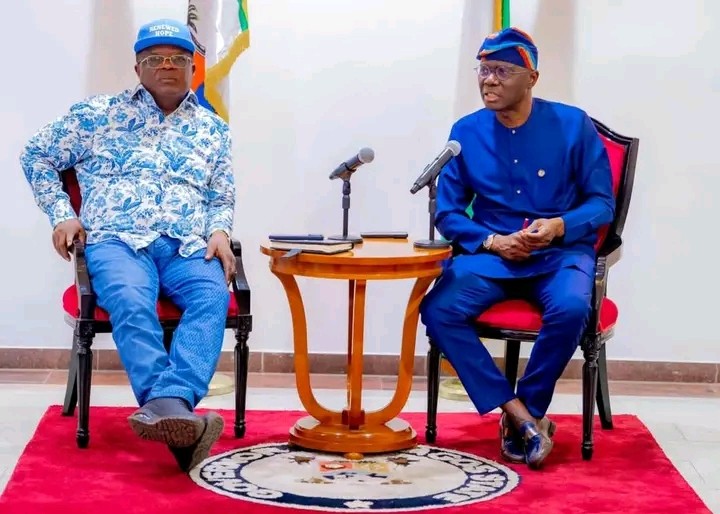
Lagos State Governor, Babajide Sanwo-Olu, and the Minister of Works, David Umahi, have dismissed claims that the ongoing Lagos-Calabar Coastal Highway is responsible for flooding in parts of Lagos, describing the allegation as false and driven by misinformation on social media.
Eko Hot Blog reports that the governor and the minister spoke during a courtesy visit by Umahi and members of the National Assembly to inspect the project.
EDITOR’S PICK
- Tinubu To Deploy Emerging Technologies Against Insecurity
- Iya Alakara: How Tinubu Turned an Online Joke Into a Leadership Moment
- Army Making Tremendous Progress in Rescue of Abducted Oyo Pupils, Teachers – COAS
Sanwo-Olu commended the Federal Government for executing what he described as a landmark infrastructure project, saying the Lagos-Calabar Coastal Highway would boost economic activities and improve the quality of life of Nigerians.
He noted that the project, once dismissed by critics as a political promise, has now become a reality.
“Two years ago, it felt like it was just a political conversation, but today people are already using the road. We thank Mr. President for this landmark project. Lagos has been the first major beneficiary, and we are indeed grateful because it will enhance the quality of life of our people and improve the economy of the country,” he said.
Responding to concerns over flooding, the governor explained that Lagos, as a coastal city, would continue to experience seasonal flooding because of its geographical location.
According to him, the state occupies less than 0.4 per cent of Nigeria’s landmass, with about one-third of its territory covered by water, while its growing population continues to increase pressure on available infrastructure.
“Lagos is a coastal city. When people say Lagos has flooded, without mincing words, we will always experience some level of flooding. We only pray that it will not be severe. These are natural occurrences associated with coastal environments across the world,” he said.
Sanwo-Olu added that heavy rainfall could temporarily overwhelm drainage systems, stressing that floodwaters usually recede after a short period.
He accused some social media users of spreading misleading narratives by sharing images taken during peak flooding without showing how quickly the water subsided.
The governor also blamed indiscriminate waste disposal for worsening flooding, saying blocked drainage channels remain one of the leading causes of urban flooding.
He disclosed that the state had begun a major clean-up of the Lagos-Badagry Expressway and would continue enforcing environmental regulations, including its ban on styrofoam, while introducing additional measures to protect drainage infrastructure.
Sanwo-Olu further revealed that the state had signed an agreement with a mechanised street-cleaning company that would deploy specialised six-lane sweeping machines to clean the Coastal Highway daily.
He added that service roads would also be constructed along the highway to improve accessibility for residents and businesses, noting that some structures may be removed to accommodate the infrastructure.
Speaking during the inspection, Minister of Works David Umahi said President Bola Tinubu directed the visit following widespread social media reports alleging that the Coastal Highway caused flooding in Lagos.
Umahi described the claims as misleading, explaining that flooding had been recorded in several states and had already been predicted in at least 22 states across the country.
“We were concerned about the negative narrative on social media claiming that the Coastal Highway caused flooding in Lagos. The President directed us to come with members of the National Assembly to assess the situation ourselves,” he said.
The minister explained that the highway was intentionally elevated to withstand ocean surges and protect the corridor from flooding for the next 20 to 30 years.
He noted that the surrounding areas were naturally swampy before construction began and warned that buildings erected below approved flood levels would remain vulnerable to flooding regardless of the highway.
Umahi praised the Lagos State Government’s drainage master plan, particularly its strategy of directing stormwater into lagoons rather than the Atlantic Ocean.
According to him, more than 80 per cent of the drainage channels leading to the lagoons have already been completed.
He added that the Federal Government and Lagos State would collaborate on additional drainage channels and service roads, while stakeholder engagements would be held with owners of structures affected by the project.
Umahi also disclosed plans to provide modern infrastructure along the highway corridor, including surveillance cameras, wind stations, parking facilities and tourism infrastructure, while promising strict development control to ensure the project meets international standards.
FURTHER READING
- Senate Moves To Hold South Africa Accountable Over Attacks On Nigerians
- Tinubu Orders Assessment of Flooding Along Lagos Coastal Corridor
- Alausa Unveils Nigeria’s First Manu-Tech University Innovation Pod at MOUAU
Click here to watch video of the week