- Lagos Proves Cities Can Drive Transformation – Sanwo-Olu
- Says Lagos Now Africa’s Second-Largest City Economy
- Climate Resilience, Creative Economy Key to Lagos Future
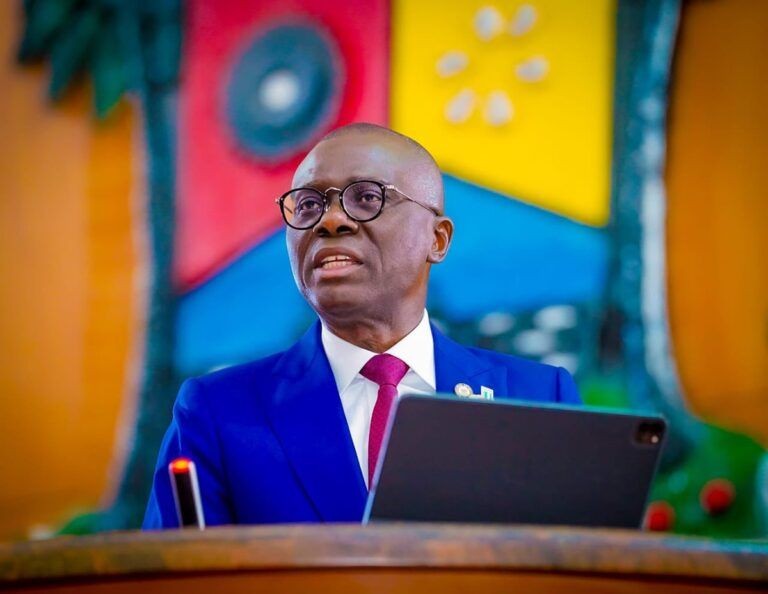
Governor of Lagos State, Babajide Sanwo-Olu, has called for greater global recognition of the role cities play in driving economic and social transformation, describing Lagos as a “living testament to African possibility.”
Eko Hot Blog reports that Sanwo-Olu made the remarks while delivering a lecture at the closing ceremony of Africa Week 2026 organised by King’s College London at the African Leadership Centre in the United Kingdom.
EDITOR’S PICK
- Don’t Import Foreign Conflicts, Chief Imams Tell Nigerians
- Lagos Well Positioned for State Police Takeoff- LNSA GM
- Tinubu Approves ₦1trn Road Projects, Plans New Carter Bridge
According to a statement by his Special Adviser on Media and Publicity, Gboyega Akosile, the governor’s lecture was titled “Exercising Agency beyond the Nation-State: Debating Change and Transformation in the Global City, Lagos.”
Addressing scholars, policymakers and students, Sanwo-Olu noted that global development conversations have traditionally focused on national governments while often overlooking the growing influence of cities in shaping economic productivity, innovation and governance.
He explained that Lagos, despite occupying a relatively small portion of Nigeria’s landmass, has grown into one of Africa’s most economically significant urban centres.
According to the governor, Lagos is now Africa’s second-largest city economy with an estimated Gross Domestic Product of about $259 billion on a purchasing power parity basis, while also serving as Nigeria’s commercial gateway and a major hub for capital, enterprise, talent and ideas.
Sanwo-Olu said the state’s development strategy since he assumed office in 2019 has been driven by the belief that Lagos should be seen as a platform for opportunity rather than a challenge to manage.
“Our development philosophy is captured in the THEMES+ agenda, designed to address the complexity of a megacity through investments in transport, healthcare, education, technology, security, tourism, environmental sustainability and social inclusion,” he said.
He explained that Lagos, like many global cities, has faced multiple challenges in recent years, including the COVID-19 pandemic, rapid population growth, climate risks and a significant infrastructure financing gap.
The governor highlighted mobility as a major priority for his administration, noting that the state has expanded its transport system through the launch of the Blue Line rail and the inauguration of the Red Line corridor, alongside ongoing investments in roads, bridges, bus reforms and water transport.
He added that the state’s integrated transport payment system has also improved digital access for commuters.
Sanwo-Olu said his administration has continued to strengthen public confidence in governance through investments in infrastructure, housing, security and emergency response services.
He noted that the government has delivered more than 3,000 affordable housing units in recent years, deployed 250 patrol vehicles to support security operations and added 62 fire trucks to improve emergency response.
According to him, Lagos’ economic expansion is also reflected in the state’s ₦4.44 trillion budget for 2026, which aims to sustain large-scale investments in infrastructure and social services.
Sanwo-Olu emphasised that the growth of Lagos strengthens Nigeria as a whole, noting that the state continues to attract a large share of capital inflows and generate substantial internal revenue.
He also pointed to the creative economy as a key driver of growth in Lagos, highlighting the global influence of the city’s music, film, fashion and digital content industries.
“Our creative ecosystem shows that culture and identity can also serve as engines of economic development,” he said.
The governor further stressed that climate change remains a major challenge for coastal cities like Lagos, citing rising sea levels, flooding and sanitation pressures as critical issues.
He noted that the state launched the Lagos Climate Adaptation and Resilience Plan in 2024 and has introduced climate investment frameworks and green bonds to support climate-resilient projects.
Sanwo-Olu concluded by stressing that effective leadership in the modern world requires collaboration across multiple levels of governance.
He said cities, national governments, investors, academic institutions and development partners must work together to address the challenges of the future and drive sustainable development across Africa.
FURTHER READING
- Tinubu-Led FEC Revives Literacy Commission, Approves University Moratorium
- Obasanjo at 89: Tinubu Applauds Former President’s Service to Nigeria, Africa
- Tinubu Swears In Disu as 23rd Inspector-General of Police
Click here to watch video of the week