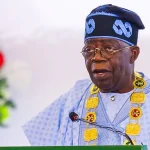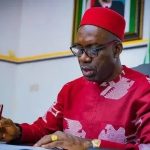
The African Democratic Congress (ADC), on Monday, named former Rivers State Governor, Rotimi Amaechi, as its vice-presidential candidate for the 2027 presidential election, pairing him with former Vice President Atiku Abubakar on what the party describes as a “unity and rescue ticket.”
The announcement, made by ADC National Publicity Secretary, Bolaji Abdullahi, follows the party’s presidential primary in which Amaechi finished as runner-up.
EDITOR’S PICKS
On paper, the pick looks logical. On the ground, it may be a harder sell.
What Amaechi brings
Amaechi is not a lightweight. A former Speaker of the Rivers State House of Assembly, two-term governor, and federal minister under former President Muhammadu Buhari, he carries three decades of political experience.
The initial plan was to pick a running mate from the South-West, but this was reconsidered on the grounds that voters in the region might be unwilling to trade the presidency for the vice-presidential slot. Attention then shifted to the South-South, where Amaechi’s influence was seen as a potential boost to the ticket’s appeal.
He also brings an active opposition network in Rivers State. When Amaechi joined the ADC and stormed Port Harcourt, he addressed supporters at the airport and declared that he was “tired of this government,” signalling his willingness to lead opposition mobilisation from the ground up.
But is Atiku ignoring the 2023 lesson?
Recent history offers a cautionary note.
In 2023, Atiku picked Delta State Governor Ifeanyi Okowa, also from the South-South, as his PDP running mate. The calculation was similar: balance the ticket, secure the South.
The result was a political embarrassment. Atiku lost virtually the entire South-South and South-East, managing victories in only Bayelsa and Akwa Ibom. Critically, he lost Delta State itself, Okowa’s home ground. A running mate could not deliver even his own backyard.
Now Atiku is attempting the same formula, with another South-South figure, from Rivers State, a territory that may be even harder to crack.
The Wike problem
Rivers State is not neutral territory. It is Nyesom Wike’s territory. The former governor, now FCT Minister, has erected a formidable political machine in the state in service of President Tinubu’s re-election, and he is not letting go.
Wike has urged Rivers residents to compare the benefits the state received under previous administrations with what it has gained under Tinubu. “President Tinubu has shown great appreciation to the people of Rivers. We have to continue supporting him,” he said.
His confidence is not rhetorical. He has declared Rivers “a no-go area” for the opposition, insisting that all 23 local government areas have been organised and mobilised for Tinubu, adding, “We don’t need to have a governor to mobilise for Mr President.”

Power dynamics within Rivers State currently revolve around three major blocs: Wike’s camp, the structure aligned with Governor Fubara, and the older bloc linked to Amaechi loyalists who have followed him into the ADC.
Amaechi does have a base. But the question is whether that base can compete with Wike’s entrenched machine, federal patronage, and cross-party Rainbow Coalition.
The Amaechi-Wike rivalry is one of the most intense in Nigerian politics, rooted in personal ambition and a bitter falling-out over succession planning that began around 2013 when Amaechi defected to the APC while Wike remained in the PDP. It is a rivalry that energises Amaechi’s followers but has not, in recent elections, translated into electoral dominance over Wike.
Does Amaechi help in the broader South?
Beyond Rivers, the Atiku-Amaechi ticket faces structural headwinds across the South.
The South-West may largely consolidate behind Tinubu, his home region. The South-East, still stinging from years of political exclusion, may be more interested in a presidential candidate of Igbo extraction, Peter Obi of the Nigeria Democratic Congress (NDC) in this case, than a North-East/South-South combination. The ADC is not the PDP; it does not have the same depth of structure in many Southern states.
The ADC has argued that Amaechi’s influence in the South-South and across Southern Nigeria would significantly strengthen Atiku’s nationwide appeal, but that is party optimism, not political evidence.
The Okowa precedent shows that South-South sentiment does not automatically follow a vice-presidential candidate’s state affiliation.
Amaechi would need to do what Okowa could not: convert personal political capital into ballot-box victories against an incumbent president with federal resources and a sitting FCT minister holding court in Port Harcourt.
FURTHER READING
That is a tall order. The ticket has experience. Whether it has the structure to match is the real question.
Philip Ibitoye is a Special Correspondent with EKO HOT BLOG. Click here to find daily analysis and critical insight on trending issues in Lagos and other parts of Nigeria.
Click to watch the video of the week below: