- The Federal Government has announced that Nigeria’s solid minerals sector attracted a massive $3 billion in investments over the past three years, marking one of the most successful commercial runs in the industry’s history.
- Driven by aggressive regulatory reforms under President Bola Tinubu, the high-ticket investments span critical mineral assets including lithium, gold, and other strategic energy transition resources.
- The milestone was unveiled ahead of the 5th African Natural Resources and Energy Investment Summit in Abuja, which aims to transition African economies from raw resource exporters into local value-addition powerhouses.
The Federal Government on Wednesday announced that Nigeria’s solid minerals sector has successfully secured approximately $3 billion in direct investments within the last three years.
Describing the massive capital influx as entirely unprecedented, Eko Hot Blog reports that government officials stated that the milestone reflects a surging wave of global investor confidence in the comprehensive mining overhauls championed under the administration of President Bola Tinubu.
EDITOR’S PICK
- Hamzat Appoints Obanikoro as Campaign DG Ahead of 2027 Lagos Governorship Race
- Tinubu’s State Police Plan Gains Momentum as Amendment Looms
- Residents Raise Alarm After Two Bodies Found in Lagos Waterway
The breakthrough is expected to fast-track Nigeria’s macroeconomic diversification strategies away from its traditional, volatile dependence on crude oil revenues.
The major economic disclosure was made at a high-level press briefing in Abuja ahead of the 5th African Natural Resources and Energy Investment Summit (AFNIS 2026), slated to hold at the State House Conference Centre from June 23 to June 25, 2026.
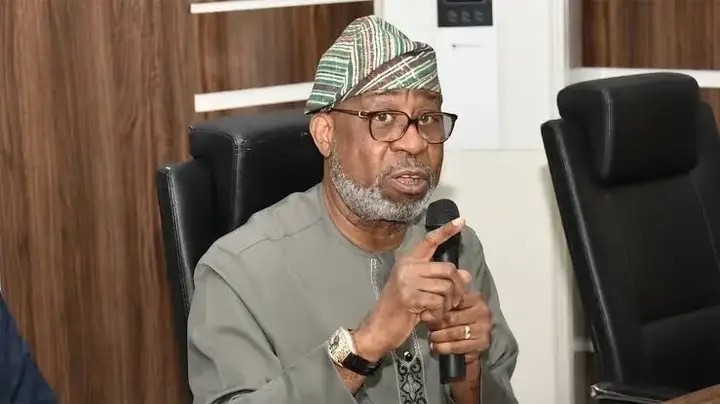
Representing the Minister of Solid Minerals Development, Dr. Dele Alake, the Managing Director and Chief Executive Officer of the Nigeria Solid Minerals Company, Martins Imonitie, explained that pulling in $3 billion within a tight three-year window is a remarkable feat for an industry notoriously defined by lengthy gestation periods, complex geological mapping, and slow capital maturity cycles.
According to Dr. Alake, mining operations are inherently long-term ventures that frequently require up to 15 to 20 years from initial discovery to commercial market maturity.
Because international financiers must carry out rigorous geological assessments, secure extensive off-take agreements, and manage massive risk structures before injecting capital, Nigeria’s recent success in locking down these multi-million-dollar commitments serves as a powerful signal to the global market that the country has become a secure, bankable mining destination.
The inflows have been heavily concentrated across high-yield extraction sectors, notably lithium and gold infrastructure.
The upcoming AFNIS 2026 summit, running under the unified theme of “One Africa, One Resource Vision,” will bring together mining and energy ministers from across the continent, including delegates from the Democratic Republic of Congo, Kenya, Uganda, and South Sudan.
The strategic goal of the Abuja summit is to map out actionable blueprints that shift Africa away from being a mere exporter of raw materials.
Instead, the continent is moving toward becoming an industrial center for local value addition, which officials emphasize is the only viable pathway to creating sustainable jobs, transferring technological expertise, and generating real wealth for the African people.
Supporting the minister’s outlook, the Director of Strategy and Platform Development at iMine, Archibald Troko, revealed that the summit has historically served as a fertile ground for deal-making, with transaction values from previous editions nearing $600 million.
To ensure AFNIS 2026 maintains this highly practical focus, the Ministry of Solid Minerals Development, through Director of Investment Promotion Esther Udoh, confirmed that the 2026 structure features dedicated sovereign meeting rooms, project de-risking sessions, and exclusive chief executive roundtables.
Furthermore, addressing potential public health questions regarding regional outbreaks, the ministry reassured international delegates that comprehensive safety protocols have been seamlessly established to ensure a secure, successful convention in the nation’s capital.