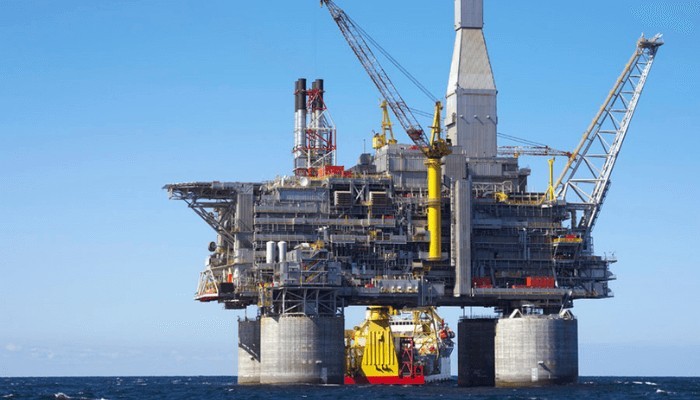
Nigeria has split one of its most valuable — and most troubled — oil blocks into four separate assets, handing operatorship to European energy giants Eni and Shell in a deal that could finally bring the long-stalled OPL 245 deepwater field into production.
According to Reuters, final contracts were expected to be signed from Monday, according to a source familiar with the situation, marking what could be the most significant breakthrough in a saga that has dragged on for nearly three decades, consumed billions of dollars in legal fees, and become a byword for corruption in the global oil industry.
EDITOR’S PICKS
EKO HOT BLOG explains what has led to this moment and what it could mean for the controversial oilfield.
So what exactly is OPL 245?
OPL 245 is a deepwater oil block sitting roughly 150 kilometres off Nigeria’s Niger Delta coast, beneath waters as deep as 2,000 metres. It is estimated to hold up to 9 billion barrels of oil, enough to transform Nigeria’s output and revenues for a generation.
Despite that enormous potential, the block has never produced a single barrel. Instead, it has been locked in a web of lawsuits, corruption allegations, and political disputes since it was first awarded in 1998.
How did it all go wrong?
The trouble started at the very beginning. In April 1998, then military Head of State, General Sani Abacha, awarded OPL 245 to a company called Malabu Oil and Gas, incorporated just days before the licence was granted.
Malabu was secretly controlled by Dan Etete, who was serving as Nigeria’s Petroleum Minister at the very time he received the award. Associates of the Abacha family were also given shares.

Years later, the licence was sold to Shell and Eni for $1.3 billion. Italian prosecutors alleged that the bulk of that money was not paid to Nigeria’s government but was instead funnelled to politicians and middlemen. Eni’s chief executive, Claudio Descalzi, was among those who stood trial in Italy. All defendants were acquitted in 2021, with each denying any wrongdoing.
In Nigeria itself, the Economic and Financial Crimes Commission (EFCC) pursued fraud and money laundering charges against former Attorney General Mohammed Adoke and others connected to the deal. In March 2024, a Federal Capital Territory High Court acquitted all defendants, ruling that the evidence was insufficient.
Meanwhile, Switzerland and the United States froze portions of the settlement funds. Some $78 million was eventually returned to Nigeria. The US Department of Justice closed its investigation in 2019 without charging anyone.
Why has it taken so long to develop?
Beyond the courtrooms, the block faced a further legal challenge from Malabu, which continued to contest ownership. That door was finally shut in May 2025, when the Court of Appeal in Abuja unanimously dismissed Malabu’s claim, ruling it was statute-barred and an abuse of court process.
With that final obstacle cleared, the federal government moved to restructure the asset entirely, splitting the single block into four new operating units to be shared between Eni and Shell.
The move is designed to spread financial risk, speed up permitting, and make it easier to attract the billions of dollars in investment needed before any oil can flow.
Why does it matter now?
Nigeria is under significant pressure to boost oil production.
Output has hovered around 1.46 million barrels per day in recent months, well below the country’s OPEC quota and its own targets, largely because of oil theft and ageing infrastructure onshore.
Bringing OPL 245 into production would provide a major shot in the arm for government revenues at a time when the country badly needs them.
FURTHER READING
For a block that has sat idle for almost 30 years, Monday’s contracts, if signed as expected, represent something remarkable: the beginning of the end of one of Africa’s longest-running oil disputes.
Philip Ibitoye is a Special Correspondent with EKO HOT BLOG. Click here to find daily analysis and critical insight on trending issues in Lagos and other parts of Nigeria.
Click to watch the video of the week below: