- Lai Mohammed has identified Nigeria’s creative industry as a major alternative to crude oil.
- He said sectors such as music, film, fashion, sports and publishing could create jobs and drive economic growth.
- NIPSS is working with the creative economy ministry to develop strategies for achieving Nigeria’s $1 trillion economic target by 2030
Former Minister of Information and Culture, Lai Mohammed, has described Nigeria’s creative industry as a major economic opportunity capable of becoming the country’s next significant source of growth after crude oil.
Eko Hot Blog gathered that Mohammed made the remarks in Abuja during a meeting involving officials of the National Institute for Policy and Strategic Studies (NIPSS) and the Minister of Art, Culture, Tourism and the Creative Economy, Hannatu Musawa.
EDITOR’S PICK
- How Lagos Achieved 57.4% Exclusive Breastfeeding Rate
- Shaibu Lists Nigeria’s Biggest Security Challenges
- Vote, Protect Your Mandate, Governor Adeleke Urges Residents Ahead of August 15 Polls.
The engagement was held as part of preparations by NIPSS and the ministry to develop policies and strategies that could help the creative sector contribute to President Bola Tinubu’s ambition of building a $1 trillion Nigerian economy by 2030.
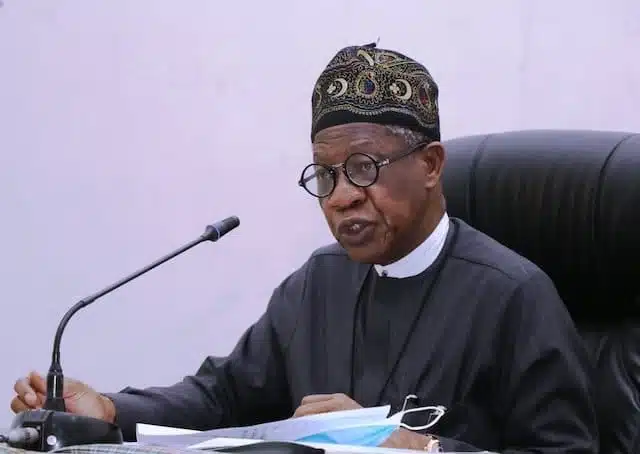
Mohammed, who serves as Managing Partner of Bruit Costaud, a consultancy involved in preparations for the upcoming National Summit and Exhibition on the Orange Economy, said the creative sector had significant capacity to generate employment and stimulate economic activity.
He argued that Nigeria must reduce its dependence on crude oil by paying greater attention to the economic possibilities offered by its creative and cultural sectors.
Mohammed identified film, music, food and gastronomy, fashion, publishing and sports among the areas capable of contributing substantially to the nation’s economy.
He also described the Ministry of Art, Culture, Tourism and the Creative Economy as strategically important, noting that the sector has the capacity to employ a large number of Nigerians.
Speaking at the meeting, the Director-General of NIPSS, Ayo Omotayo, said the institute had aligned its research priorities with the Federal Government’s economic objectives.
Omotayo noted that although the creative sector had significant economic potential, it had not received sufficient attention in policy research.
He explained that the forthcoming summit was intended to examine the sector more closely and develop practical strategies for unlocking its contribution to Nigeria’s economic expansion.
According to him, NIPSS had reviewed various sectors of the economy since 2023 to identify areas with the potential to help the country achieve the $1 trillion economic target.
He said the creative sector was selected because of its broad influence on Nigerians’ daily lives and its growing potential, particularly with the advancement of technology.
Omotayo added that rapid technological development had transformed the way creative content was produced, distributed and consumed, creating new opportunities for the arts and culture sector.
He expressed optimism that the collaboration between NIPSS and the ministry would produce ideas capable of strengthening the creative economy and increasing its contribution to national development.
FURTHER READING