- Pastor Missing After Alleged IPOB Mislabeling Sparks Violent Attacks
- The pastor had been outspoken against the extrajudicial killings of Igbo youths often branded as IPOB members
- Witnesses said the severely injured cleric was rushed to a private clinic on Ilamoye Street, Aguda, Surulere, near the Ijesha area of Lagos
The whereabouts of Pastor Azubuine Kenneth Chimezie, a senior leader of the Assemblies of God Church in Surulere, Lagos, remain unknown following a series of violent, targeted attacks by unidentified gunmen who allegedly accused him of being a member of the Indigenous People of Biafra (IPOB).
Eko Hot Blog reports that Pastor Chimezie has been missing since March 3, 2025, a development that has unsettled the Christian community and raised fresh concerns over the dangers faced by individuals caught in ideological and identity-related conflicts.
EDITOR’S PICK
- EFCC Arraigns Man for Allegedly Defrauding US Investors of $525,276
- Tinubu’s State Visit Yields Nigeria–Turkey Diaspora Partnership
- FG, States, LGs Receive ₦1.969trn as FAAC Allocation for December 2025
Although questions were initially raised over why the cleric was linked to IPOB, emerging details suggest his ordeal stemmed from his public stance on Biafran identity, which reportedly made him a target of suspected radical elements.
The pastor had been outspoken against the extrajudicial killings of Igbo youths often branded as IPOB members, arguing that ideological disagreements should not justify violence against one’s own people.
His position was rooted in a literal interpretation of the acronym IPOB, which he reportedly explained as meaning that every Indigenous Person of Biafra is Biafran by birth, but not necessarily a member of the organisation.
According to close associates, Chimezie consistently clarified that while he identified as Biafran by ancestry, he was not affiliated with IPOB as a political or militant group. This distinction, however, was allegedly ignored by his attackers.
Tensions reportedly intensified following a widely publicised church crusade organised by the pastor, titled “Let My People Go”. While intended as a spiritual programme, the theme was allegedly misinterpreted by hostile actors as a political statement, resulting in increased threats and surveillance.
The situation escalated when Pastor Chimezie was allegedly intercepted by about eight armed men. According to eyewitness accounts and his wife’s testimony, the attackers questioned how he could be “both a pastor and an IPOB member”.
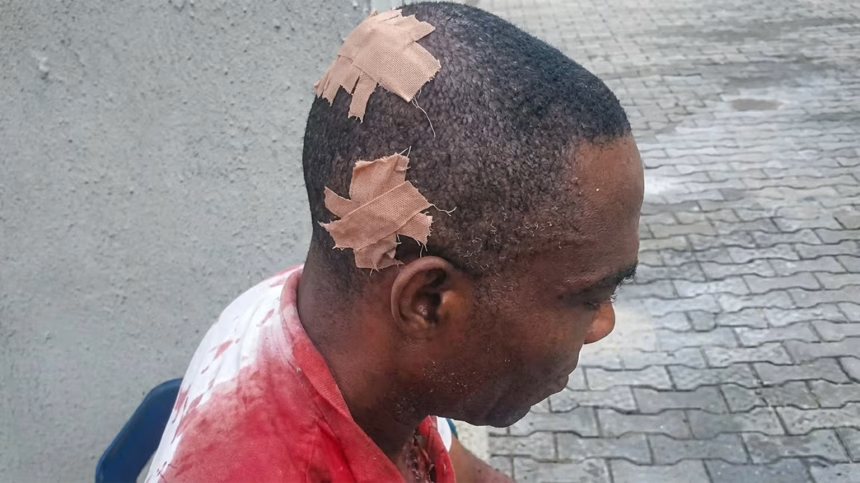
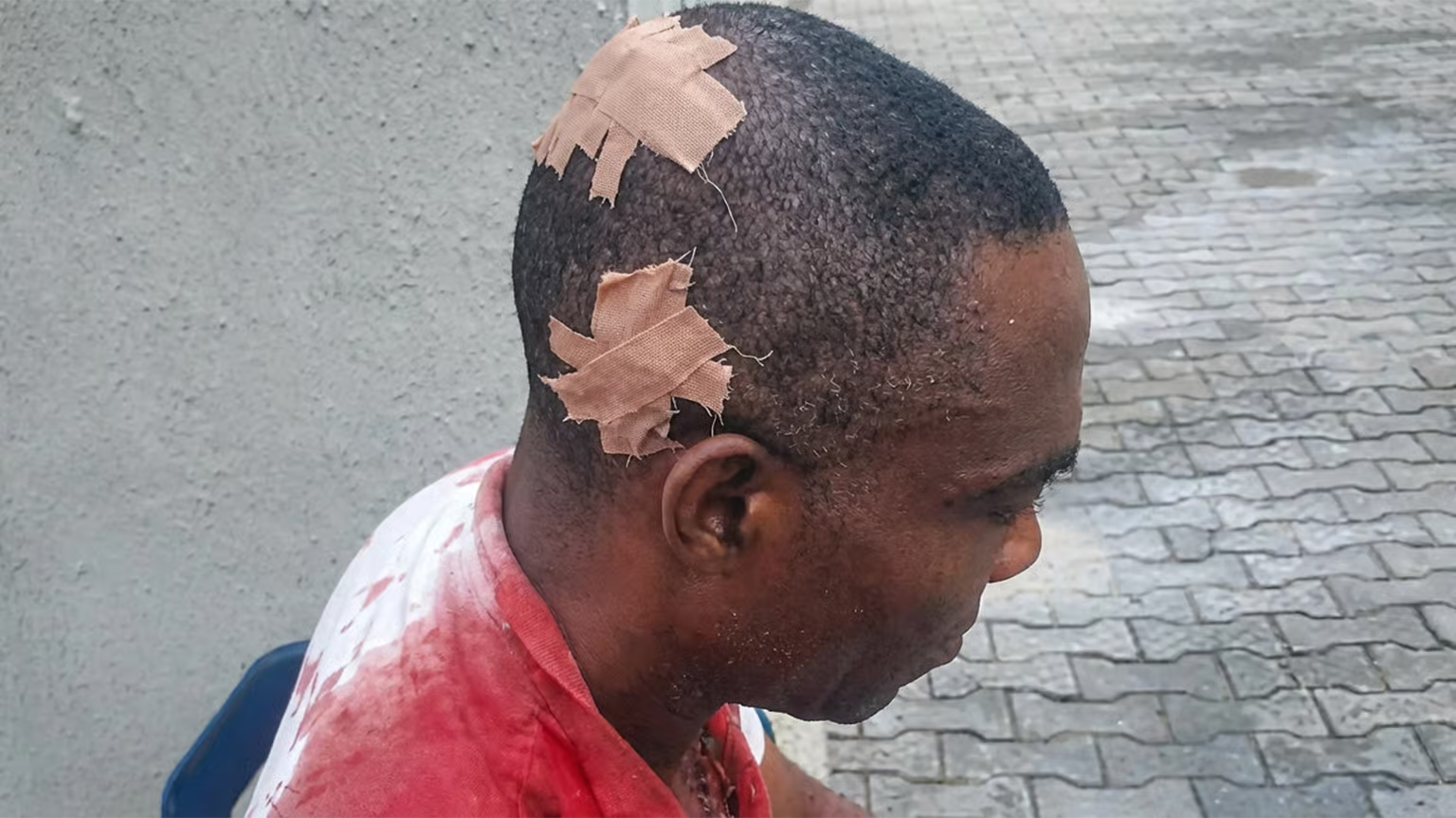
Despite his explanation, he was reportedly assaulted with cutlasses and left for dead.
Witnesses said the severely injured cleric was rushed to a private clinic on Ilamoye Street, Aguda, Surulere, near the Ijesha area of Lagos. Among those who assisted were Mrs Okonkwo, wife of Pastor John Okonkwo of Believers Fire Assembly Ministry, who also sustained injuries during the attack.
Other witnesses included Mr Ogbonaya Chukwujekwu, Mr Solomon Kanu, Mrs Austin Oluchi, Mr Ismaila Abioye, and Mr Wayid, a local security guard.
Mr Chukwujekwu, who reportedly drove the pastor to the Aguda Police Station, said the incident was formally reported but alleged that officers demanded money before taking action. The group reportedly declined and later sought an affidavit from a court.
The persecution allegedly extended to the pastor’s family. On July 13, 2025, assailants were said to have traced the family to their village, where Pastor Chimezie’s mother was attacked.
A family source described her injuries as life-threatening, leaving her bedridden. The attackers allegedly issued a warning that wherever the pastor is found, he would be hunted down and killed.
At the Assemblies of God Church, 24 Ehi Street, Ijesha Airways, Surulere, services are now being overseen by deacons amid uncertainty and distress.
One of them, Deacon Thompson, appealed to security agencies to intensify efforts to locate the missing cleric, describing him as a peaceful man whose only offence was speaking against violence.
As the search continues, the case has renewed debate over the dangers of ideological labelling, particularly in regions where the line between identity, belief and affiliation has increasingly become a matter of life and death.