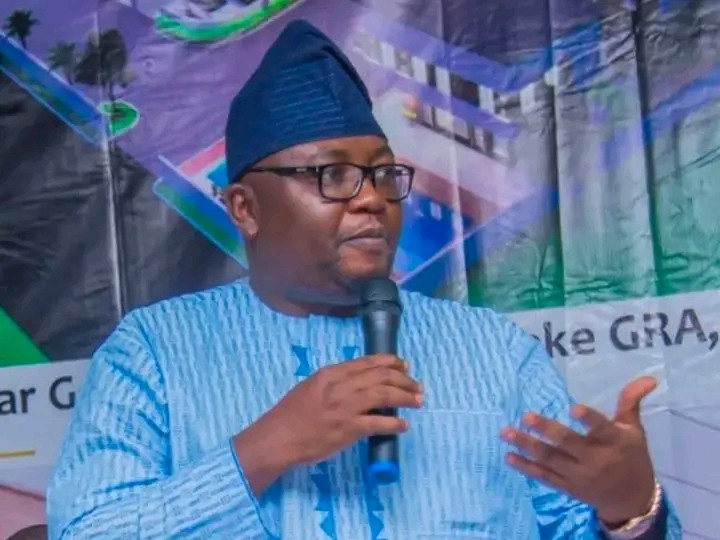
- Following the resignation of Adebayo Adelabu, the Association of Power Generation Companies (APGC) and other industry leaders are urging President Bola Tinubu to appoint a technocrat with proven sector experience rather than a “political jobber.”
- Adelabu officially stepped down on April 22, 2026, to focus on his governorship bid in Oyo State. His resignation is set to take effect on April 30, 2026, to ensure a smooth administrative handover.
- Stakeholders, including energy professors and policy advocates, argue that the Nigerian power sector is in a state of “emergency” that requires a solution-driven leader capable of fixing systemic defects.
As President Bola Tinubu begins the search for a new Minister of Power, key players in the energy industry have voiced strong opposition to the appointment of another politician to the role.
Eko Hot Blog reports that the call for a technocrat comes in the wake of Adebayo Adelabu’s resignation, as he exits the cabinet to pursue the governorship of Oyo State.
EDITOR’S PICKS
- JAMB Delists 23 CBT Centres, Warns 89 After Mock UTME Review
- NASA Astronauts Return to Earth After First Human Trip to the Moon in 50 Years
- INEC Shifts Nationwide Voter Revalidation Until After 2027 General Election
Joy Ogaji, CEO of the Association of Power Generation Companies (APGC), emphasized that the President must prioritize “solution-driven capacity” over political loyalty or ethnicity.
She argued that the sector needs a leader who is dissatisfied with the status quo and possesses the practical expertise to hit the ground running.
Similarly, Adetayo Adegbemle of PowerUp Nigeria noted that the incoming minister must have a clear national agenda, specifically focusing on the financial health of the sector, metering, and a comprehensive review of the National Integrated Energy Plan.
Despite Adelabu’s highlighted achievements, such as the implementation of the Electricity Act 2023 and reaching a peak generation of over 6,000 megawatts, the sector continues to be plagued by persistent power outages that began in February.
Energy experts, including Professor Dayo Ayoade of the University of Lagos, maintain that no individual can succeed unless the underlying system is fundamentally overhauled.
They argue that professional competence is non-negotiable if the ministry is to move beyond the current cycle of “zero results.”
As the April 30 transition date approaches, all eyes are on the Presidency to see if the new appointment will favor political expediency or the technical rigor demanded by those managing the nation’s grid.