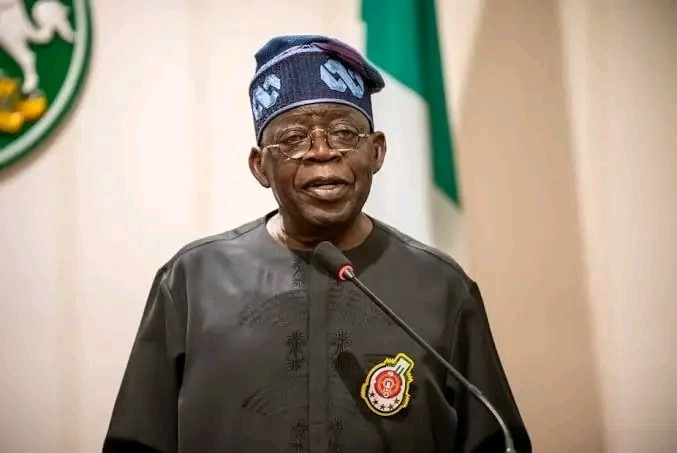
- President Bola Tinubu has approved the immediate dissolution of the Presidential Implementation Committee (PIC) on the Alienation of Federal Government Properties, bringing an end to the 25-year-old body created under former President Olusegun Obasanjo.
- All operational duties, oversight responsibilities, and assets previously managed by the committee have been officially transferred to the Attorney-General of the Federation and Minister of Justice, Lateef Fagbemi.
- Official statements revealed that a comprehensive review found the committee had continuously overstepped its original mandate, triggering extensive litigation nationwide and rendering its continued operation unjustified.
President Bola Tinubu has ordered the immediate dissolution of the Presidential Implementation Committee (PIC) on the Alienation of Federal Government Properties, ending the operation of a 25-year-old administrative body created during former President Olusegun Obasanjo’s administration.
Eko Hot Blog reports that the directive was formally announced in a statement released Thursday by the Special Adviser to the President on Information and Strategy, Bayo Onanuga.
EDITOR’S PICK
- Tinubu Approves Army Expansion, Recruitment of 28,000 Personnel
- Aregbesola Claims Record as First Nigerian Governor to Serve Eight Years Without Owning a House
- Ikosi-Ejinrin LCDA Commissions Fully Equipped NSCDC Divisional Headquarters, Donates Patrol Vehicle and Motorcycle to Boost Security
According to the Presidency, the dissolution takes retroactive effect from November 5, 2025.
Following the directive, the committee’s former Secretary, B. S. Dutsin-Ma, has been instructed to immediately cease all actions, transactions, and representation on behalf of both the committee and the Federal Government regarding federal real estate assets.
All responsibilities, functions, and unresolved matters previously handled by the PIC have now been transferred to the Office of the Attorney-General of the Federation and Minister of Justice, Lateef Fagbemi.
Explaining the reasoning behind the decision, the Presidency stated that a thorough review of the panel’s operations revealed that its activities had expanded well beyond its initial statutory scope.
This overreach resulted in widespread property disputes, regulatory confusion, and protracted litigation across various courts nationwide, leading the administration to conclude that the body’s continued existence was no longer justified.
The PIC was originally established in the year 2000 under the Obasanjo administration to supervise the privatization, sale, and long-term lease of government-owned landed assets under the federal monetization policy.
The sweeping reform program was designed to convert public housing, vehicles, and real estate assets into capital while ending the practice of providing free residential quarters to public servants.
Although the initiative represented one of the most significant administrative overhauls of that era, its implementation faced persistent controversy over the years.
Over two decades, the committee was dogged by allegations of arbitrary asset valuations, irregular allocations to political figures, and endless property disputes across the country.
FURTHER READING