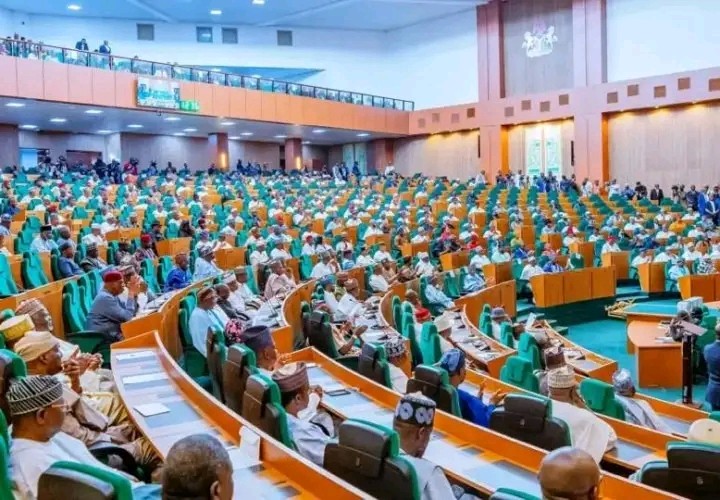
- The House of Representatives has formally called on the 36 State Houses of Assembly to support and pass the Special Seats for Women Bill, a key component of the ongoing constitutional amendment process.
- Lawmakers emphasized that women make up nearly half of the population but hold less than 5% of elective offices, ranking Nigeria among the lowest globally for female political representation.
- The bill proposes the creation of additional, constitutionally-backed seats in the National and State Assemblies as a temporary affirmative action measure to bridge the gender gap in governance.
The House of Representatives has urged state legislatures to expedite the passage of the Special Seats for Women Bill.
Eko Hot Blog reports that during Thursday’s plenary, presided over by Speaker Tajudeen Abbas, the House adopted a motion of urgent public importance highlighting the critical need for inclusive governance and democratic legitimacy.
EDITOR’S PICKS
- JAMB Delists 23 CBT Centres, Warns 89 After Mock UTME Review
- NASA Astronauts Return to Earth After First Human Trip to the Moon in 50 Years
- INEC Shifts Nationwide Voter Revalidation Until After 2027 General Election
The motion, sponsored by Lagos State lawmaker Jesse Onuakalusi, argued that the persistent exclusion of women from decision-making structures constitutes a “fundamental democratic deficit.”
Onuakalusi noted that while women contribute significantly to Nigeria’s economic and social spheres, cultural barriers, high nomination costs, and political violence have historically barred them from elective office.
He pointed to successful affirmative action models in other African nations, such as Kenya, Uganda, and South Africa, as evidence that legislative intervention can effectively transform political diversity.
Following the adoption of the motion, the House mandated its Committees on Constitutional Review, Women Affairs, and Electoral Matters to fast-track work on the bill.
The lawmakers warned that failure to act would not only weaken institutional legitimacy but also hinder socio-economic development, particularly in areas like healthcare and education where female leadership has proven impactful.