- Meanwhile, China acknowledged the leadership transition and said the process followed Iran’s constitutional procedures
- Putin also reiterated Russia’s commitment to maintaining close ties with Iran, describing Moscow as a dependable partner of the Islamic Republic
- Putin said the new leader faces significant challenges as Iran deals with ongoing military pressure
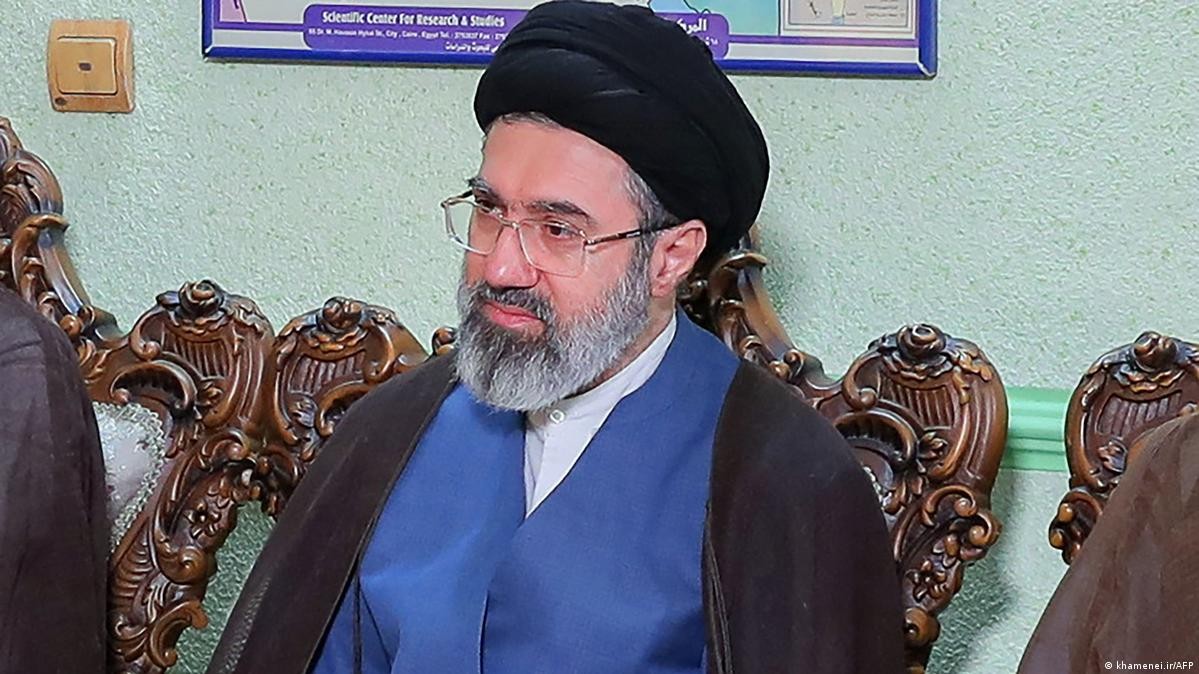
Russia and China have expressed support for Mojtaba Khamenei following his appointment as the new supreme leader of Iran, as tensions in the region continue to rise.
Eko Hot Blog gathered that Vladimir Putin, president of Russia, sent a congratulatory message to Khamenei, praising his appointment and reaffirming Moscow’s continued partnership with Tehran.
EDITOR’S PICK
- “Pay Her Transport Fare Too”, Pete Edochie Stirs Debate on Dating Expenses
- Epe Students Parliament Declares Executive Seats Vacant Over Inauguration Dispute
- Osimhen Warns Galatasaray Ahead of Liverpool Match
In a statement released by the Kremlin, Putin said the new leader faces significant challenges as Iran deals with ongoing military pressure.
He expressed confidence that Mojtaba Khamenei would carry forward the legacy of his father, the late Iranian leader Ali Khamenei, and help unite the Iranian population during what he described as a difficult period for the country.
Putin also reiterated Russia’s commitment to maintaining close ties with Iran, describing Moscow as a dependable partner of the Islamic Republic.
Meanwhile, China acknowledged the leadership transition and said the process followed Iran’s constitutional procedures.
Speaking on Monday, Chinese Foreign Ministry spokesperson Guo Jiakun stressed that Beijing opposes any interference in Iran’s internal affairs.
His comments came in response to recent remarks by Donald Trump, president of the United States, who suggested that Iran’s new leader would not remain in power without Washington’s approval.
Guo called on the international community to respect Iran’s sovereignty and urged all parties to pursue diplomatic dialogue to end the escalating conflict.
Mojtaba Khamenei, a 56-year-old cleric believed to have strong connections with Iran’s security establishment, became the country’s third supreme leader after being selected by the Assembly of Experts.
Iranian president Masoud Pezeshkian described the leadership transition as an important step toward maintaining national unity during a time of crisis.
The appointment followed the death of Ali Khamenei, who led Iran for nearly four decades before being killed in an airstrike on February 28.
The strike, reportedly carried out by the United States and Israel, targeted his residence in Tehran.
Since then, the confrontation between Iran, Israel and the United States has intensified, spreading across parts of the Middle East.
According to reports, the ongoing military campaign has resulted in the deaths of more than 1,200 people in Iran, including civilians and schoolchildren.
Iran has responded with missile and drone attacks against Israeli targets and locations in Gulf countries hosting American military bases, further heightening tensions in the region.
FURTHER READING