- The Nigerian Senate has rejected immediate legislative demands to launch an independent parallel probe into how a completely non-existent agency secured a N1.3 billion allocation in the active federal budget.
- Lawmakers raised alarming concerns regarding severe oversight failures within the National Assembly’s appropriation architecture, pointing out that over N800 million was specifically coded for nonexistent personnel costs.
- The legislative leadership ruled that the parliament will temporarily step back to await the formal results of the statutory anti-graft criminal investigation initiated by the Independent Corrupt Practices and Other Related Offences Commission.
The Nigerian Senate on Wednesday formally declined to launch a fresh, independent legislative investigation into the highly controversial N1.3 billion budgetary allocation granted to a completely fictitious entity labeled the Presidential Foreign Intervention Promotion Council (PFIPC).
Eko Hot Blog reports that the leadership of the upper legislative chamber declared that the federal parliament would instead defer any direct internal scrutiny to await the statutory outcome of an ongoing criminal probe currently being handled by the Independent Corrupt Practices and Other Related Offences Commission (ICPC).
EDITOR’S PICK
- Hamzat Appoints Obanikoro as Campaign DG Ahead of 2027 Lagos Governorship Race
- Tinubu’s State Police Plan Gains Momentum as Amendment Looms
- Residents Raise Alarm After Two Bodies Found in Lagos Waterway
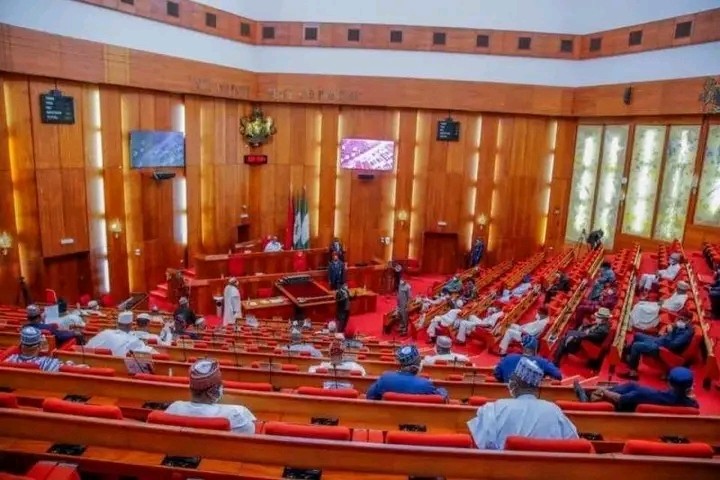
The decisive legislative development occurred during a heated plenary session following a formal point of order raised by the Senator representing Kano South, Kawu Sumaila.
The lawmaker vigorously urged his colleagues to aggressively investigate how a phantom organization, which the presidency has openly disowned as completely non-existent, managed to successfully navigate through strict legislative committee defenses to secure a massive financial line item within the 2026 Appropriation Act.
While presenting his structural arguments under the Senate’s official rules of order, Senator Sumaila declared that the shocking discovery of the PFIPC allocation has inflicted a severe blow to the overall credibility and transparency of the federation’s national budget management process.
He revealed that despite clear executive confirmations that the body has zero statutory backing, the sum of exactly N1,302,978,000 was fully encoded under budget code 0111062001 in the active legal budget document.
Providing a detailed breakdown of the questionable funds, the Kano South representative revealed that the fraudulent line item suspiciously set aside over N800 million for supposed staff personnel costs, more than N200 million for administrative overhead operational expenses, and upwards of N300 million earmarked for capital projects.
Sumaila argued passionately that allowing a completely fictitious body to slide effortlessly into the national budget indicates deep systemic flaws in legislative scrutiny, calling on the Senate Committees on Appropriations, and Ethics and Public Petitions to thoroughly trace if any liquid cash had already been unconstitutionally drawn from the central treasury.
However, the presiding officer of the plenary session, Deputy Senate President Barau Jibrin, quickly stepped in to halt the adoption of the investigative motion.
Jibrin noted that because President Bola Tinubu had already taken definitive executive action by commanding the ICPC to unmask the entire operation, any parallel legislative committee panel would simply cause unnecessary bureaucratic duplication.
The Deputy Senate President ruled that the parliament must exercise strategic patience, allowing the anti-graft commission to finish its assignment before lawmakers evaluate the final findings for subsequent statutory actions.
The wider national scandal broke into the public domain following a comprehensive executive order issued by the presidency, which directed the ICPC to unravel how a private citizen, identified as Adeniyi Adeyemi Mathew, allegedly utilized forged presidential signatures, fake appointment letters, and manipulated ministerial approvals to pose as a legitimate Director-General.
The presidency, through statements released by Special Adviser Bayo Onanuga, revealed that the suspect successfully leveraged the fake identity to secure high-level diplomatic support, request official visa processing, and open multiple institutional bank accounts under the guise of an active federal agency, prompting a full 30-day investigative deadline.