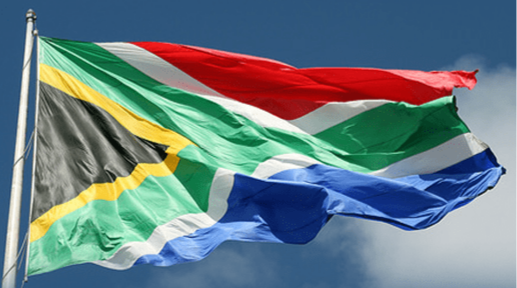
“We don’t want Africans here [in South Africa] anymore. We’re tired of seeing African migrants moving all over the world, refusing to fix their own countries. We’re making it clear: we don’t want you here,” a South African woman says to a Ghanaian man in a video that went viral on X on Tuesday, April 21, 2026.
“We don’t want Africans here anymore. We’re tired of seeing African migrants moving all over the world, refusing to fix their own countries. We’re making it clear: we don’t want you here. You know you’re visitors, yet you’ve decided to integrate into our communities. Can we come… pic.twitter.com/qy36kkVrIt
— EDHUB🌍ℹ (@eddie_wrt) April 21, 2026
The result of that xenophobic confrontation? The Nigerian Consulate in Johannesburg disclosed on Monday that two Nigerians had been killed in South Africa as the attack on foreigners of African origin intensified. The Consul-General, Ninikanwa Okey-Uche identified the victims as Amaramiro Emmanuel and Ekpenyong Andrew.
EDITOR’S PICKS
The disclosure came a few days after the Nigerians in Diaspora Commission (NiDCOM) asked Nigerians in South Africa to shut their businesses in that country. The advisory, which was issued on Friday, April 24, came just a day after Ghana’s Foreign Affairs ministry summoned South Africa’s High Commissioner in the West African country.
GOVERNMENT OF GHANA SUMMONS SOUTH AFRICAN ENVOY OVER XENOPHOBIC INCIDENTS pic.twitter.com/vpPWkujuOj
— Ghana MFA (@GhanaMFA) April 23, 2026
In KwaZulu-Natal, Durban’s central business district has been forced to shut down entirely. For decades, Africans of various nationalities have been attacked by locals. These are the actions of a country that has never fully reckoned with what it owes the continent and its own moral authority on racial issues.
South Africa’s Debt
The cruelest part of this is not the violence itself. It is who the victims are. The Nigerians being driven from their shops, the Ghanaians being harassed on the streets, the Zimbabweans being attacked. These are not strangers to South Africa’s story. They are the children and grandchildren of nations that bled for South Africa’s freedom, often at enormous cost to themselves.
For example, besides sympathising with Black South Africans during apartheid, Nigeria organised and sacrificed for its liberation cause. It set up the National Committee Against Apartheid as far back as 1960. It issued passports to South Africans whose own government had stripped them of travel documents. It refused to sell oil to the apartheid regime for decades, absorbing an estimated $41 billion in lost revenue. It led the 32-nation boycott of the 1986 Commonwealth Games to pressure Margaret Thatcher into isolating the apartheid government. It chaired the UN Anti-Apartheid Committee for 30 unbroken years. Nigerian civil servants even paid a so-called “Mandela tax” to support Nelson Mandela’s African National Congress (ANC) in fighting the system.
Ghana’s Kwame Nkrumah pointed Radio Ghana’s transmitters at the continent’s South as early as 1958, broadcasting liberation into the ears of people the apartheid state wanted kept in silence. Zambia sheltered ANC fighters, absorbed South African military raids on its own soil, and hosted ANC Radio Freedom while Kenneth Kaunda refused to flinch even as the apartheid regime trained dissidents to destabilise his government. Tanzania gave Oliver Tambo and the Pan Africanist Congress (PAC) headquarters a home for decades. These countries did not do this cheaply. They paid in money, in blood, and in economic underdevelopment.
Within months of walking out of prison, Nelson Mandela embarked on a six-week tour to personally thank these nations. He understood the debt. Thirty-six years later, the country he liberated is hunting the grandchildren of its benefactors.
The Contradiction in South Africa’s Behaviour
It gets worse when you zoom out. South Africa has spent the last two years positioning itself as the moral conscience of the world. It dragged Israel before the International Court of Justice on charges of genocide. Its expelled United States (US) ambassador, Ebrahim Rasool, himself a victim of forced removal under apartheid, accused the US government of racism and “mobilising a supremacist instinct.” President Cyril Ramaphosa called the US refugee offer to white Afrikaners “racist” just last month.
These are not unreasonable positions in isolation. But they collapse under the weight of what is happening at home. You cannot credibly accuse another country of racism while you have vigilante groups — like Operation Dudula, whose name literally means “removing by force” — blocking Malawian toddlers from accessing government clinics.
South African xenophobic attackers harassing a Nigerian man who possessed a valid passport.
Good that the man stood up to them. However, I thought the fight was against illegal migrants?✍️ pic.twitter.com/bbR5yJtUVQ
— Obiasogu David (@afrisagacity) April 26, 2026
What South Africa is doing to its African neighbours is not merely hypocritical. It is arguably worse than the racism it condemns elsewhere, because it is Black people brutalising Black people, using economic anxiety as cover for what is, at its core, ethnic hatred.
The Continent Pays the Price
South Africa’s hypocrisy does not stay within its borders. The rest of Africa absorbs the damage.
The African Union (AU) was built on a simple idea: that African nations which trade together, move freely together, and build together will grow together. Europe tried this after two world wars and it worked. Africa declared the same ambition and stalled. The reason is not resources or geography. It is trust. And you cannot build trust between nations whose citizens are being chased through each other’s streets.
South Africa is not just any member of that project. It is the continent’s most industrialised economy, its most symbolically significant democracy, the country whose freedom the rest of Africa bled for. If any country was positioned to anchor African integration — to make the AU’s free movement aspirations real, to model what post-colonial solidarity looks like in practice — it was South Africa. Instead it has become the biggest obstacle to progress. It is also the country that drags Israel to the ICJ for genocide and lectures the world about dignity and discrimination. That moral authority, however legitimate, means nothing when its own people are attacking African migrants.
FURTHER READING
You cannot speak for the oppressed abroad while oppressing innocent people at home. South Africa has not yet learned that. And until it does, every speech it gives at the UN, every case it files at the ICJ, every accusation it levels at the US government will carry an asterisk placed there by its own hands.
Philip Ibitoye is a Special Correspondent with EKO HOT BLOG. Click here to find daily analysis and critical insight on trending issues in Lagos and other parts of Nigeria.
Click to watch the video of the week below: