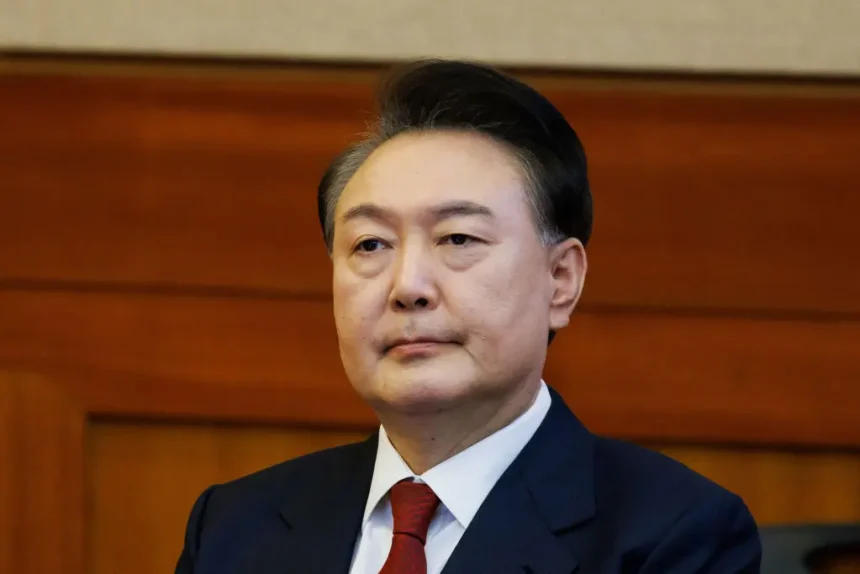
- The court concluded that Yoon deployed the military to the National Assembly to obstruct its operations
- Yoon is the first sitting South Korean president to be arrested, the second to be successfully impeached
- Although the martial law lasted only around six hours before parliament rejected it
South Korea’s ex-president, Yoon Suk-yeol, has been sentenced to life imprisonment after being found guilty of leading an insurrection linked to his brief declaration of martial law in 2024.
Eko Hot Blog gathered that the Presiding Judge Ji Gwi-yeon told the Seoul Central District Court on Thursday, “The declaration of martial law caused massive social disruption, and there is no clear evidence that the defendant has shown remorse.”
EDITOR’S PICK
- Grand Wedding Reception: Halimot, Saheed Mark Their Union
- Ikosi-Ejinrin LCDA Celebrates Former Chairman, Hon. Segun Adetola, on Birthday
- Sanwo-Olu Flags Off Free Eye Screening for 1,000 Lagos Police Officers
“The charge of leading an insurrection against the state is established. We therefore sentence Yoon to life imprisonment,” the judge added.
Prosecutors had sought the death penalty for Yoon, who was impeached and removed from office over his decision to impose martial law in December 2024.
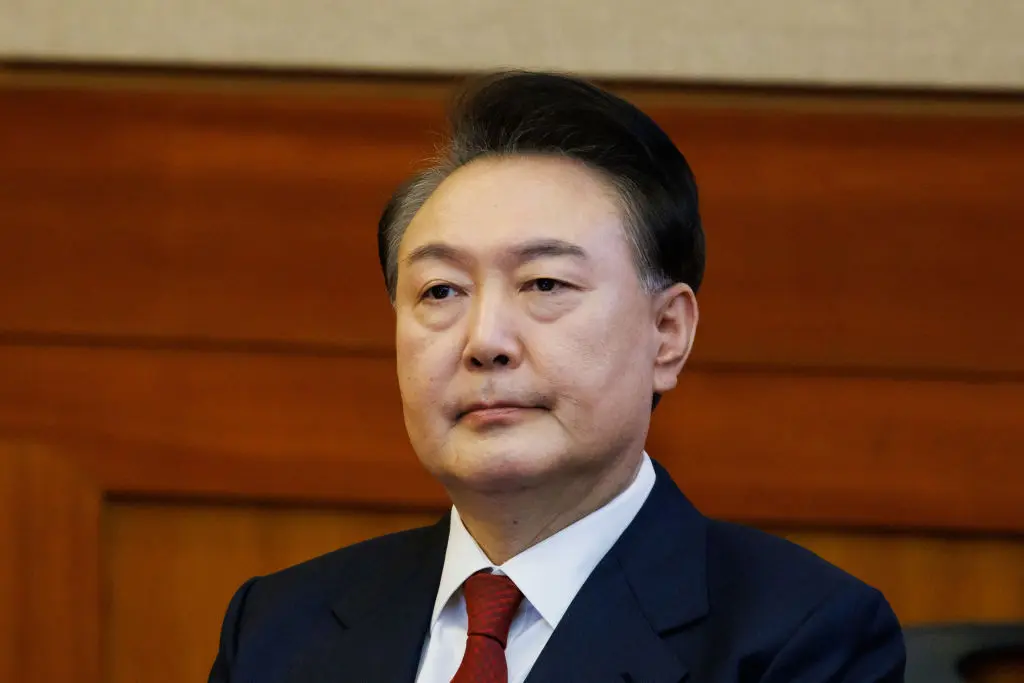
The court concluded that Yoon deployed the military to the National Assembly to obstruct its operations, though it did not accept claims that he sought a long-term dictatorship.
Yoon, 65, has consistently maintained his innocence, asserting that he acted within his presidential authority and that the martial law was intended to prevent obstruction by opposition parties.
A heavy police presence surrounded the court during the ruling, with streets blocked off to prevent unrest. Yoon remains in custody at the Seoul Detention Centre and is expected to stay detained pending any appeal.
Following the verdict, Yoon’s legal team criticized the ruling as a “pre-written script” unsupported by evidence, and said they would discuss with Yoon whether to appeal.
Al Jazeera correspondent Jack Barton in Seoul noted that this verdict marks the closure, at least temporarily, of a politically turbulent chapter that began with months of public protests and Yoon’s impeachment.
Yoon is the first sitting South Korean president to be arrested, the second to be successfully impeached, and the third to face trial for insurrection.
The judicial system in South Korea typically aims to conclude first-instance trials within six months and appeals within two years, but politically sensitive cases often exceed these timelines.
Yoon faces additional legal challenges. In January, he was sentenced to five years in prison for obstructing authorities trying to arrest him following his martial law order; he has appealed that ruling.
Although the martial law lasted only around six hours before parliament rejected it amid nationwide protests, it shook South Korea, a key U.S. ally and one of Asia’s largest economies. The episode has sparked debates about the resilience of the country’s democratic institutions.
President Lee Jae-myung, who assumed office after a snap election following Yoon’s removal, praised the citizens’ response. He wrote on X, “It was possible because it is the Republic of Korea,” highlighting the peaceful public resistance.
Some academics have even suggested nominating the South Korean public for a Nobel Peace Prize for their nonviolent opposition to martial law.
FURTHER READING