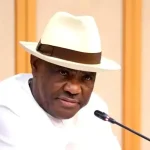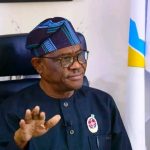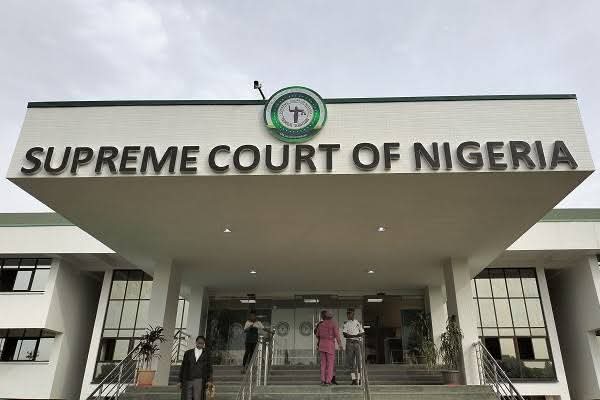
After months of anticipation, the Supreme Court on Tuesday finally heard arguments in the suit filed by 11 governors elected on the platform of the Peoples Democratic Party (PDP), challenging President Bola Tinubu’s suspension of Rivers State Governor Siminalayi Fubara, his deputy, and members of the state House of Assembly.
The apex court has now reserved judgment. But beyond the immediate politics of Rivers, this case presents a constitutional test that Nigeria’s democracy cannot afford to ignore — whether a president has the power to suspend elected officials under the guise of emergency rule.
EDITOR’S PICKS
The case, marked SC/CV/329/2025, was filed in April by the governors of Adamawa, Enugu, Osun, Oyo, Bauchi, Akwa Ibom, Plateau, Taraba, Zamfara, and Bayelsa, challenging Tinubu’s March 18 proclamation of a state of emergency in Rivers State. The president had suspended Governor Fubara, Deputy Governor Ngozi Odu, and all members of the state assembly for six months, citing deep political crisis and vandalisation of oil installations. He subsequently appointed a retired vice-admiral, Ibok-Ete Ibas, as the state’s sole administrator — a move swiftly approved by both chambers of the National Assembly.
At Tuesday’s hearing, the PDP governors, through their counsel, Eyitayo Jegede (SAN), argued that while the president may declare a state of emergency under Section 305 of the 1999 Constitution (as amended), nothing in that provision or elsewhere empowers him to suspend, remove, or replace democratically elected state officials. Their case is not about whether a state of emergency can be declared, Jegede clarified, but whether such a declaration can lawfully override the tenure of elected officials guaranteed by the same constitution.
What the Constitution Actually Says
Section 305 empowers the president to declare a state of emergency under specific conditions — including natural disasters, imminent danger, or breakdown of public order — but nowhere does it authorise the suspension of governors, deputies, or lawmakers. Legal experts have long argued that such powers belong exclusively to the state House of Assembly and the courts.
Principal Partner of Iris Attorneys LP, Ridwan Oke, told Punch earlier in March that the 1999 Constitution makes no room for presidential suspension of elected officials. “The 1963 Constitution provided for the suspension of a sitting governor, not the 1999 Constitution,” he said. “The president cannot suspend the governor, deputy governor, or lawmakers. Such action is unconstitutional.”
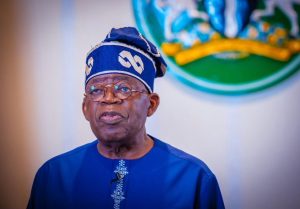
Even Attorney-General of the Federation Lateef Fagbemi (SAN), while defending the president’s decision, admitted during a March 19 press briefing that the action was an “extraordinary measure” — not that it was expressly backed by law. He told the court on Tuesday that the officials were “merely suspended, not removed,” arguing that extraordinary situations sometimes require extraordinary responses.
A Constitutional Gap the Supreme Court Must Fill
The question now before the court is not new. In 2004, former President Olusegun Obasanjo declared a state of emergency in Plateau State, suspended Governor Joshua Dariye and the state assembly, and appointed former Chief of Army Staff Chris Alli as sole administrator. The suspended officials challenged the action at the Supreme Court.
However, the apex court’s 2006 judgment avoided addressing the substantive constitutional issue. Instead, it dismissed the case on technical grounds, ruling that the plaintiffs lacked standing to sue because the sole administrator did not consent to the action on behalf of the state government. The constitutional question — whether a president can suspend elected officials — was left unresolved.
That missed opportunity has now come full circle. For the sake of constitutional clarity and institutional balance, the Supreme Court must not repeat its 2006 reticence. The court’s ruling in this case will have implications far beyond Rivers State. It will define the limits of presidential authority during emergencies, clarify the sanctity of elected mandates, and either reinforce or weaken Nigeria’s fragile constitutional democracy.
If the court again sidesteps the issue, future presidents may interpret emergency powers as a licence to dissolve state governments and install administrators at will. But if it affirms that no constitutional provision allows for the suspension of elected officials, it will close one of the most dangerous loopholes in Nigeria’s democratic practice.
FURTHER READING
For two decades, the judiciary has left this question unanswered. Now, the time has come for the Supreme Court to settle it once and for all, not just for the sake of Governor Fubara or the PDP governors who brought the case, but for the integrity of the Nigerian Constitution itself.
Philip Ibitoye is a Special Correspondent with EKO HOT BLOG. Click here to find daily analysis and critical insight on trending issues in Lagos and other parts of Nigeria.
Click here to watch the video of the week below: