Defections makes us think of familiar words like consultations, realignments, national interest, etcetera. But the outcome is unmistakable, a steady stream of defections reshaping the balance of power between parties.
EDITOR’S PICK
- Ogun Begins Crackdown on Illegal Parks at Sango Border Over Rising Accidents
- Police Nab 30-Year-Old ‘Super M’ During Stop-and-Search in Lagos
- LASG Launches Investigation Into Cosmetic Surgery Death
In Nigeria’s Fourth Republic, defections have always been part of political survival. Yet the scale and speed of movements since the 2023 general elections have sparked renewed debate about the strength of the country’s multi-party democracy.
From governors abandoning opposition strongholds to senators crossing party lines in Abuja, Nigeria’s political map is slowly being redrawn.
A Political Tradition Older Than the Crisis
Party defections are hardly new in Nigeria.
Since the return to democratic rule in 1999, politicians have frequently moved between parties, sometimes within months of elections.
Often, the reasons cited are internal party disputes or ideological disagreements. In practice, however, defections tend to reflect deeper calculations about power, access, and political survival.
The pattern intensified after President Bola Tinubu assumed office in 2023. By mid-2025, the ruling All Progressives Congress (APC) had formally endorsed him as its candidate for the 2027 presidential election, signaling early consolidation within the party.
That consolidation has coincided with visible instability inside opposition parties such as the Peoples Democratic Party (PDP) and the Labour Party (LP).
The result is a political migration that has touched nearly every layer of Nigeria’s political structure.
Perhaps the most consequential defections have come from sitting governors, whose movements often drag entire political structures with them.
One of the earliest shocks came in April 2025, when Sheriff Oborevwori defected from the PDP to the APC.
The move carried symbolic weight because Delta had long been considered a PDP stronghold. Even more striking was the presence of Ifeanyi Okowa, who moved with him.
Soon after, other governors followed.
Among them were:
- Umo Eno, who defected to the APC in June 2025 after consultations with political stakeholders.
- Peter Mbah, who later announced his own defection.
- Douye Diri, whose switch further weakened the PDP’s southern base.
In Rivers State, political tensions eventually produced another dramatic move when Siminalayi Fubara left the PDP and joined the APC in December 2025.
The shift was followed by the defection of 17 members of the Rivers State House of Assembly, signaling a broader political realignment within the state.
In February 2026, Ahmadu Fintiri also dumped the PDP for the ruling party, another move that chipped away at the opposition’s remaining strongholds.
By that point, analysts began to speak openly about the shrinking map of opposition-controlled states.

The National Assembly Is Not Immune
If the governors set the tone, lawmakers have followed closely behind.
Inside the National Assembly, defections have become almost routine.
Between late 2024 and 2025, at least 14 members of the House of Representatives from the PDP and Labour Party crossed over to the APC, strengthening the ruling party’s majority in parliament.
In March, three PDP senators, Amos Yohanna, Aminu Iya Abbas, and Ikra Bilbis, formally announced their defection to the APC.
In letters read during plenary, they cited internal divisions and leadership disputes within the PDP as the reason for leaving.
But defections have not flowed in only one direction.
In a notable counter-movement, nine senators from different parties recently adopted the platform of the African Democratic Congress (ADC).
The list included prominent figures such as Aminu Waziri Tambuwal and Binos Dauda Yaroe, signaling attempts by opposition figures to regroup ahead of the next election cycle.
A New Opposition Coalition Emerges
As defections weakened some parties, others began to reorganize.
In December 2025, former presidential candidate Peter Obi defected from the Labour Party to the African Democratic Congress (ADC), saying the decision was motivated by “patriotism and national interest.”
His move was interpreted by many observers as an attempt to build a broader opposition coalition capable of challenging the APC in 2027.
Around the same period, former Kaduna State governor Nasir El‑Rufai also left the APC for the Social Democratic Party (SDP), citing disagreements with the direction of the ruling party.
These movements suggest that while some politicians are gravitating toward the ruling party, others are attempting to build alternative political platforms.
Why Nigerian Politicians Keep Defecting
Several factors explain why defections occur so frequently in Nigeria.
Access to federal power is perhaps the most significant. States governed by the same party as the federal government often enjoy smoother political relations and easier access to federal resources.
There are also internal party crises. Leadership struggles within the PDP and Labour Party have been cited repeatedly by defectors as justification for leaving.
Another factor is electoral strategy.
Politicians often believe that belonging to a stronger party improves their chances of winning future elections.
Finally, Nigeria’s political parties have historically been less ideological than pragmatic, meaning party affiliation can sometimes be more about political convenience than policy alignment.
The One-Party State Debate
The growing dominance of the APC has triggered concerns among analysts and opposition figures.
Some critics argue that the wave of defections could gradually weaken Nigeria’s multi-party system and tilt the country toward a de facto one-party state.
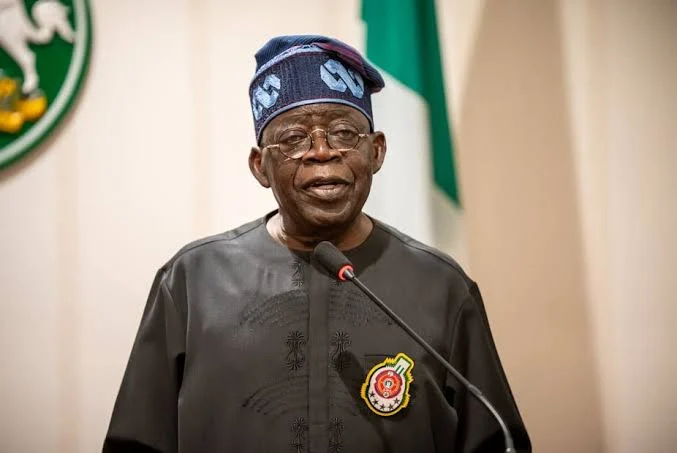
President Bola Tinubu has rejected those claims, insisting that Nigeria’s democracy remains firmly multi-party and that politicians are free to choose their affiliations.
Still, the debate continues.
For many observers, the real question is whether opposition parties can rebuild their structures in time for the 2027 election.
The Road to 2027
With nearly two years left before the next general elections, Nigeria’s political realignments are far from over.
More defections are expected as parties begin internal primaries and coalition talks.
What remains uncertain is whether the current wave of defections will strengthen Nigeria’s democracy, or hollow out the competition that keeps it alive.
For now, it is clear that in Nigerian politics, loyalty rarely lasts longer than the next election cycle.