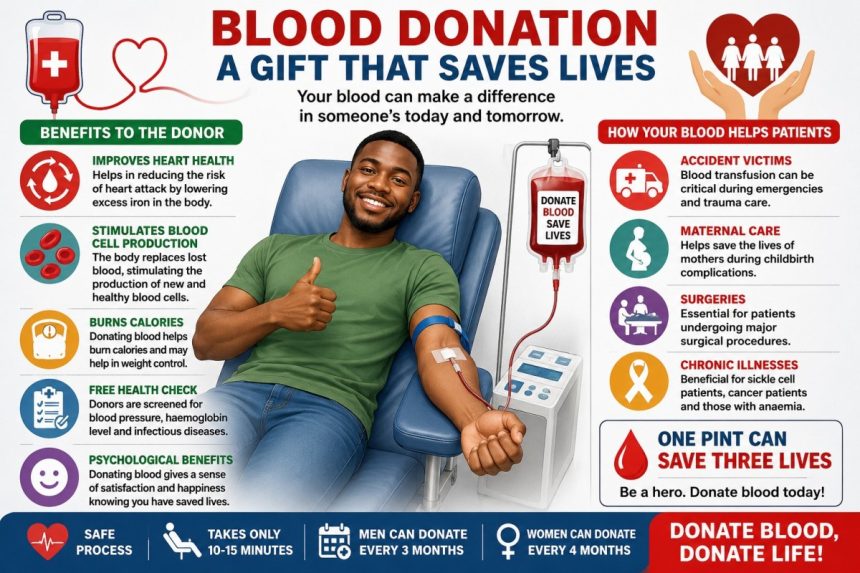
Medical experts have consistently emphasized that blood donation is not only beneficial to patients in need but also offers several health benefits to the donor. A single unit of donated blood has the potential to save up to three lives after it is separated into red blood cells, plasma and platelets for different medical purposes.
One of the most important effects of blood donation is its ability to save lives. Every donation strengthens hospital blood banks and ensures that healthcare professionals have adequate supplies to respond quickly during emergencies. In many situations, the availability of compatible blood determines whether a patient survives or not.
Beyond helping others, voluntary blood donation also contributes to the donor’s overall health. According to health professionals, donating blood stimulates the body to produce fresh blood cells, replacing the blood that has been donated. This natural process helps maintain healthy blood circulation and promotes the regeneration of new blood components.
Regular blood donation also helps regulate iron levels in the body. Excess iron can accumulate in some individuals, increasing the risk of certain heart and liver conditions. By donating blood periodically, healthy adults may help reduce excessive iron stores and support better cardiovascular health.
Medical practitioners also note that blood donation provides an opportunity for routine health screening. Before every donation, potential donors undergo basic health assessments, including checks for blood pressure, body weight, haemoglobin level and screening for infectious diseases. These evaluations can help detect certain health concerns early, allowing donors to seek timely medical attention when necessary.
Psychologically, blood donation provides an immense sense of fulfilment. Many donors describe the experience as emotionally rewarding because they know their simple act of kindness could give another person a second chance at life. This feeling of contributing to humanity often encourages repeat donations and strengthens community spirit.
Blood donation also plays a critical role in strengthening national healthcare systems. A reliable blood supply enables hospitals to perform emergency surgeries, organ transplants, cancer treatments and maternal healthcare services without unnecessary delays. Communities with a strong culture of voluntary blood donation are generally better equipped to respond to public health emergencies and disasters.
Despite these benefits, health experts advise that only healthy individuals who meet the required eligibility criteria should donate blood. Donors are carefully screened to ensure that the process is safe for both the donor and the recipient. After donating, individuals are encouraged to rest briefly, drink plenty of fluids and eat nutritious meals to aid recovery.
Experts further recommend that healthy men may donate blood approximately every three months, while healthy women may donate at appropriate intervals as advised by healthcare professionals, depending on their overall health and haemoglobin levels.
As Nigeria continues to experience increasing demand for safe blood, healthcare professionals are appealing to citizens, religious organisations, educational institutions, corporate organisations and community groups to embrace voluntary blood donation as a regular civic responsibility rather than waiting until family members require blood.
Blood remains a priceless gift that no laboratory can produce and no factory can manufacture. It can only come from generous individuals willing to give a small part of themselves so that others may continue to live.
Ultimately, every blood donor becomes an unseen hero. While they may never meet the people whose lives they save, their compassion leaves a lasting impact on families, communities and the healthcare system. One donation can restore hope, preserve families and offer someone another opportunity to live, making voluntary blood donation one of the greatest acts of humanity.