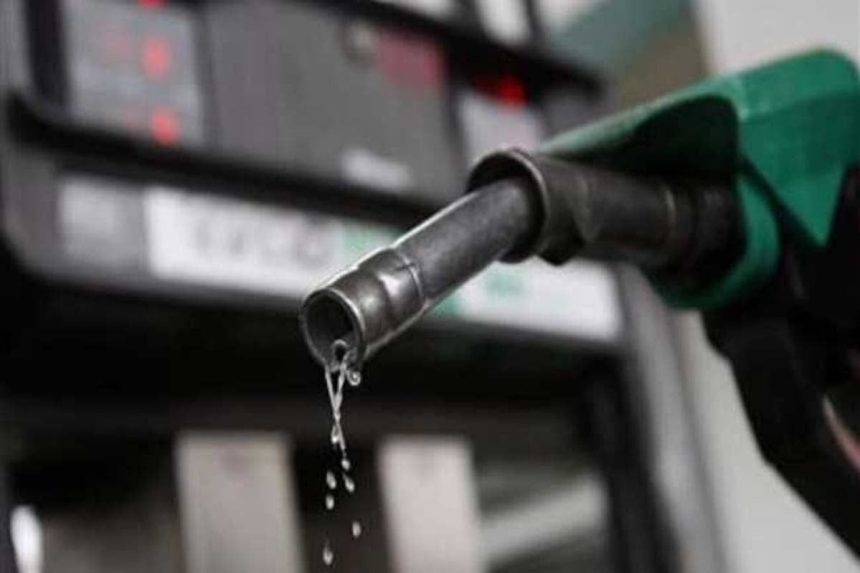
Global crude oil prices have crashed. However, petrol prices in Nigeria have not. Now, the Federal Competition and Consumer Protection Commission (FCCPC) is asking questions and threatening consequences.
The FCCPC on Sunday raised the alarm over what it described as possible consumer exploitation in Nigeria’s downstream petroleum sector, saying fuel prices have remained stubbornly high despite a sharp drop in international crude oil prices. It warned that it could investigate and take enforcement action against operators found to be manipulating prices.
EDITOR’S PICKS
- Can “Waste Police” Fix Lagos’s Trash Epidemic?
- LAWMA Is Clearing Lagos’s Trash. But Who Stops the Next Pile?
But can it actually deliver? EKO HOT BLOG explores the dynamics at play.
What Triggered the Warning?
The timeline matters. In February, petrol sold for between ₦800 and ₦900 per litre. When US-Iran hostilities broke out and crude oil climbed to around $120 per barrel in April, fuel prices followed almost immediately, rising to between ₦1,350 and ₦1,500 per litre in many parts of the country.
A ceasefire deal and the reopening of the Strait of Hormuz — the critical global shipping route — have since pulled crude prices back down to around $73 per barrel, near where they were in February. Yet petrol is still averaging ₦1,200 per litre nationwide. Some local refiners still have gantry prices between ₦1,025 and ₦1,075 per litre.
The FCCPC’s own market surveillance captured the problem precisely: price increases went up like a rocket, but reductions are coming down like a feather, if at all.
What the FCCPC Is Actually Saying
The commission’s Executive Vice Chairman, Tunji Bello, gave a frank assessment. Operators in the downstream sector, he said, respond swiftly whenever crude prices rise but become mysteriously slow when crude prices fall. He called it a one-sided market.
“Competitive markets must work fairly in both directions,” Bello said.
Critically, the FCCPC was careful to draw its own boundary. It is not a price regulator; it cannot order filling stations to sell at a specific amount per litre. What it can do, under the Federal Competition and Consumer Protection Act 2018, is investigate anti-competitive conduct, expose exploitative practices, and pursue enforcement action where it finds violations.
In plain terms: it can investigate and prosecute, but it cannot set prices.
The Structural Problem FCCPC Cannot Fix
Here is where the rescue narrative gets complicated. The reasons fuel prices have not fallen in step with crude are largely structural and mostly outside the FCCPC’s reach.
Nigeria’s fuel is priced in naira but the inputs are bought in dollars. Even with cheaper crude, a weakened naira erodes much of the gain before it reaches the consumer. The Dangote Refinery, which now supplies roughly 80 percent of domestic fuel, also prices its products based on what it would cost to import, a method that keeps local prices high even when there is no import happening.
More fundamentally, the refinery is receiving far less crude from NNPC than its contract requires, forcing it to buy the shortfall from international traders at premium prices. Those premium costs flow directly to the pump. None of that is something the FCCPC can regulate away.
So, Can FCCPC Help?
Partially. The FCCPC’s intervention does something important even before a single investigation is opened: it applies public pressure from a government agency.
But a rescue? That would require the naira to stabilise, NNPC to honour its crude supply obligations, and the pricing model in the downstream sector to genuinely reflect competition rather than a near-monopoly.
FURTHER READING
- Men’s Health Week: What Nigerian Fathers Must Do To Stay Alive
- Inside the 37 Bills That Could Rewrite How Nigeria Is Governed
Until those structural issues are addressed, the FCCPC’s loudest weapon remains its voice and that alone may not bring petrol back to ₦800.
Philip Ibitoye is a Special Correspondent with EKO HOT BLOG. Click here to find daily analysis and critical insight on trending issues in Lagos and other parts of Nigeria.
Click to watch the video of the week below: