- Atiku accused the Tinubu administration of failing Nigeria’s fiscal transparency test
- He criticised the government’s tax policies and handling of subsidy savings
- The ADC candidate urged Tinubu to publish detailed records of government spending
Former Vice President and African Democratic Congress presidential candidate, Atiku Abubakar, has criticised the administration of President Bola Tinubu over Nigeria’s fiscal transparency record and the country’s tax environment.
Eko Hot Blog gathered that Atiku’s position was contained in a statement issued by his Senior Special Assistant on Public Communication, Phrank Shaibu, following the United States government’s assessment of Nigeria’s fiscal transparency.
EDITOR’S PICK
- How Lagos Achieved 57.4% Exclusive Breastfeeding Rate
- Shaibu Lists Nigeria’s Biggest Security Challenges
- Vote, Protect Your Mandate, Governor Adeleke Urges Residents Ahead of August 15 Polls.
The former vice president accused the Federal Government of failing to adequately respond to concerns raised in the assessment, arguing that the administration had instead focused on questioning the benchmark used to evaluate its performance.
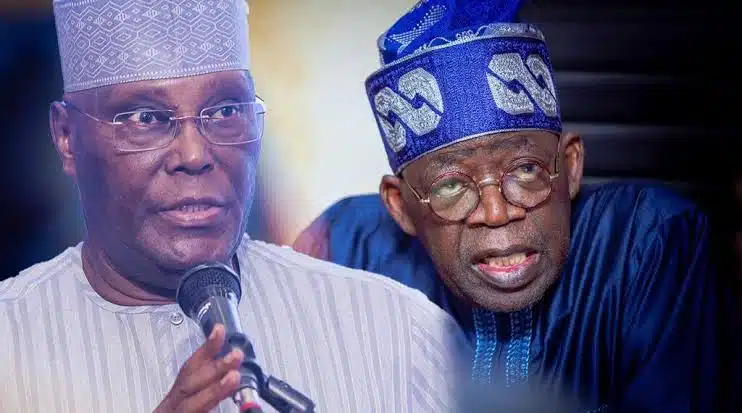
According to Atiku, the US assessment indicated that Nigeria did not meet the minimum standards for fiscal transparency and had made limited progress in areas such as budget disclosure, revenue and expenditure reporting, audit independence and access to procurement information.
He described the government’s response as an attempt to shift attention away from the substance of the findings rather than provide detailed evidence to counter them.
Atiku also linked the issue of fiscal transparency to the government’s tax policies, arguing that Nigerians and businesses were facing an increasingly heavy tax burden.
He cited the Central Bank of Nigeria’s July 2026 Business Expectations Survey, which showed that 70.8 per cent of respondents identified high and multiple taxation as their biggest business constraint.
The ADC candidate questioned what he described as a contrast between the tax burden faced by local businesses and incentives being offered to major oil companies to encourage investment.
He argued that manufacturers, small businesses, traders and other entrepreneurs should also benefit from policies designed to reduce excessive taxation and encourage economic activity.
Atiku further challenged the Federal Government to provide a detailed account of the revenue generated from the removal of fuel subsidies and explain how the funds had been spent.
He called for the publication of comprehensive financial records covering projects funded with subsidy savings, including the rehabilitation of government-owned refineries.
According to him, the government should disclose the amounts spent, contractors involved, work completed and the reasons for continued promises concerning the return of the refineries.
Atiku said the appropriate response to concerns about a lack of transparency was to release verifiable records rather than issue further explanations.
He maintained that Nigerians had endured significant economic hardship since the removal of fuel subsidies and deserved to know how the resulting savings had been utilised.
The former vice president also argued that accountability should accompany the government’s demand for tax compliance from citizens and businesses.
He said the country’s economic difficulties were being reflected in the struggles of households and businesses, as well as in domestic and international assessments of Nigeria’s economic management.
Atiku urged the Tinubu administration to make its financial records available to the public and demonstrate how public resources had been managed.
He warned that Nigeria could not afford to continue with what he described as reforms without sufficient transparency, accountability and measurable improvements in citizens’ living conditions.
FURTHER READING