There are phrases that feel impossible until they appear in your timeline. On Friday, March 20, Nigerians woke up to two words placed side by side in a way that stopped the scroll cold: “Raping Festival.”
Across X, people noted with a mix of horror and dark disbelief that they were the first in their generation — perhaps in the history of language — to see those words used together. And yet, there it was. Not a dystopian fiction. Not a headline from another planet. A trending topic in Nigeria, in 2026, less than two weeks after the country joined the world to mark International Women’s Day under the theme of justice for women.
EDITOR’S PICKS
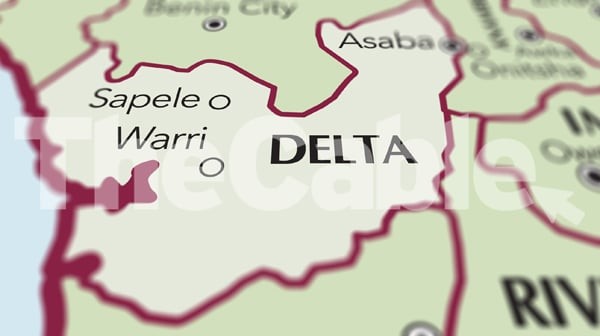
The disgraceful spectacle in Ozoro, Isoko North Local Government Area of Delta State, is not what justice looks like.
Videos that circulated online showed several men chasing women through the streets, dragging them to the ground, tearing at their clothes. A male voice in one clip was heard stating plainly that any woman outside during the period risked being raped. Not a threat delivered in ambiguity. A declaration. The scene was less a cultural festival than a pogrom with a gender target.
Many girls have reportedly been r@p£d and m0l£sted by men in Ozoro during what is being described as a “r@p!ng festival” in the area.
According to multiple reports and videos circulating online, today is said to be the day of this festival in the Ozoro community, and girls are… pic.twitter.com/h1CjvFQg74
— TENIOLA (@Teeniiola) March 20, 2026
To be precise: there is no officially recognised festival in Ozoro that sanctions sexual violence. What apparently exists is a traditional community celebration during which women are expected, by custom, to remain indoors at certain hours. In previous years, community leaders would issue advance notifications and sensitisation to ensure this norm was observed without incident. This year, no such guidance came. What filled that vacuum was mob criminality dressed in the language of culture.
That distinction matters, and it must be made carefully. Culture is not the villain here in the way the phrase “raping festival” suggests, but culture is certainly being used as a shield for the villain. When a community’s tradition creates conditions in which women must hide from men in their own town or face assault, the tradition has become a problem that deserves interrogation regardless of its origins. There are customs across Nigeria that restrict women’s movement, visibility, or autonomy under the guise of reverence or protection. Ozoro has shown, in the most violent possible terms, where that logic eventually leads.
The community chief, identified as Omorede Sunday, head of Oramudu quarters, has been arrested alongside four others.
20th March, 2026
PRESS RELEASE
OZORO INCIDENT: CP AINA ADESOLA CONDEMN ALLEGED SEXUAL ASSAULTS, ORDER FULL-SCALE INVESTIGATION, POLICE ARREST MORE ORAMUDU COMMUNITY HEAD AND FIVE OTHERS pic.twitter.com/dwjzwwzrYs
— Delta State Police Command (@DeltaPoliceNG) March 20, 2026
The Delta State Commissioner of Police has ordered a State CID transfer and investigation. The state government has condemned the incident. These are the right initial steps. But Nigerians have grown fluent in the grammar of official condemnation; they know the difference between statements issued under pressure and accountability actually dispensed. The test will come when the courts sit.
And yet, even as the state promises justice, the Delta Police Command managed to embarrass itself spectacularly on the very same day. When activist Rinu Oduala criticised police spokesperson Superintendent Bright Edafe for being slow to act — pointedly noting that officers are “fast” when it comes to suppressing protests — Edafe’s response was not a defence of police action. It was a jibe: “Whenever I issue a statement, it turns you on. Why if I may ask?”
Whenever I issue a statement, it turns you on. Why if I may ask?
— SP Bright Edafe (@Brightgoldenboy) March 20, 2026
Let that land. A police spokesperson, responding to a woman criticising his command’s handling of mass sexual assault allegations, chose to make a sexualised remark at her. This is not a reading between lines. It is what the words say. And it constitutes, without qualification, sexual harassment — the kind the law recognises and the Nigeria Police Code of Conduct explicitly prohibits, requiring officers to be courteous, polite, and respectful to the public.
The question is not merely one of propriety. It is structural: can the institution being asked to prosecute a case of alleged gang rape be trusted when its own image-maker cannot resist sexualising a female critic in the middle of the crisis? Edafe never addressed Oduala’s actual point — that the police have historically moved faster against protesters than against perpetrators of violence. He answered it with the same reflex the Ozoro attackers displayed: a woman speaking becomes an object to be reduced.
FURTHER READING
Ozoro is a tragedy. The footage is evidence of something broken, not just in a Delta community, but in a national culture that dresses violence in tradition and calls it heritage. IWD came and went. The banners are still warm. And somewhere in Delta, women are still counting their bruises from a “festival.”
Philip Ibitoye is a Special Correspondent with EKO HOT BLOG. Click here to find daily analysis and critical insight on trending issues in Lagos and other parts of Nigeria.
Click to watch the video of the week below: