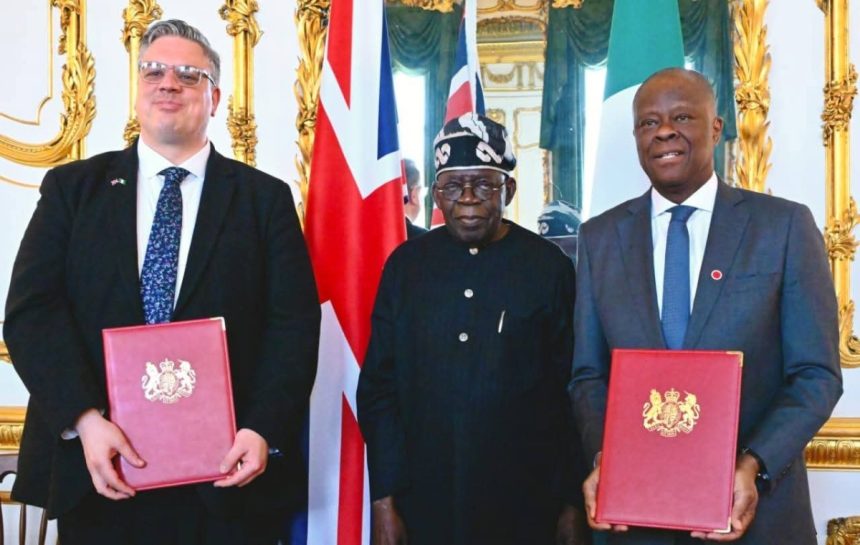
Nigeria and the United Kingdom have sealed a £746 million export finance deal to redevelop two of the country’s busiest seaports, in what both governments have described as a historic step in bilateral relations.
The agreement was announced on Thursday during a state visit by President Bola Tinubu to London — the first by a Nigerian leader in 37 years.
EDITOR’S PICKS
Prime Minister Keir Starmer, who received Tinubu at Downing Street, described the visit as marking a “historic” moment between the two countries. Tinubu called it “very thrilling and significant.”
At the centre of the deal is UK Export Finance (UKEF), the British government’s export credit agency, which will guarantee loans for the refurbishment of the Apapa Port Complex and the Tin Can Island Port Complex, both located in Lagos. The financing arrangement will be coordinated by Citibank.
The two ports together handle more than 70 percent of Nigeria’s import and export traffic, making them the backbone of the country’s maritime trade. Apapa, established in 1913, is the country’s oldest and busiest seaport. Tin Can Island was commissioned in 1977 to support its capacity. Neither facility has undergone a modernisation programme of this scale in nearly five decades.
What the Deal Involves
The agreement was signed on behalf of Nigeria by Finance Minister Wale Edun, and on behalf of the UK by Blair McDougall MP, the parliamentary under-secretary of state for small business and economic transformation.
As part of the financing structure, at least 20 percent of the project components must be sourced from the United Kingdom. This condition is expected to generate a minimum of £236 million in supplier contracts for British companies.
British Steel will supply 120,000 tonnes of steel for the port projects under a separate contract valued at £70 million — described by the UK government as the largest export order backed by UKEF for British Steel. Construction companies Hitech Nigeria and ITB Nigeria will receive the steel for use in the redevelopment work.
Edun said the agreements are consistent with Nigeria’s priorities around infrastructure, energy and industrial development. He added that deepening bilateral partnerships of this kind would help attract the scale of investment needed to boost economic activity, create jobs and reduce poverty, in line with the administration’s Renewed Hope agenda.
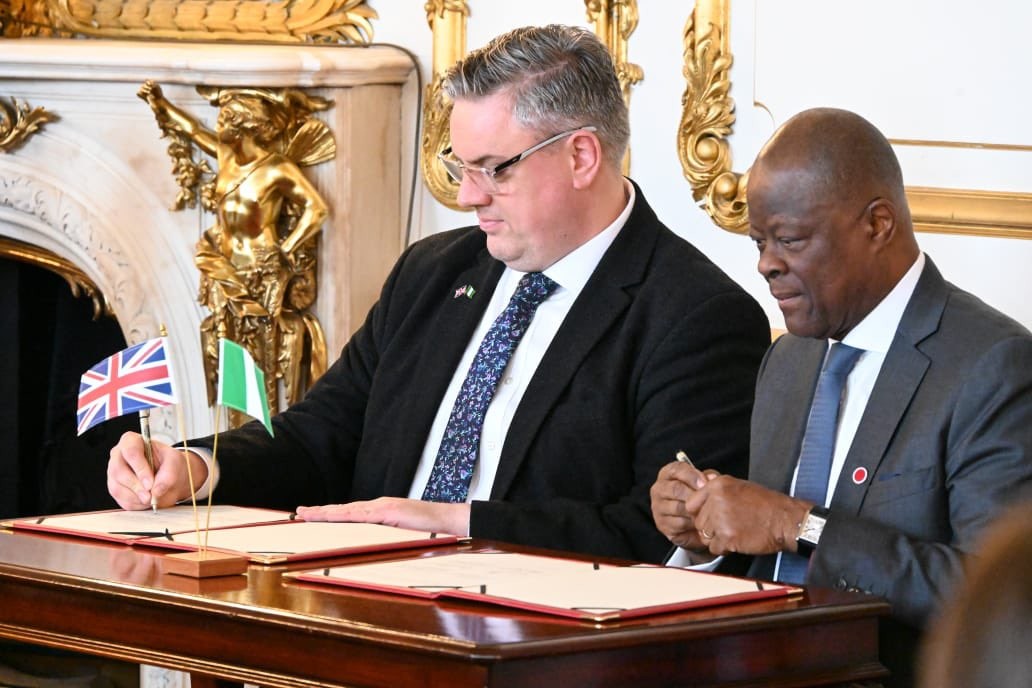
Alongside the ports financing deal, the UK and Nigeria signed a Memorandum of Understanding to establish a framework for future trade and investment collaboration. The MoU sets out a pipeline of priority projects for which Nigeria will seek UKEF support going forward. Separately, the Nigeria Sovereign Investment Authority signed an MoU with the UK’s Asset Green Limited to develop an integrated dairy production platform in Nigeria.
What Changes at the Ports
The Ministry of Marine and Blue Economy said the redevelopment would transform how the ports operate. Minister Adegboyega Oyetola said the upgrade would reduce vessel turnaround times and cut cargo dwell times, as automated processes replace paperwork-heavy procedures and expanded capacity clears longstanding bottlenecks.
The improvements are expected to reduce demurrage and logistics costs for businesses, improve the speed and predictability of cargo clearance, and generate more revenue for national development. Oyetola said the project would ultimately strengthen Nigeria’s position as a leading maritime hub in West and Central Africa.
For Nigerian importers and businesses that depend on the ports, the practical promise is simpler: goods that currently sit for days or weeks at the ports due to congestion and inefficiencies should move faster. That has direct implications for the cost of doing business, and by extension, consumer prices.
Questions Around the Deal
The federal government has not publicly addressed questions about the selection of contractors.
It is also worth noting the distinction between the £746 million financing deal and the MoU, two instruments that have sometimes been conflated in reporting. The £746 million is an active loan guarantee arrangement with defined contractors and supply chains already in place. The MoU is a forward-looking framework — a commitment by both governments to identify and develop additional projects, not a funding commitment in itself.
FURTHER READING
What is clear is that the deal represents a significant shift in how Nigeria is approaching port infrastructure: through sovereign-backed bilateral financing rather than the concessioning model that has dominated its maritime sector in recent decades.
Philip Ibitoye is a Special Correspondent with EKO HOT BLOG. Click here to find daily analysis and critical insight on trending issues in Lagos and other parts of Nigeria.
Click to watch the video of the week below: