- United States President Donald Trump has announced that a historic peace accord to resolve the ongoing Middle East conflict is set to be signed on Sunday, promising the immediate restoration of unhindered international maritime trade through the vital Strait of Hormuz.
- The optimism from Washington has hit an immediate diplomatic wall in Tehran, with the Iranian Foreign Ministry categorically denying that a Memorandum of Understanding will be executed on Sunday, though they admitted a deal remains highly possible in the subsequent days.
- Under the proposed framework, Trump disclosed that Iran’s highly enriched uranium stockpiles, hidden deep within fortified underground mountain facilities, will be thoroughly extracted, downblended, and completely destroyed by joint technical teams, backed by a stern warning of military alternatives if compliance stalls.
The volatile geopolitical landscape of the Middle East hangs in a delicate balance following highly conflicting statements from Washington and Tehran regarding the execution of a definitive peace treaty.
Eko Hot Blog reports that United States President Donald Trump took to his Truth Social platform on Saturday, June 13, 2026, to enthusiastically declare that the highly anticipated peace agreement is scheduled for formal signing on Sunday.
EDITOR’S PICK
- Hamzat Appoints Obanikoro as Campaign DG Ahead of 2027 Lagos Governorship Race
- Tinubu’s State Police Plan Gains Momentum as Amendment Looms
- Residents Raise Alarm After Two Bodies Found in Lagos Waterway
According to the American leader, the immediate economic dividend of the diplomatic breakthrough will be the total reopening of the strategic Strait of Hormuz, a critical maritime chokepoint through which a significant portion of the world’s petroleum supplies pass, which has been severely restricted by ongoing military hostilities.
However, the unilateral timeline presented by the White House was quickly contradicted by official diplomatic channels in Iran.
Speaking to state media on Saturday, Iranian Foreign Ministry spokesperson Esmaeil Baghaei explicitly downplayed the Sunday timeline, clarifying that while an absolute breakthrough is within reach in the coming days, the memorandum of understanding will definitely not be signed tomorrow.
Tehran’s cautious stance highlights lingering friction in the backend negotiations, even as Switzerland stands ready to host the formal international delegation for the signing ceremony.
Diplomatic observers note that this marks the latest in a series of optimistic declarations by the US administration, with global watchdogs tracking multiple instances where a final draft was declared imminent before talks reverted to hostile cross-border rhetoric.
A central pivot of the proposed peace framework involves the absolute neutralization of Iran’s nuclear infrastructure.
President Trump explicitly detailed aggressive logistics plans to secure and destroy the Islamic Republic’s current stockpiles of enriched uranium.
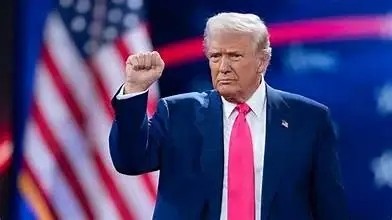
In a characteristic public brief, Trump noted that at the appropriate time when geopolitical stability is fully restored, specialized teams will move in to extract the nuclear material buried deep beneath fortified, sunken granite mountain ranges, safely bypassed due to previous precision operations by B-2 stealth bombers, to ensure it is thoroughly downblended and permanently destroyed, either within Iran or on American soil.
Despite expressing a desire to foster long-term economic and diplomatic partnerships across the broader Middle East, the US President paired his peaceful overtures with an ironclad warning, stating that any violation of the agreement would trigger a catastrophic military alternative.
Throughout the grueling negotiation process, Iran has fiercely maintained its sovereign right to domestic uranium enrichment for peaceful energy generation, creating a major ideological hurdle for international mediators.
As global energy markets react to the wild swings between Trump’s immediate promises of a reopened trade channel and Tehran’s insistence on a more calculated, delayed timeline, the international community remains on high alert.
The upcoming 24 hours will prove critical in determining whether the diplomatic architecture put together by international allies will culminate in a verified, historic signing or slide back into regional military gridlock.