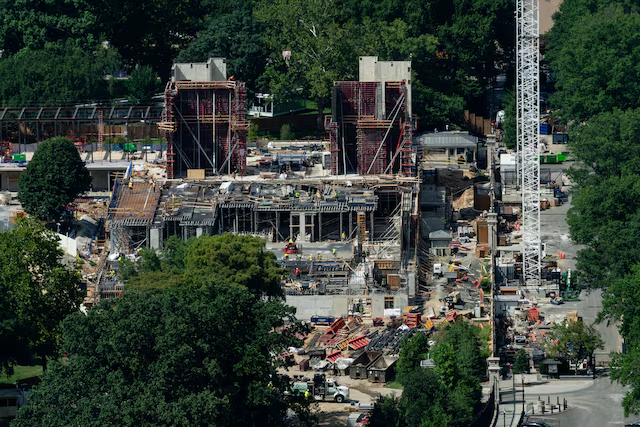
- The appeals court stopped the White House ballroom project
- Trump vowed to appeal the decision to the Supreme Court
- Congress must approve major changes to the White House
A U.S. federal appeals court has temporarily stopped the construction of President Donald Trump’s proposed $400 million White House ballroom, ruling that the project cannot move forward without approval from Congress.
Eko Hot Blog gathered that in a 2-1 decision delivered on Friday, the Washington-based U.S. Court of Appeals for the District of Columbia Circuit said the White House belongs to the American people and that any major structural changes require legislative authorisation.
EDITOR’S PICK
- APC Youth Wing Opens Applications for 2026 Zacch Adedeji Taxation, Fiscal Policy Fellowship
- ‘Make Him President, Let’s See If Nigerians Become Millionaires’ – Presidency Mocks Obi
- Super Falcons Shift Focus to Zambia Clash After Malawi Defeat
The case stems from a lawsuit filed by the National Trust for Historic Preservation after the Trump administration demolished the East Wing and began building a 90,000-square-foot ballroom. The organisation argued that the administration bypassed Congress before starting the project.
The appellate court upheld an earlier injunction that prevents above-ground construction from continuing while the legal challenge remains unresolved. However, the judges suspended their ruling for 14 days to allow the administration to seek relief from the U.S. Supreme Court.

Reacting to the decision, Trump criticised the ruling on Truth Social, describing it as politically motivated and vowing to challenge it at the nation’s highest court.
He argued that the proposed facility is more than a ceremonial ballroom, saying it would include bomb shelters, medical facilities and advanced security systems designed to protect the president, staff and visitors.
The National Trust for Historic Preservation welcomed the ruling, calling it an important victory for the protection of one of America’s most historic landmarks and for public participation in decisions affecting national heritage.
The dispute follows earlier rulings by U.S. District Judge Richard Leon, who had already blocked above-ground construction while permitting underground work to continue.
During court proceedings, lawyers for the Trump administration maintained that the project was privately funded and necessary to strengthen White House security. They argued that courts should not interfere with decisions involving presidential protection.
The majority of the appeals court disagreed, stating that national security concerns do not exempt the executive branch from complying with constitutional and legal requirements. While the judges said the project could still proceed if Congress grants approval, they stressed that construction cannot continue above ground until that process is completed.
One member of the three-judge panel dissented, arguing that the lower court had exceeded its authority by intervening in the White House construction project.
The proposed ballroom is one of several initiatives by Trump aimed at reshaping federal buildings and national landmarks in Washington. The president has defended the project’s rising cost, saying the expanded design and enhanced security features justify the increased budget.
FURTHER READING