- President Donald Trump has warned that U.S. forces are prepared to decimate Iran’s entire civilian infrastructure, including all bridges and power plants, within a four-hour window if the Strait of Hormuz is not reopened by midnight GMT Tuesday.
- Despite mediation efforts by Egypt, Turkey, and Pakistan, both Trump and Tehran have rejected a proposed 45-day truce, with the U.S. President labeling the current terms “not good enough.”
- Iran’s blockade of the vital shipping route has caused global oil and gas prices to skyrocket, forcing international airlines like Air Asia X to hike ticket prices by 40% and prompting nations to reroute oil supplies.
In a high-stakes escalation of the five-week-old Middle East war, U.S. President Donald Trump has dialed up his warlike rhetoric, threatening the total destruction of Iran’s essential infrastructure.
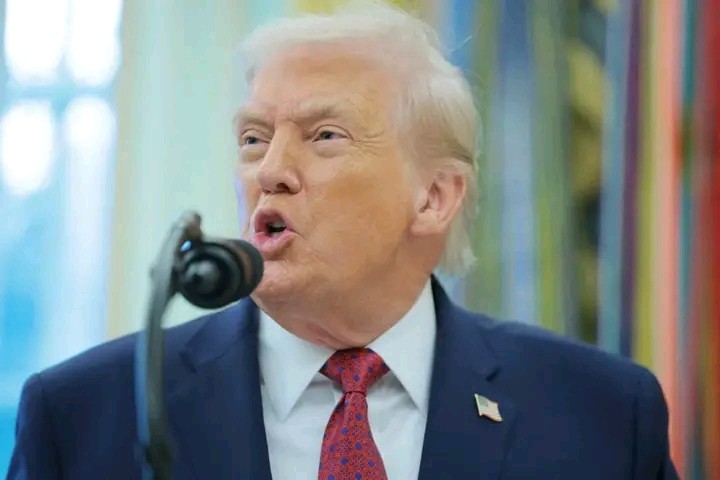
Eko Hot Blog reports that at a Washington press conference on Monday, Trump declared that the U.S. military has a plan to ensure “every bridge in Iran will be decimated” and every power plant will be “burning and exploding” by tomorrow night if his demands are not met.
EDITOR’S PICKS
- Judge Frees 37 Inmates Over Prolonged Detention in Akwa Ibom
- Trump Threatens Iran Over Energy Attacks
- Tinubu Excludes Kemi Badenoch from UK State Visit Itinerary
The President’s ultimatum centers on the reopening of the Strait of Hormuz, a critical maritime artery that Iran has virtually blockaded since the conflict began on February 28.
The war, which was triggered by a joint U.S.-Israeli air assault that killed Supreme Leader Ayatollah Ali Khamenei, has now reached a fever pitch.
While international mediators have scrambled to arrange a 45-day ceasefire, the proposal has hit a deadlock. Trump acknowledged the effort as “significant” but insisted on further improvements, while Iranian state media reported that officials in Tehran have also rejected the deal, demanding a definitive end to the conflict rather than a temporary pause.
Meanwhile, the International Committee of the Red Cross has warned that such deliberate threats against civilian infrastructure are a violation of international law.
On the battlefield, the devastation continues to mount. On Monday, Israeli strikes successfully hit Iran’s largest petrochemical facility in Asaluyeh and targeted military aircraft at airports in Tehran.
This follows the confirmed deaths of high-ranking Iranian officials, including the Revolutionary Guards’ intelligence chief Majid Khademi and Quds Force special operations commander Asghar Bagheri.
In response, the Guards have vowed a “major retaliatory strike,” and regional allies like Yemen’s Houthi rebels have launched attacks targeting Israel in solidarity with Tehran.
The global economic fallout of the conflict is becoming increasingly severe. The blockade of the Strait of Hormuz has sent energy prices into a tailspin, leading Indonesia to increase jet fuel surcharges and forcing countries like South Korea and Taiwan to reroute oil tankers through the Red Sea to avoid the conflict zone.
Within Iran and Israel, the human cost is rising, with missile strikes hitting residential buildings in Haifa and causing gas outages and University disruptions in Tehran.
As the Tuesday midnight deadline approaches, the international community remains on edge, watching to see if diplomacy can prevail over the threat of total demolition.