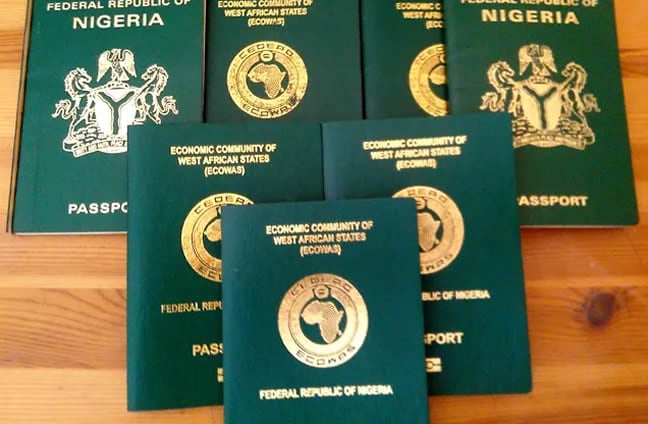
A bill currently before the Senate proposes one of the most sweeping penalties yet for citizens convicted of crimes outside the country: a 10-year withdrawal of their Nigerian passports after completing their foreign sentences.
The proposal, which has already scaled second reading on Tuesday seeks to amend the Passport (Miscellaneous Provisions) Act, Cap. P343, Laws of the Federation of Nigeria 2004.
EDITOR’S PICKS
It comes on the heels the conviction and imprisonment of the Apetu of Ipetumodu, Osun State, Oba Joseph Oloyede, for fraud in the United States (US). He was sentenced to five years in prison for his role in a multi-million-dollar scheme that siphoned US COVID-19 relief funds.
EKO HOT BLOG breaks down everything you need to know about this bill and its goal of accountability and protecting Nigeria’s image.
Why the Bill Matters
The bill, sponsored by Senator Abubakar Bello (Niger North) and presented on his behalf by Senator Mohammed Onawo (Nasarawa South), is framed as a moral and diplomatic corrective — a way to redeem Nigeria’s battered image abroad and deter criminal activity by its nationals in foreign jurisdictions.
According to its sponsors, the measure would show that Nigeria takes responsibility for the conduct of its citizens beyond its borders.
By doing so, lawmakers argue, it would help restore the global credibility of the Nigerian passport and address growing restrictions placed on Nigerians seeking visas.
What the Bill Proposes
If passed into law, the amendment would empower authorities to withdraw the international passport of any Nigerian convicted in a foreign country for 10 years following their release or completion of sentence.
Supporters describe it as both punitive and deterrent intended to discourage Nigerians from engaging in activities that have led to a “crashing blow” to the country’s reputation in the diplomatic community.
“The commission of crimes by Nigerians in foreign jurisdictions has caused stupendous disgrace in international transits,” Senator Onawo said in his lead debate. “Innocent and patriotic Nigerians suffer harassment, visa denials, and discrimination because of the actions of a few.”
The Rationale Behind It
Lawmakers say Nigeria’s passport, once a symbol of pride, has become a source of embarrassment. Senator Onawo lamented that the “green passport is widely discountenanced and the sovereign pride it intrinsically bears has severely diminished.”
He argued that countries such as China, Turkey, Canada, France, Egypt, Germany, Ethiopia, South Africa, Russia, and the United Arab Emirates now apply stringent visa rules to Nigerians, largely because of criminal offences committed by a small segment of the population abroad.
The proposed amendment, he said, is “a veritable deterrent” that would demonstrate Nigeria’s seriousness about law, order, and good governance.
Supporters’ Argument: Image Restoration and Accountability
Backers of the bill believe it would reassure international partners that Nigeria is committed to accountability. They say it could also reduce the stigma that law-abiding citizens face in airports and embassies worldwide.
For years, diplomatic reports have cited offences ranging from drug trafficking to cybercrime as contributing factors to Nigeria’s image problem. The bill’s proponents see it as a symbolic act, an internal sanction against external wrongdoing.
“It is incumbent upon us as a country to act,” Onawo told his colleagues. “This bill will redeem, preserve, and elevate the image and integrity of our dear country.”
Critics’ Likely Concerns
Although the bill enjoys broad moral appeal, some legal experts may raise constitutional and procedural questions once it advances to the committee stage.
They could argue that a foreign conviction, especially in jurisdictions with differing legal standards or human-rights records, might not automatically justify a domestic penalty.
Others might warn that revoking passports after sentences are served could amount to double punishment, potentially conflicting with Nigeria’s obligations under international law.
Still, supporters counter that the withdrawal would be temporary and symbolic, not a permanent forfeiture of citizenship.
Next Steps
Having passed its second reading, the bill will move to the Senate Committee on Interior for further scrutiny, where specific mechanisms for enforcement such as coordination between the Ministry of Interior, Nigerian Immigration Service, and foreign embassies are expected to be examined.
FURTHER READING
If it clears that stage and passes third reading, the measure would then proceed to the House of Representatives for concurrence before being transmitted to the President for assent.
Philip Ibitoye is a Special Correspondent with EKO HOT BLOG. Click here to find daily analysis and critical insight on trending issues in Lagos and other parts of Nigeria.
Click here to watch the video of the week below: