South Africa says it owes Nigeria a debt it can never repay. Ninety-eight dead Nigerians since 2022 suggest that country has found an odd way to service that debt.
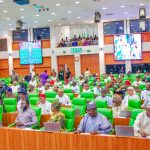
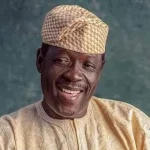
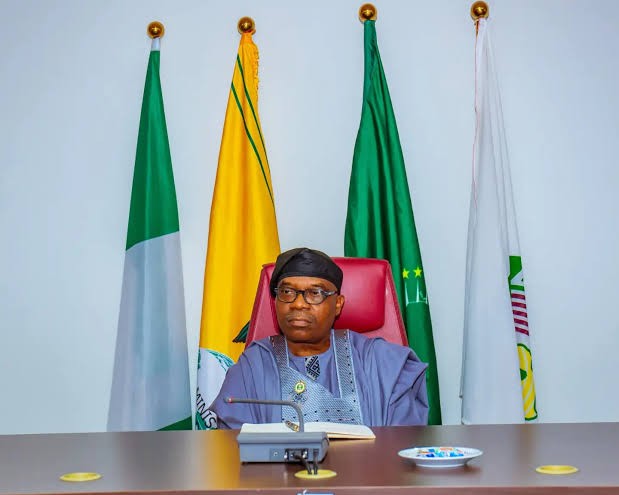
On Monday in Abuja, South Africa’s Minister of International Relations, Ronald Lamola, told Nigeria’s Minister of State for Foreign Affairs, Sola Enikanolaiye, that his country “remains deeply indebted” to Nigeria for backing the anti-apartheid struggle.
EDITOR’S PICKS
He spoke of solidarity, of shared African values, of opposition to xenophobia in all its forms. It was the kind of language diplomats reach for when the facts on the ground say otherwise.
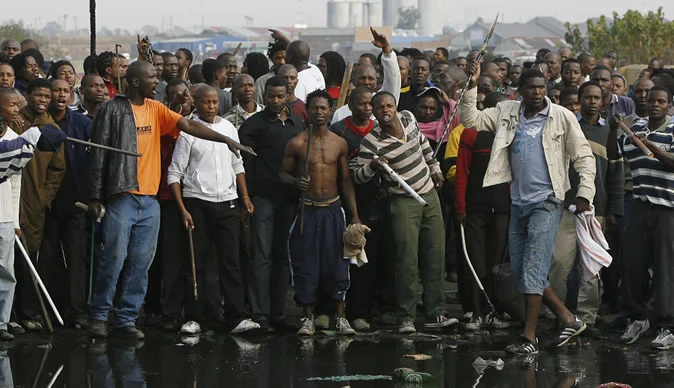
Because the facts, as Enikanolaiye laid them out, are grim. Ninety-eight Nigerians killed in mob and hate-related attacks in South Africa since 2022, five of them this year alone. Nearly 1,500 Nigerians repatriated in 2026, many of them, by the minister’s own account, arriving home with nothing after their homes and businesses were looted and burned.
Some of the evacuees, he said, had been legally resident in South Africa. The violence did not discriminate between the documented and the undocumented, the law-abiding and the accused.
Gratitude Without Action
What was notably absent from Lamola’s remarks was any concrete commitment.
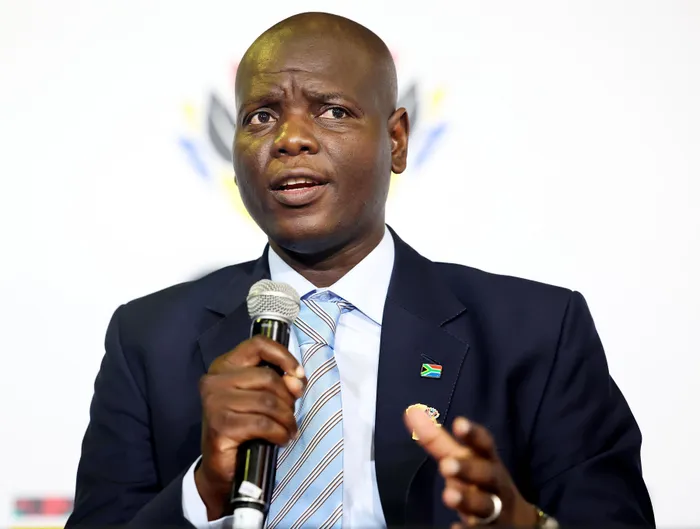
He spoke of a “sovereign responsibility” to enforce immigration law and fight drug trafficking and internet fraud; a framing that, intentionally or not, edges toward justifying the violence by linking it to Nigerian criminality. He called migration a “continental challenge” requiring African Union cooperation. These are the words of a government managing a diplomatic embarrassment, not one confronting a domestic failure.
Nigeria’s position, as Enikanolaiye stated it, was more precise. The federal government does not shield criminals. But it insists that anyone accused of a crime be arrested, prosecuted and punished through due process, not lynched by a mob while security agencies stand by. That is not a radical demand. It is the baseline expectation of any state that claims to be governed by law.
The question Nigeria is really asking is simpler than Lamola’s answer suggests: why do South African security agencies keep failing to intervene while foreign nationals are being killed in the streets?
A Pattern, Not An Incident
This is the fourth wave of anti-foreigner violence in South Africa in under a decade, and each time the government’s response has followed the same script: expressions of regret, promises of investigation, appeals to AU solidarity, and then silence until the next outbreak.
The 98 deaths recorded since 2022 did not happen in a single riot. They accumulated attack by attack, each one met with statements rather than structural change. No minister has resigned over it. No police commander has
been held publicly accountable for standing aside while Nigerian-owned shops were looted.
Enikanolaiye’s account of receiving the first batch of evacuees — children, women and the elderly returning with almost nothing — is not the kind of detail that fits comfortably into a debt-of-gratitude speech. It points instead to a protection gap that South Africa has had four years, and several previous waves of violence stretching back to 2008 and 2019, to close.
What Indebtedness Should Look Like
If South Africa genuinely regards its debt to Nigeria as unpayable, the honest response is not another ministerial visit rich in historical sentiment. It is visible, sustained policing of xenophobic violence, prosecutions that reach beyond token arrests, and a public accounting of why security services have repeatedly failed to protect foreign nationals in real time. Nigeria has signalled patience by pursuing dialogue rather than retaliation. That patience should not be mistaken for indifference to the body count.
FURTHER READING
Gratitude that costs nothing to express is not gratitude. It is diplomacy. Nigeria’s dead are still dead, and the debt South Africa claims to feel has yet to be paid in the only currency that matters: the safety of the people it claims to owe.
Philip Ibitoye is a Special Correspondent with EKO HOT BLOG. Click here to find daily analysis and critical insight on trending issues in Lagos and other parts of Nigeria.
Click to watch the video of the week below: