EDITOR’S PICK
- Mr. President, Osun Has Warned You: The Abuja Boys May Not Know the People
- How Lagos Is Raising a New Generation of ‘Eco Heroes’
- Beyond the Glamour: The Hidden Price Celebrities Pay for Looking Perfect
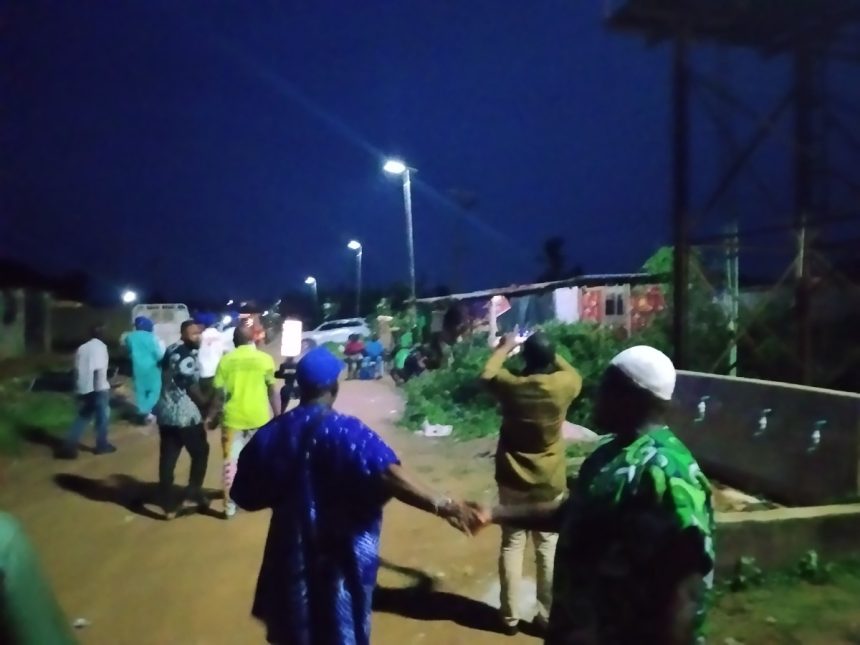
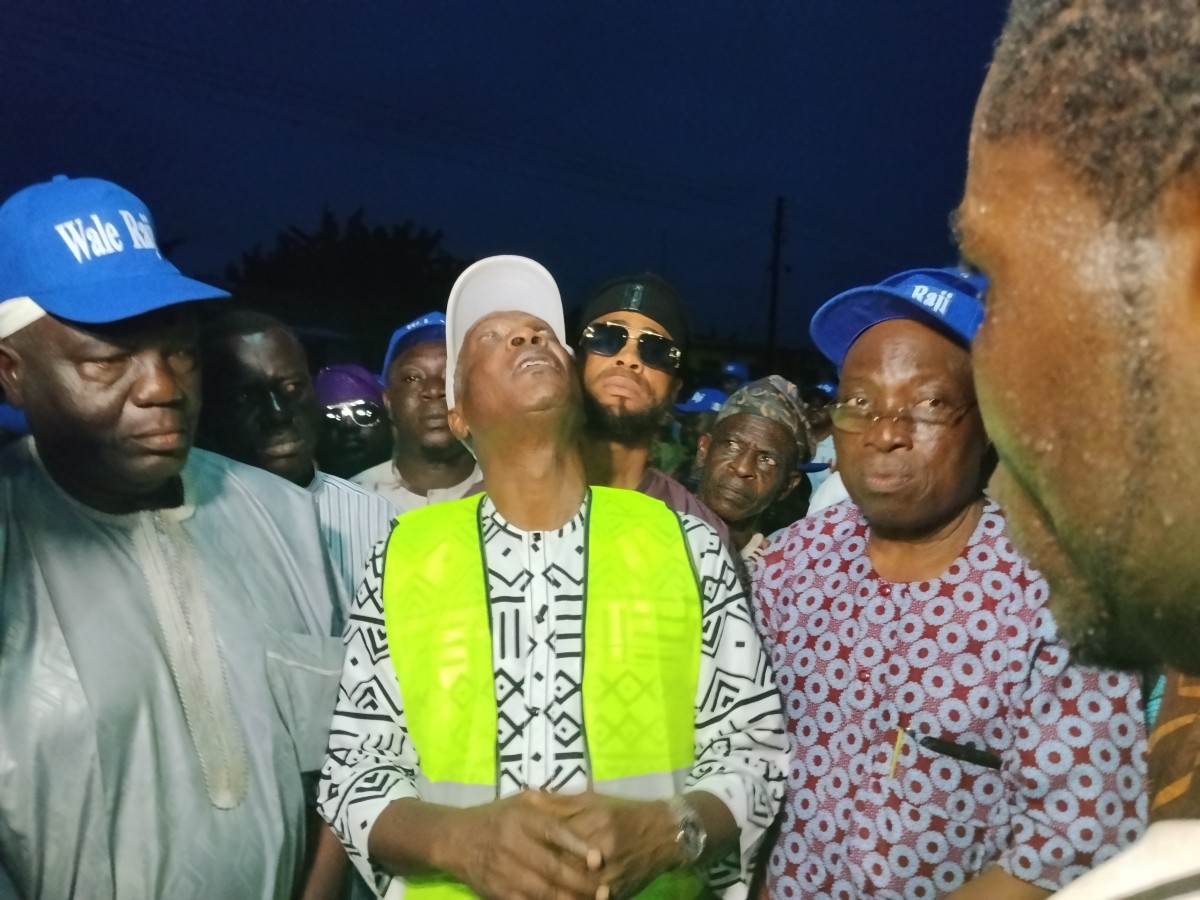
The recent flag-off of another 1,000 solar-powered street lights by the Member of the House of Representatives representing Epe Federal Constituency, Rep. Tasir Olawale Raji, offers an opportunity to look at constituency representation from a different perspective.
In my view, the most significant aspect of the project is not simply the number of lights being installed. It is the attempt to ensure that communities that are often less visible in development conversations are also remembered.
Raji specifically mentioned riverine communities in Wards B1, C1 and D1, promising that no community would be left behind.
“There’s no community that the distribution will not touch and as from Tuesday, the installation will continue and there’s no ward that will be left out,” he said.
That statement matters because development should not be measured only by what happens in the more accessible parts of a constituency. The real test is whether smaller, remote and underserved communities can also feel the presence of government and representation.
Epe Federal Constituency is diverse. It has urban settlements, developing communities and riverine areas with different needs. A single development approach cannot adequately address all these realities.
This is why the decision to extend the Light Up Epe Project to riverine communities deserves attention.
There is also the issue of security.
A dark street does not automatically mean an unsafe street, just as a well-lit street does not automatically guarantee security. However, proper lighting can improve visibility and make movement easier for residents at night. It can also create a more welcoming environment for businesses and social activities.
For me, this is where the project becomes more meaningful. A street light can appear small when compared with a major road or a large public building, but its impact is experienced daily by ordinary people.
A trader returning home late, a resident moving through the community after sunset, a young person coming back from an engagement or a small business owner operating in the evening can all benefit from better lighting.
The project also comes with an important lesson about sustainability.
The use of solar-powered street lights is particularly relevant in communities where electricity supply remains inconsistent. Rather than depending entirely on conventional electricity for public lighting, solar installations provide an independent source of illumination.
But there is another side to the story that should not be ignored: maintenance and protection.
At Shagari Estate, residents raised concerns about a previously installed solar-powered borehole that was vandalised and subsequently converted to gasoline-powered operation.
Raji promised to restore the facility to solar power, but he also appealed to residents to protect it.
“I have special interest in Shagari Estate and it has been for a long time. The Solar-powered Borehole was vandalized but was converted to gasoline-powered. But now, it will be converted back to solar but with the promise that it will not be vandalized,” he said.
This is an important reminder that development is a partnership.
Government can provide infrastructure, representatives can facilitate projects, contractors can execute them, but communities must also protect what has been provided.
There is little value in celebrating a project today only for the facility to become unusable tomorrow because of vandalism or neglect.
Another point that stands out is the reported growth of the Light Up Epe Project from its original target.
The first phase was launched with a target of 1,000 solar street lights, but Raji said more than 2,000 installations had already been completed across the constituency. Now, another 1,000 installations are being introduced.
Whether one views this through the lens of politics, representation or community development, the scale is significant.
But ultimately, numbers should not be the only measurement.
What matters is where the lights are installed, whether they function effectively, whether they are maintained and whether residents genuinely experience the intended benefits.
The same principle applies to the other interventions highlighted by Raji, including schools, classrooms, roads and the construction of 840 shops distributed free to beneficiaries.
Infrastructure becomes meaningful when it moves from statistics to people’s everyday experiences.
That, in my opinion, is the real conversation around constituency projects.
It is easy to announce projects. It is more important to ensure that they reach the people for whom they are intended.
The reaction from residents at Shagari Estate also shows that people are paying attention. They are not only interested in political speeches; they are interested in what changes around them.
As one resident, Alhaji Mukaila, put it:
“We are very happy with what we are seeing today because light is not just about illumination; it brings life back to a community at night.”
That statement captures the essence of the project.
Perhaps the most important question should therefore not be whether 1,000 lights are being installed.
The bigger question is: How many lives will experience a difference because those lights are there?
If the project is properly implemented, maintained and equitably distributed, the answer could extend far beyond the number of poles installed.
For Epe, a constituency with a growing population and diverse communities, development must increasingly be about inclusion.
And sometimes, inclusion begins with something as simple as making sure that no community is left in the dark.