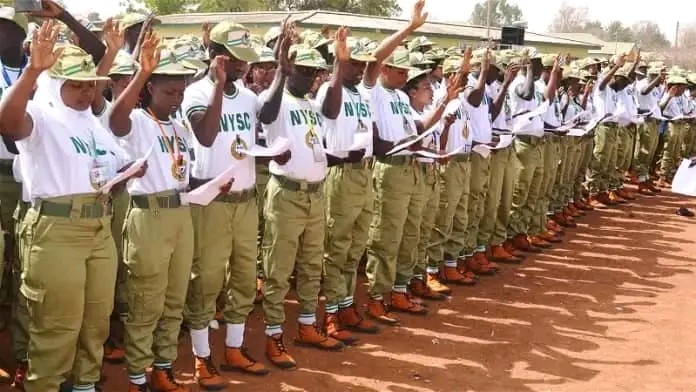
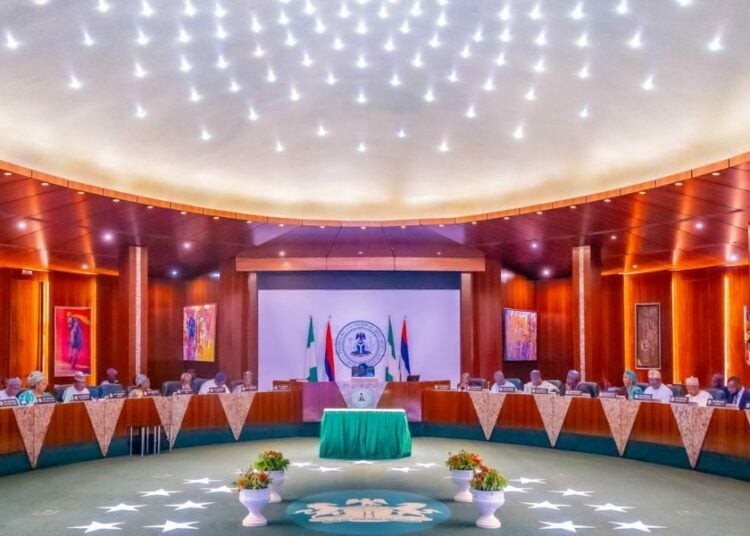
The Federal Executive Council (FEC) on Monday approved seven key reforms to reposition the National Youth Service Corps (NYSC), including a switch from military to civilian leadership, a redesigned uniform, skills-based training, and a technology-driven call-up process.
The changes, announced by Minister of Youth Development Ayodele Olawande, also include risk-sensitive deployment, an overhauled orientation programme, and a new graduation ceremony to replace the passing-out parade.
EDITOR’S PICKS
- Can “Waste Police” Fix Lagos’s Trash Epidemic?
- LAWMA Is Clearing Lagos’s Trash. But Who Stops the Next Pile?
It is a significant development. But it also raises an uncomfortable question: why did it take this long?
A Scheme Frozen in Time
The NYSC was established in 1973, in the aftermath of a civil war, to foster national unity among Nigerian graduates.
That original purpose was noble and necessary. But the country that corps members serve in 2026 looks almost nothing like the Nigeria of five decades ago. The economy has changed. The labour market has changed. Graduate unemployment has ballooned. And yet the scheme, by the government’s own admission, has had no major review since its founding year.
The result is a programme that has largely run on inertia. Graduates are deployed to states they did not choose, assigned to primary placements that often have nothing to do with their skills or academic training, and housed in facilities that frequently fall below basic standards.
For many, the one year is written off as a mandatory delay before real life begins, not a meaningful contribution to national development.
Reform Must Go Beyond Optics
The reforms approved by FEC are promising on paper. Civilian leadership replacing military command is a rational structural change. A technology-driven call-up process could reduce the corruption and manipulation that have long plagued deployment. Aligning primary assignments with corps members’ academic backgrounds is the kind of common-sense fix that should have happened years ago.
But the government must resist the temptation to let aesthetics stand in for substance. A redesigned uniform and a rebranded graduation ceremony are fine. But they are not reform. The danger is that the administration celebrates the packaging while the core problems — underutilisation of graduates, poor welfare, weak accountability for host organisations, and meaningless placements — go largely unaddressed.
President Bola Tinubu’s Special Adviser on Policy Coordination, Hadiza Bala-Usman, referenced a proposed digital corps and specialised cohorts that could earn professional certifications before deployment.
That is exactly the kind of direction this reform should take. If a corps member can exit their service year with a recognised certification, an expanded professional network, and documented work experience, the year becomes an investment rather than an interruption.
The Real Test Is Implementation
FEC has also directed the Attorney-General of the Federation, Lateef Fagbemi, to work with the National Assembly on amending the NYSC Act and its regulations to enable immediate implementation. That is the right sequence. Without legal backing, many of these reforms will remain aspirational.
But legislation alone will not be enough. The NYSC’s chronic problems are also administrative. Host organisations routinely ignore corps members or assign them to irrelevant tasks. State coordinators operate with limited oversight. Camp conditions vary wildly across states with little consequence for underperformance. A national grading and certification system for camps, as included in the reforms, could help, but only if there are real sanctions for facilities that fail.
FURTHER READING
- Men’s Health Week: What Nigerian Fathers Must Do To Stay Alive
- Inside the 37 Bills That Could Rewrite How Nigeria Is Governed
Nigeria’s graduates deserve a service year that builds them, not one they endure. The FEC’s approval of these reforms is overdue, but it is a start. The administration now faces the harder task of turning a 52-year-old scheme into something graduates can point to as time well spent. That will require more than new uniforms. It will require the political will to enforce what has been promised.
Philip Ibitoye is a Special Correspondent with EKO HOT BLOG. Click here to find daily analysis and critical insight on trending issues in Lagos and other parts of Nigeria.
Click to watch the video of the week below: