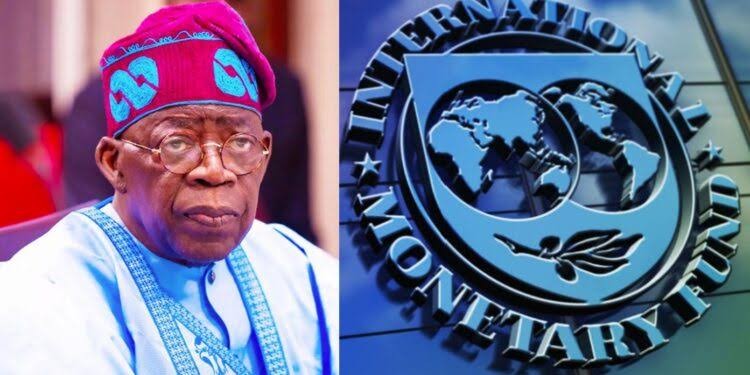
Nigeria’s public finances are back under the microscope, and this time the source isn’t a domestic critic, it’s the International Monetary Fund (IMF).
A single technical comment on budget reporting has, within days, mutated into a full-blown political storm, complete with resignation calls, corruption accusations, and a scrambling government rebuttal.
EDITOR’S PICKS
- Can “Waste Police” Fix Lagos’s Trash Epidemic?
- LAWMA Is Clearing Lagos’s Trash. But Who Stops the Next Pile?
At the centre of it all is a number: 2%. That’s how much of Nigeria’s GDP the IMF says went unrecorded in recent budgets, translating, by some calculations, to roughly ₦8.83 trillion. It’s a figure opposition politicians have seized on with both hands, framing it as proof of grand theft. But a closer look at what was actually said, versus what’s being alleged, tells a more complicated story.
EKO HOT BLOG breaks down how the controversy started, what the key figures have said, and why the difference between “unreported” and “unaccounted-for” matters more than the headlines suggest.
How It Started
The story began on July 1, when IMF resident representative in Nigeria, Christian Ebeke, addressed business executives in Lagos. He disclosed that Nigeria had about 2% of GDP in public spending not recorded in recent official budgets, creating a gap between the country’s reported fiscal deficit and its actual borrowing needs.
Ebeke explained that the issue stemmed largely from capital projects executed outside the formal budget process.
In his words: “So far we think that there are about two per cent of GDP of expenditure that were not reported that should be reported and should be recorded, so that this statistical discrepancy will disappear.”
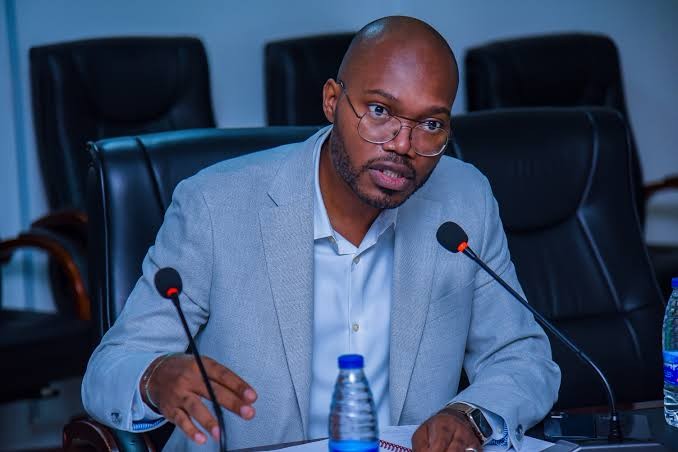
He noted the government had already begun repealing and revising budget laws to capture previously omitted spending, and situated the disclosure within the IMF’s broader Article IV consultation, which actually commended Nigeria’s macroeconomic reforms.
The Reactions
The reactions came fast, and largely along political lines. Opposition figures treated the disclosure as confirmation of deep-rooted corruption.
The presidential candidate of the African Democratic Congress (ADC), Atiku Abubakar, called on the Economic and Financial Crimes Commission (EFCC) and Independent Corrupt Practices and Other Related Offences Commission (ICPC) to investigate, demanding to know “who stole the missing two per cent of our GDP” and insisting money doesn’t vanish from a budget without someone authorising and benefiting from it.
The presidential candidate of the Nigeria Democratic Congress (NDC), Peter Obi, went further, describing the figure as evidence of “grand corruption” and renewing his call for President Tinubu to resign.
He argued the ₦8.83 trillion exceeded 35% of the 2025 capital budget and surpassed the combined education and health allocations, saying: “This expenditure is not budgeted and is therefore not under legislative oversight or administrative scrutiny. This is horrible.” He called the development part of a broader pattern of “rampant looting of Nigerian public finances.”
The Federal Government has pushed back firmly.
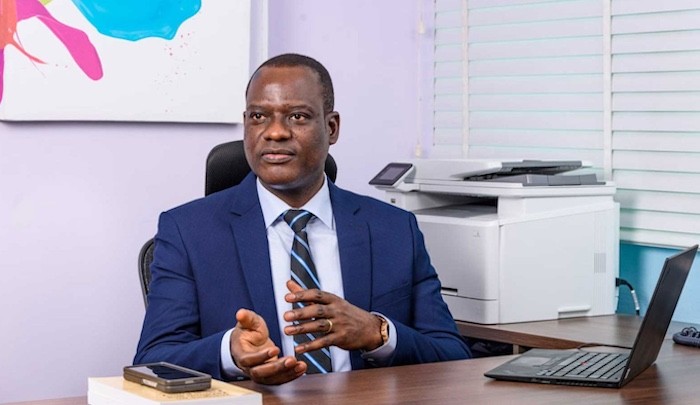
The Minister of Finance and Coordinating Minister of the Economy, Taiwo Oyedele, dismissed the framing as a misrepresentation, stating plainly that “no public funds were missing” and that “the Federal Government does not operate a shadow budget or expend public funds outside the constitutional and statutory framework.”
He attributed the discrepancy to differences in statistical treatment and timing of expenditure recognition across reporting systems, insisting all spending ran through Appropriation Acts and other statutory channels approved by the National Assembly.
PRESS RELEASE
FEDERAL MINISTRY OF FINANCE
5 July 2026
𝐑𝐄𝐒𝐏𝐎𝐍𝐒𝐄 𝐓𝐎 𝐑𝐄𝐂𝐄𝐍𝐓 𝐌𝐈𝐒𝐑𝐄𝐏𝐑𝐄𝐒𝐄𝐍𝐓𝐀𝐓𝐈𝐎𝐍𝐒 𝐎𝐍 𝐏𝐔𝐁𝐋𝐈𝐂 𝐄𝐗𝐏𝐄𝐍𝐃𝐈𝐓𝐔𝐑𝐄
The Federal Government has noted recent public commentary alleging that approximately two percent of GDP…
— Taiwo Oyedele (@taiwoyedele) July 5, 2026
Unreported vs. Unaccounted-For: Why It Matters
This is where the controversy actually turns on a technicality and it’s a technicality worth understanding.
Ebeke’s original comments were about recording, not disappearance. His concern was that off-budget capital projects weren’t reflected in budget documents, distorting the deficit picture. That’s a transparency and bookkeeping critique. “Unaccounted-for” or “stolen” implies something else entirely: that money is missing or untraceable.
Oyedele made this distinction explicit, stating the IMF’s observations focused on improving the completeness and presentation of fiscal reporting, “not questioning the legality of government expenditure.”
It’s also worth noting that the government’s own reform agenda predates the controversy: Tinubu had asked the National Assembly, during the December 2025 Appropriation Bill presentation, to end overlapping budgets in favour of one harmonised framework, which is precisely the fix Ebeke’s comments point toward.
The Bottom Line
The IMF flagged a reporting gap. The opposition read it as a corruption confession. The truth, based on the available record, sits closer to the former, though it doesn’t excuse the underlying problem: off-budget spending, even when lawful, still weakens transparency and oversight.
FURTHER READING
- Men’s Health Week: What Nigerian Fathers Must Do To Stay Alive
- Inside the 37 Bills That Could Rewrite How Nigeria Is Governed
The real test now is whether the promised reforms and updated implementation reports actually close that gap.
Philip Ibitoye is a Special Correspondent with EKO HOT BLOG. Click here to find daily analysis and critical insight on trending issues in Lagos and other parts of Nigeria.
Click to watch the video of the week below: