Nigeria’s inflation figures for November 2025 show some relief, but they also highlight ongoing pressure on prices, especially in the short term.
The figures are contained in the Consumer Price Index (CPI) released by the National Bureau of Statistics (NBS) on Monday.
EDITOR’S PICKS
The data shows that while headline and food inflation have fallen sharply year-on-year, month-to-month price increases remain elevated, highlighting the complexity of the disinflation process.
Headline Inflation Hits Five-Year Low
Headline inflation eased to 14.45 per cent in November 2025, down from 16.05 per cent in October, marking the eighth consecutive monthly decline this year and falling below President Bola Tinubu’s 15 per cent target.
The figure is the lowest in five years, returning to levels last seen during the COVID-19 period in 2020.
On a year-on-year basis, the slowdown is striking: November’s rate is 20.15 percentage points lower than the 34.60 per cent recorded in November 2024. This suggests that the worst of last year’s inflation surge has unwound. However, on a month-on-month basis, headline inflation rose to 1.22 per cent, higher than October’s 0.93 per cent, indicating that prices are still rising at a faster pace in the short term.
Food Inflation: Sharp Annual Drop, Uneven State Trends
Food inflation followed a similar pattern, declining to 11.08 per cent year-on-year in November 2025 from 39.93 per cent a year earlier. The NBS noted that much of this steep annual drop reflects a base-year effect, rather than a complete resolution of food supply and pricing challenges.
Month-on-month food inflation stood at 1.13 per cent, reversing October’s decline, driven by higher prices of staples such as tomatoes, cassava, pepper, eggs, crayfish, onions and meat products.
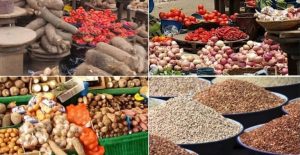
State-level data reveal wide disparities: food inflation was highest year-on-year in Kogi, Ogun and Rivers, while Imo, Katsina and Akwa Ibom recorded the slowest increases. On a monthly basis, sharp rises were seen in Yobe, Katsina and Ondo, even as Imo, Nasarawa and Enugu experienced declines.
Policy Context and What It Means
The inflation slowdown has unfolded alongside tight monetary conditions. In late November, the Central Bank of Nigeria’s Monetary Policy Committee retained the monetary policy rate at 27 per cent, signalling a continued commitment to restraining inflationary pressures.
Overall, November’s figures confirm that Nigeria is firmly on a disinflation path, especially when viewed against last year’s peak. Yet the uptick in month-on-month inflation and uneven food price movements suggest that price stability remains fragile. For households and policymakers alike, the numbers point to progress achieved but also to the need for sustained fiscal discipline, improved food supply chains and cautious monetary management to lock in the gains.
A win for President Tinubu
During Tinubu’s N49.7 trillion budget presentation before the National Assembly on December 18, 2024, he expressed optimism that Nigeria’s inflation rate would decline from 34.60 percent to 15 percent in 2025.
But in January, Chief Executive of Financial Derivatives and popular economist, Bismark Rewane said the target was unrealistic and a mere aspiration.
“Well, the target is an aspiration; the reality that we think is inflation could reduce from approximately 35 percent to somewhere like 27 percent or 25 percent, but a 15% rate on inflation is very bullish and aspirational, but we are free to have our aspirations.
“We deal in the world of reality, and in the world of reality, we see more of 27% to 25%. I would rather bet on that than bet on much more optimistic scenarios,” he said during a Channels Television’s programme on January 2, 2025.
However, Rewane’s skepticism came before the NBS rebasing exercise, which resulted in significantly lower reported inflation numbers, such as the drop from 34.8% in December 2024 to 24.48% in January 2025.
Nevertheless, the Presidency is taking a victory lap following the latest inflation report.
In a statement posted on X, the Special Adviser to the President on Policy Communication, Daniel Bwala, said Tinubu had set a 15 per cent inflation target in January, a goal he said many critics doubted at the time.
“This is not luck. It is the outcome of tough, radical reforms and disciplined economic management,” the presidential aide wrote.
FURTHER READING
Bwala maintained that the improvement showed the country was “steadily turning the corner,” insisting that the President’s economic promises were being fulfilled.
In January, President Bola Ahmed Tinubu set a 15% inflation target. Many doubted it. Today, the facts have answered them. Headline inflation eased to 14.45% in November 2025, beating the target and dropping from 16.05% in October. This is not luck. It is the outcome of tough,… pic.twitter.com/dwrSHXW1Jt
— D. H Bwala (@BwalaDaniel) December 15, 2025
Philip Ibitoye is a Special Correspondent with EKO HOT BLOG. Click here to find daily analysis and critical insight on trending issues in Lagos and other parts of Nigeria.
Click here to watch the video of the week below: