- The Senate declared the Ogijo lead-poisoning crisis a national public health emergency and directed immediate medical and relief interventions.
- Lawmakers debated amendments to BOFIA to strengthen CBN oversight of fintechs and systemically important non-bank institutions.
- The Senate cited recent macroeconomic improvements, including reduced inflation and better FX stability, during its engagement with the CBN Governor.
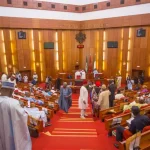
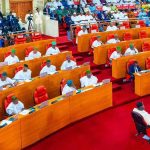
The Nigerian Senate has declared the lead-poisoning crisis in Ogijo a national public health emergency, following a motion moved on the floor of the Senate yesterday.
Eko Hot Blog reports that the motion, sponsored by the Chairman of the Senate Committee on Banking, Insurance and Other Financial Institutions, emphasized that no Nigerian community should be exposed to hazardous industrial practices capable of endangering lives.
EDITOR’S PICKS
- Lagos East Senator, Tokunbo Abiru Celebrates Men on International Men’s Day
- Nathaniel Bassey Condemns Kwara, Kebbi Attacks
- 42 Countries Confirm 2026 World Cup Qualification As UEFA Sets Playoff Paths
The Senate commended the Federal Government, as well as the Lagos and Ogun State Governments, for their swift interventions so far, while calling for intensified action.
It mandated the Nigeria Centre for Disease Control and Prevention (NCDC) to deploy emergency medical teams for free toxicology screening and continuous treatment of affected residents, including children already showing symptoms of heavy-metal poisoning.
It further directed the National Emergency Management Agency (NEMA) to provide urgent relief materials, clean water supply, and food support to residents, alongside a detailed environmental contamination-mapping and remediation process.
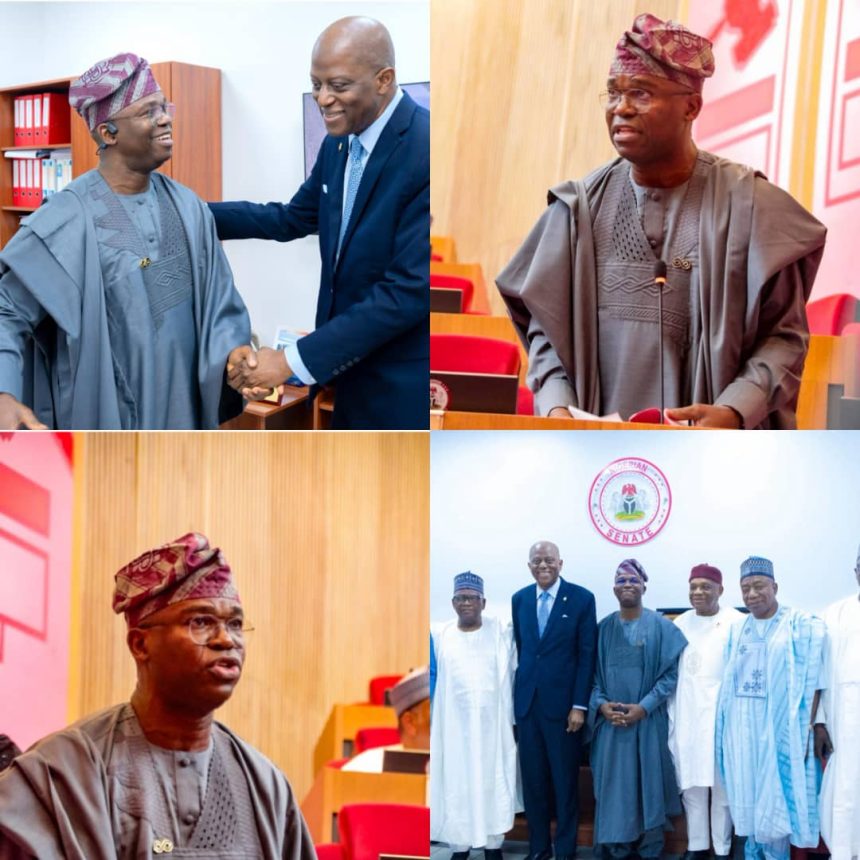
During the same plenary, attention shifted to Nigeria’s financial sector as the lawmaker led the debate on the Bank and Other Financial Institutions (BOFIA) Amendment Bill—an important reform aimed at tightening oversight of rapidly expanding fintech operators whose activities now rival traditional banks.
The amendment seeks to empower the Central Bank of Nigeria (CBN) with stronger regulatory tools to designate and supervise Systemically Important Institutions (SIIs), including non-bank fintechs that play critical roles in financial transactions, digital payments, and data processing.
The bill also stresses the need for deeper collaboration between the CBN and key regulators such as the SEC, NCC, NITDA, CAC, FCCPC, and the Office of the National Security Adviser to ensure consumer protection, data security, and reduction of systemic risks in the digital economy.
As Committee Chairman, the lawmaker also presided over the statutory engagement with CBN Governor Dr. Olayemi Cardoso and his team in line with Section 8(4) of the CBN Act.
He acknowledged notable macroeconomic improvements since July, including a drop in inflation to 16 percent, greater stability in the foreign exchange market, and improved liquidity and transparency that continue to boost investor confidence.
The Senate reaffirmed its commitment to transparent oversight, strengthening national institutions, and driving reforms that protect communities while securing Nigeria’s economic future.