For decades, politics in Epe has largely been a male-dominated terrain, with men occupying most elective and appointive positions across party lines. However, in recent years, a quiet but significant shift has begun to take shape.
Women are no longer content with playing supporting roles behind the scenes; they are stepping forward as contenders, administrators, and power brokers, challenging long-standing political norms.
EDITOR’S PICK
- FRSC Redeploys Senior Officers Nationwide to Strengthen Operations
- 2026 BECE Registration Begins as Lagos Moves Process Online
- Lagos Lawmakers Justify Demolition of Illegal Structures in Makoko, Oworonsoki
While women constitute a strong base in party structures, campaign mobilization, and grassroots organization in Epe, their numerical strength has not always translated into proportional representation.
The ratio of male aspirants to female aspirants remains significantly uneven, particularly for high-stake elective positions such as chairmanship, legislative seats, and party leadership roles.
That said, representation at the councillorship level has shown notable progress, especially within Eredo LCDA, where women have increasingly taken up elective responsibilities and legislative roles at the grassroots.
A defining example remains Princess Surah Olayemi Animashaun, the Executive Chairman of Epe Local Government. Her re-election in July 2025 stands as a landmark achievement for women in local governance.
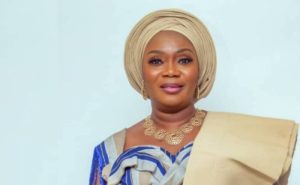
Beyond politics, her recognitions ranging from TB advocacy to community development awards have reinforced her image as a results-oriented leader, not merely a symbolic office holder.
Equally significant is Barrister Olayinka Oladunjoye, former Lagos State Commissioner for Education and current Federal Commissioner at the National Population Commission (NPC).
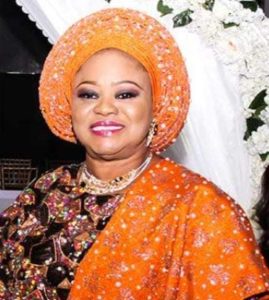
Her continued relevance within the Epe Federal Constituency highlights how women from Epe have successfully navigated both state and federal governance spaces through competence and experience.
At the legislative arm of local governance, Hon. Mary Ogunsanya, a councillor from Eredo Local Council Development Area, represents another critical milestone.
Her emergence reflects the gradual but deliberate inclusion of women in grassroots lawmaking and community representation.
As a councillor, she embodies the growing confidence of voters in female leadership at ward level, where direct community impact is most visible.
Beyond Hon. Ogunsanya, other female councillors across Epe and Ikosi-Ejinrin have continued to contribute to debates, oversight, and constituency engagement.
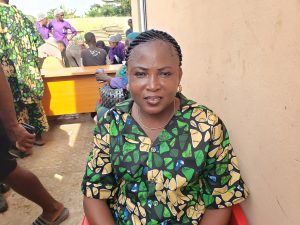
Their presence, though still limited in number compared to their male counterparts, signals a steady normalization of women as decision-makers rather than exceptions.
Historically, female aspirants in Epe faced skepticism often masked as concerns about structure, funding, or political resilience. However, the performance of women currently in office particularly at the local government and councillorship levels has begun to dismantle these perceptions.
While women generally receive stronger encouragement for appointive roles, elective positions still require overcoming party dynamics, financial barriers, and entrenched political networks dominated by men.
Nevertheless, women who have contested and won elections have shown that credibility and consistency can neutralize bias over time.
Across political parties not limited to the APC, women in Epe have gained more access through appointments than elections.
Yet, the success of women at councillorship and chairmanship levels has challenged the idea that women are less electable.
Female councillors, in particular, have become training grounds for future leadership, offering exposure to governance, constituency management, and political negotiation skills essential for higher office.
As the 2027 election cycle approaches, the political space in Epe is likely to see more women expressing interest in elective offices. Those most likely to make an impact will be women who have:
Built strong grassroots presence through council or community roles
Demonstrated legislative or executive competence
Earned trust beyond party loyalty
Positioned themselves as community problem-solvers
Leaders like Princess Surah Olayemi Animashaun, Barrister Olayinka Oladunjoye, Hon. Mary Ogunsanya, and other serving female councillors have laid a visible foundation.
Their journeys suggest that the next phase of women’s political participation in Epe will be driven less by novelty and more by preparedness.
Women in Epe politics are no longer on the fringes. Though men still dominate in numbers, the influence and performance of women in office continue to reshape political expectations.
From executive leadership to legislative representation at the grassroots, women are steadily redefining what political leadership looks like in Epe.
As 2027 draws closer, the question is no longer whether women will participate—but how many will rise, and how far they will go.
FURTHER READING
- Trump Pushes for Greenland Deal Amid EU Tensions
- Anthony Joshua Crash Driver’s Trial Adjourned to February 25
- Firdaus Prayers Held in Honour of Erelu Aminat Dosunmu
Click here to watch video of the week