- A total of 792 people lost their lives in 882 recorded security incidents cutting across all thirty-six states and the Federal Capital Territory in June 2026, marking an elevated baseline of rural and urban insecurity.
- The Islamic State West Africa Province (ISWAP) launched a coordinated tactical campaign in northern Borno, raiding humanitarian bases and burning supply trucks along the Monguno-Gajiram road to intentionally starve out hundreds of thousands of internally displaced persons.
- Although state forces aggressively drove law-enforcement operations, non-state armed actors recorded a much higher kill-rate per incident, killing 337 individuals in fewer total engagements compared to the 274 casualties linked to government operations.
Nigeria’s domestic security faced severe friction throughout June 2026, resulting in 792 confirmed fatalities across 882 distinct security incidents documented across the federation.
According to the comprehensive Nigeria Monthly Security Overview published by SARI Global, a prominent risk intelligence firm specialized in monitoring highly volatile conflict environments, the first half of the month recorded a massive surge in kinetic activity before settling into a high-casualty plateau.
EDITOR’S PICK
- Hamzat Appoints Obanikoro as Campaign DG Ahead of 2027 Lagos Governorship Race
- Tinubu’s State Police Plan Gains Momentum as Amendment Looms
- Residents Raise Alarm After Two Bodies Found in Lagos Waterway
The second week of June emerged as the deadliest frame, concentrating heavy insurgent actions, widespread banditry, and intense state counter-insurgency operations.
The data, hosted via the United Nations Office for the Coordination of Humanitarian Affairs repository, indicated that while federal security forces maintained an aggressive operational tempo, they struggled to fully suppress localized insurgent networks.
A critical flashpoint developed within the northern axis of Borno State, where ISWAP executed a calculated blockade targeting vital international aid pathways.
The terror cells introduced a dual-pronged strategy: launching nighttime compound raids inside garrison towns like Monguno, Cross Kauwa, Baga, and Kukawa, while operating daylight vehicle checkpoints along the crucial Monguno-Gajiram supply corridor.
In a brazen display of lawlessness on June 24, fighters successfully breached a housing estate in Monguno town, abducting an international non-governmental organization (INGO) worker and a local guard. This was followed on June 29 by the daylight arson of two NGO-contracted commercial supply trucks.
Security analysts warn that these deliberate strikes on food cargo are designed to intimidate local vendors, withdraw logistics support from global actors, and effectively choke off essential aid distributions during the peak of the lean agricultural season.
The statistical breakdown of the monthly data highlights the stark asymmetrical nature of the conflict. Government-affiliated forces were the primary drivers behind the raw volume of incidents, initiating 375 engagements through cordon-and-search operations, target raids, and strategic arrests.
However, these state operations yielded 274 fatalities. In stark contrast, non-state armed actors initiated fewer engagements at 224 incidents but inflicted maximum lethality, causing 337 deaths, accounting for 42.5 percent of all monthly casualties. The remaining deaths included 64 civilians, 30 criminals, one political actor, and 86 individuals tied to unattributed or unknown actors in remote terrains where confirmation remains structurally difficult due to severed communication networks.
The geographical layout of the violence cements Borno State as the most volatile zone in the country, leading with 109 incidents and 172 deaths focused around the Lake Chad basin and the Sambisa Forest periphery.
Zamfara State followed closely with 63 incidents, reflecting the deeply entrenched banditry economy ravaging the North-West zone.
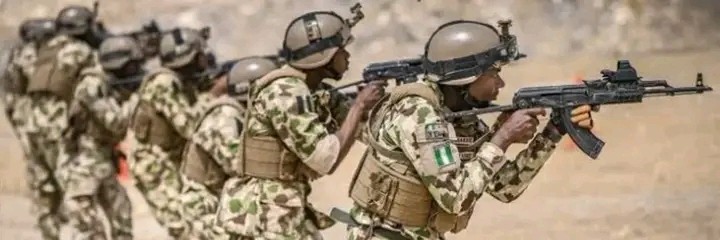
The report also warned of an expanding tactical threat to educational infrastructure, pointing to a June 29 mass abduction at the Government Day Secondary School in Lassa, where ISWAP fighters kidnapped students and teachers in broad daylight.
This trend suggests that schools in peripheral local government areas near insurgent hotbeds are facing heightened vulnerability, requiring urgent defensive reassessments.
Simultaneously, unexpected security challenges emerged within humanitarian hubs, characterized by “beneficiary aggression” where aid workers faced physical assaults from individuals excluded from distribution registers.
In the southern region, states like Lagos and Rivers maintained a lower-lethality mix of urban criminality, localized protests, and transit hazards. Meanwhile, the Federal Capital Territory recorded 36 incidents, largely dominated by civil unrest and heavy-handed crowd control as the political machinery begins shifting toward the advancing 2027 electoral cycle.
Looking forward into July, SARI Global projects a widening gap between humanitarian needs and response capacities as sticky inflation, deep food insecurity, and persistent supply-chain interdictions complicate regional intervention efforts.