- Alausa Launches Education Communication Strategy, Highlights Tinubu’s Reforms
- The minister applauded President Bola Ahmed Tinubu for giving education the highest budgetary allocation in Nigeria’s history
- Alausa outlined key milestones under NESRI
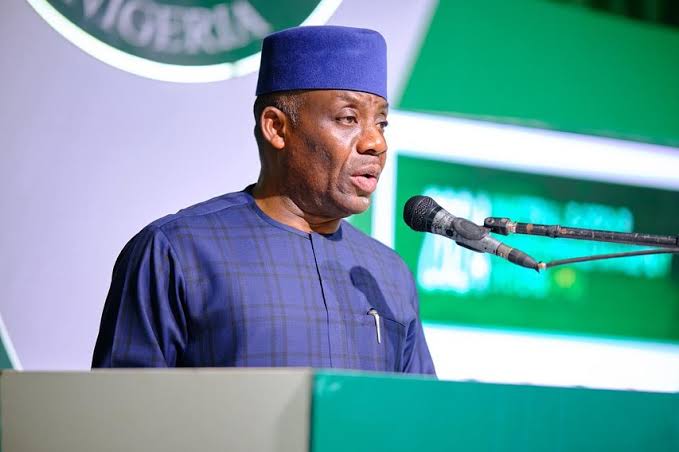
Minister of Education, Dr. Maruf Tunji Alausa, on Tuesday launched the Federal Ministry of Education’s Communication Strategy (2025–2027), describing it as a vital tool for building public trust, stakeholder engagement, and transparency in Nigeria’s education reforms.
Eko Hot Blog reports that while speaking at the Abuja event, Alausa said the blueprint would unify all agencies of the ministry under one communication framework and ensure that Nigerians are well informed about every milestone in the sector.
EDITOR’S PICK
- Benin Go Top After FIFA Strips South Africa Of World Cup Win
- LASUBEB Opens Online Portal for Teaching Job Applications Across Lagos State
- COWLSO Extends Humanitarian Support to Orphanages in Lagos
“This strategy is not a document to be shelved. It is our social contract with the Nigerian people that every reform, policy, innovation and success story will be shared, understood, and celebrated,” he stated.
The minister applauded President Bola Ahmed Tinubu for giving education the highest budgetary allocation in Nigeria’s history, and credited the First Lady, Senator Oluremi Tinubu, for her scholarship initiatives and the revival of the stalled National Library Project.
Alausa outlined key milestones under the Nigeria Education Sector Renewal Initiative (NESRI), including:
Technical and Vocational Education (TVET): Over 960,000 applicants registered on the new digital platform; 58,000 students have already been matched to centres. Free tuition, feeding, and stipends for technical college students will commence in the 2025/26 academic session.
STEM and Medical Education: Nursing intake increased from 28,000 to 115,000, while medical enrolment is rising towards 20,000 students annually.
Foundational Education: Over 4,900 classrooms built, 3,000 renovated, and 34 model schools constructed in six months, reaching 2.3 million learners.
Out-of-School Children: Nearly one million Almajiri children mapped nationwide; 35,000 reintegrated into schools.
Digitisation: National Education Management data digitised; federal universities now operate on the Blackboard Learning Management System.
Girl-Child Education: More than 577,000 girls awarded scholarships under the AGILE Project, with nearly 100,000 trained in life skills.
He added that the new national curriculum which reintroduces History in primary and junior secondary schools and introduces Citizenship and Heritage Studies in senior secondary would reduce subject overload and align Nigerian education with global best practices.
Alausa stressed that effective communication would prevent misconceptions and resistance to reforms, noting that the strategy is anchored on four pillars: visibility, coordination, engagement, and resilience.
Calling for support, he urged the media, civil society, parents, teachers, and development partners to amplify Nigeria’s education success stories.
“Let us tell the story of every teacher trained, every child enrolled, every girl empowered, every curriculum modernised, every innovation adopted. Let no achievement go unnoticed, and no Nigerian remain uninformed,” he said.
FURTHER READING
- Kasali Rewards Outstanding Pupils and Students in Lekki LCDA
- Low-Key 65th Independence Celebration to Promote National Values
- Sanwo-Olu Announces Lagos as First African Stop for E1 Powerboat Series
Click here to watch video of the week