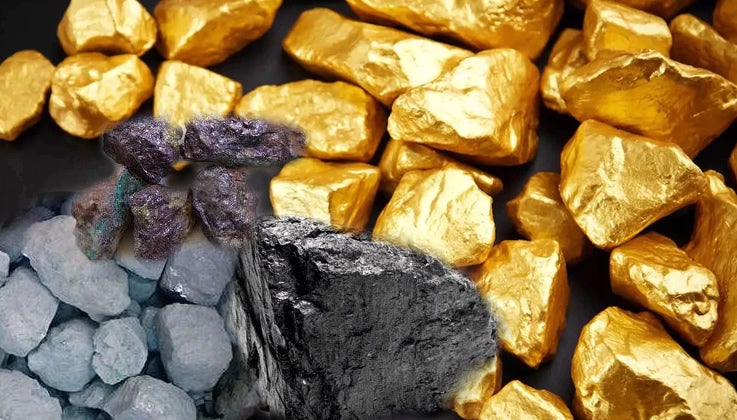
Nigeria’s earnings from solid minerals rose sharply in the fourth quarter of 2024, underscoring the federal government’s progress in diversifying its revenue base away from oil dependence.
According to the Budget Office of the Federation, the federal government earned ₦4.6 billion from solid minerals in the period, a 303.56 percent increase from the previous quarter.
EDITOR’S PICKS
Signs of Diversification
The data, contained in the Q4 2024 Budget Implementation Report compiled by the Ministry of Budget and Economic Planning, shows that non-oil revenue continues to strengthen amid fluctuating oil receipts.
While total federal revenue in the quarter stood at ₦6.42 trillion, slightly below the target of ₦6.46 trillion, oil sources contributed ₦1.61 trillion—a 20.93 percent shortfall from estimates.
In contrast, the solid minerals sector outperformed expectations, reflecting reforms aimed at improving transparency, plugging revenue leakages, and formalising artisanal mining operations. The report credited the sharp rise to ongoing government efforts to diversify income streams and expand the non-oil economy.
Alake’s Push for Global Relevance
Speaking earlier in October at the 10th Nigeria Mining Week in Abuja, Minister of Solid Minerals Dele Alake said the progress aligns with the administration’s Renewed Hope Agenda to enhance transparency, attract investment, and add value to Nigeria’s mineral resources.

“The mining week aligns with Nigeria’s goal to boost revenue by adding value to minerals and tapping energy transition opportunities,” Alake said. He added that the event, themed ‘Nigeria Mining: From Progress to Global Relevance’, drew over 3,500 delegates and 100 exhibitors from Africa, Europe, Asia, and the Middle East — a sign of increasing global confidence in Nigeria’s mineral potential.
According to the minister, collaborative efforts between the government and private sector are beginning to reposition Nigeria as a credible global player in the mining industry.
“Through innovation and steadfast commitment, we will reposition Nigeria as a major force in the global mining landscape,” he said.
Economic Implications
The revenue surge, though still modest relative to oil income, highlights the economic potential of the solid minerals sector if current reforms are sustained. Mining could become a vital pillar for fiscal stability, export diversification, and job creation, particularly as global demand for critical minerals, such as lithium, gold, and rare earth elements, intensifies with the global energy transition.
However, unlocking the sector’s full value may require continued investment in infrastructure, security in mining regions, and enforcement of environmental and regulatory standards. The next phase would need to focus on scaling up production, value addition, and local beneficiation to ensure the sector contributes meaningfully to Nigeria’s GDP.
FURTHER READING
Outlook
The Q4 performance marks a positive signal for the federal government as it seeks alternatives to volatile oil revenues. As reforms deepen and investor confidence grows, the solid minerals sector could become one of the key anchors of Nigeria’s economic resilience in the years ahead.
Philip Ibitoye is a Special Correspondent with EKO HOT BLOG. Click here to find daily analysis and critical insight on trending issues in Lagos and other parts of Nigeria.
Click here to watch the video of the week below: