The African Democratic Congress (ADC) has emerged as the most formidable opposition platform ahead of the 2027 general election, having assembled a coalition that includes former presidential candidates Atiku Abubakar, Peter Obi, and Rabiu Musa Kwankwaso — figures who collectively received nearly 15 million votes in 2023.
But barely two days after Kwankwaso’s high-profile reception into the party at his Kano residence last Monday, March 30, the Independent National Electoral Commission (INEC) announced it was withdrawing recognition from the David Mark-led National Working Committee (NWC), citing a March 12 Court of Appeal order directing parties to maintain the status quo ante bellum as it existed before September 2, 2025.
EDITOR’S PICKS
The ADC has blamed the ruling All Progressives Congress (APC) and accused INEC of acting as its instrument.
But a closer examination of the events that led to this crisis by EKO HOT BLOG reveals that the party’s legal strategy may have contributed significantly to its own undoing.
How the Crisis Was Set in Motion
The trouble traces back to July 2025, when the then-ADC chairman, Ralph Nwosu, announced the resignation of the entire National Working Committee (NWC), paving the way for the Mark-led interim structure.
Nafiu Bala, who was National Vice Chairman at the time, subsequently filed a suit at the Federal High Court in Abuja, arguing that he never resigned and that, under the party’s constitution, the exit of the chairman entitled him to assume acting leadership. He sought to restrain INEC from recognising Mark’s team and to be recognised himself as acting national chairman.
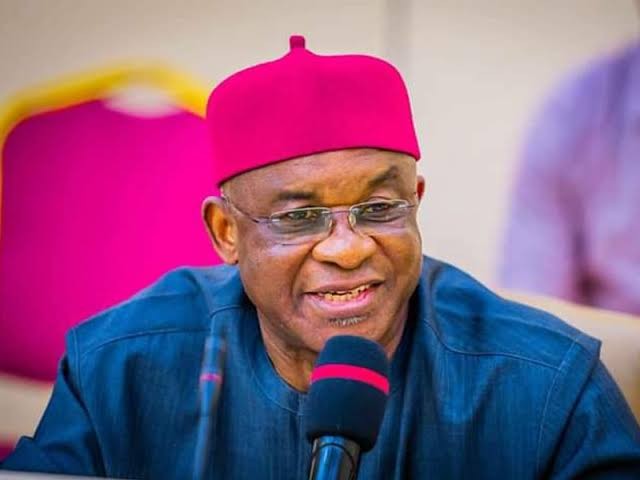
When the trial judge directed that Mark and INEC be put on notice to show cause why Bala’s motion should not be granted, Mark did not respond to the lower court.
Instead, he approached the Court of Appeal in Abuja to halt the proceedings entirely, a decision that would prove costly.
The appellate court not only dismissed Mark’s appeal as incompetent, finding there was no lower court ruling to appeal against, but it also issued preservatory orders directing all parties to maintain the pre-September 2 status quo. INEC then used that ruling to justify de-recognising the Mark-led NWC.
A Questionable Legal Strategy
Legal analysts have been pointed in their assessment of how the ADC handled the early stages of the dispute.
Human rights lawyer Inibehe Effiong, who is sympathetic to the ADC, described the decision to appeal against the order to show cause as “problematic” and “unusual.”
“Why did David Mark appeal against an order that was not injunctive and did not adversely affect his position? I cannot fathom… They should have filed processes in vehement opposition to the motion and the substantive suit. But the legal team decided to file an interlocutory appeal against the order to show cause. It’s unusual. It’s untidy to me,” Effiong said on X.
I agree with you, the ADC legal strategy in this case is problematic.
Why did David Mark appeal against an order that was not injunctive and did not adversely affect his position?
I cannot fathom.
The judge did not grant any restraining order. The ex-parte motion failed the… https://t.co/KuewuAqRhg
— Inibehe Effiong (@InibeheEffiong) April 2, 2026
Another lawyer, Najib Adamu Usman, took a similar view. While arguing that Bala does not have a particularly strong case on the merits, Usman maintained that the ADC had miscalculated by escalating to the Court of Appeal rather than confronting the suit head-on at the Federal High Court.
I am not interested in any conference the ADC held or will hold. Let's be updated on the status of the cases in court.
Are you appealing the court of Appeal's decision to the supreme court? Are you going back to the Federal High Court for the accelerated hearing? Are you taking…
— Najib Adamu Usman, Esq. (@NajeebAdamu1) April 3, 2026
Effiong further warned that any further escalation to the Supreme Court would compound the problem rather than resolve it.
The APC, for its part, has been unsympathetic.
The party’s spokesperson Felix Morka argued that the crisis was entirely of the ADC’s making.
“When its factional leadership under the duo of David Mark and Rauf Aregbesola parachuted into the party like thoughtless and planless commandos, and hijacked the party in violent violation of its constitutional stipulations regarding leadership succession, and in disregard of the rule of law, the ADC set its own date with destiny,” Morka said.
A Clock That Is Already Ticking
Whatever the merits of the competing political narratives, the ADC now faces a concrete and unforgiving deadline.
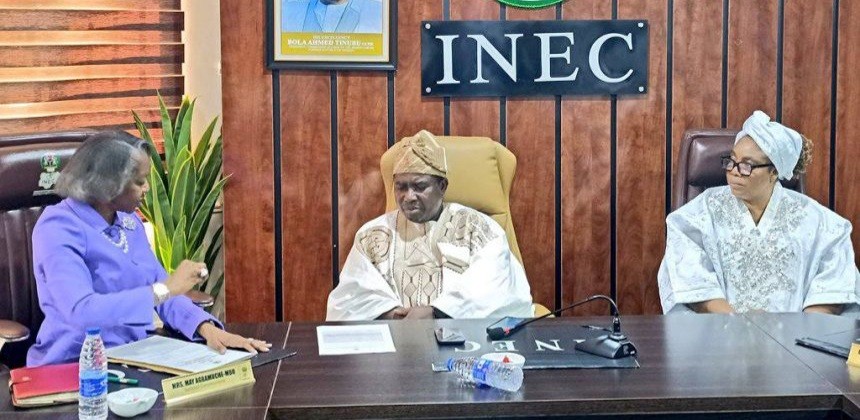
INEC has set primaries for between April 23 and May 30, 2026, requiring parties to submit membership registers by May 10. The commission has also said it will not monitor any congress or convention the party holds until the Federal High Court resolves the dispute.
Legal analysts say the party’s best — and perhaps only — viable path is a swift, favourable ruling from the Federal High Court.
FURTHER READING
Three weeks after the Court of Appeal granted accelerated hearing, no such hearing appears to have taken place. With its congresses set for April 7 and convention for April 14, the ADC is pressing ahead under a cloud of legal uncertainty that it may, in no small part, have brought upon itself.
Philip Ibitoye is a Special Correspondent with EKO HOT BLOG. Click here to find daily analysis and critical insight on trending issues in Lagos and other parts of Nigeria.
Click to watch the video of the week below: