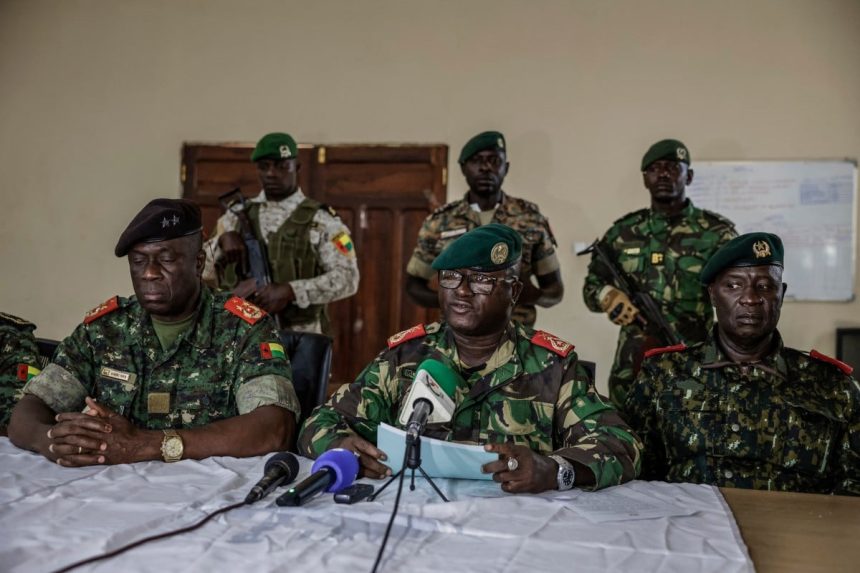
On Wednesday, November 26, 2025, Guinea-Bissau witnessed the latest in a string of military takeovers in Africa when soldiers seized power just a day before provisional presidential results were due.
This marks the tenth clear, uncontested coup on the continent in five years, beginning with the first Malian coup in August 2020, when the military ousted President Ibrahim Boubacar Keïta.
EDITOR’S PICKS
The wave of coups across Africa since 2020 reflects both deep governance crises and the repeated failure of political institutions to protect citizens, deliver essential services, or maintain transparency.
In many cases, the civilian leaders who were overthrown had manipulated constitutions to extend their rule, stifled opposition parties, and created toxic political climates in which dissent was suppressed. Guinea-Bissau is a prime example, where the main opposition was barred from contesting the presidential election before the military stepped in.
Hence, coups have been frequently justified by the military as necessary interventions to restore order, correct mismanagement, or stabilize countries under threat from insurgency, insecurity, or electoral irregularities.
Yet the record shows that the promises of returning power to civilian hands were often broken, with junta leaders consolidating authority, suspending elections, and delaying democratic transitions.
EKO HOT BLOG chronicles the ten coups and the recurring patterns and motivations behind these military interventions:
1. Mali — August 18, 2020
Soldiers overthrew President Keïta, forming the National Committee for the Salvation of the People.
The coup plotters cited government corruption, mismanagement, and failure to contain jihadist violence as justification, presenting their intervention as a response to mass public protests and national frustration.
2. Mali — May 24, 2021
Nine months later, Colonel Assimi Goïta removed the interim president and prime minister, accusing them of violating the transitional charter by reshuffling the cabinet without military consultation.
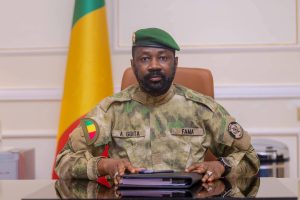
The junta framed the takeover as necessary to safeguard the integrity of Mali’s fragile transitional process.
Elections were promised to be held in 2022 but they have been postponed multiple times, and Goïta has strengthened the junta’s hold on key security and administrative positions by crushing dissent and banning opposition parties.
3. Guinea — September 5, 2021
Lieutenant-Colonel Mamady Doumbouya led the removal of 83-year-old President Alpha Condé, blaming him for corruption, economic mismanagement, and constitutional manipulation to secure a third term.
After the coup, Doumbouya installed a military-led transitional government and promised elections within a short timeframe.
However, the military has since retained tight control over governance, delayed the promised return to civilian rule, and limited political freedoms, while opposition figures remain marginalized.
4. Sudan — October 25, 2021
General Abdel Fattah al-Burhan dissolved the transitional civilian-military government and detained civilian leaders.
The military justified the move by claiming to prevent civil conflict and correct political infighting that threatened national stability, though analysts note it also protected entrenched military economic and political interests.
The coup exacerbated existing unrest, with pro-democracy activists and civilians protesting the suspension of democratic processes.
5. Burkina Faso — January 24, 2022
President Roch Marc Christian Kaboré was overthrown by a junta led by Paul-Henri Sandaogo Damiba.
The military cited the government’s failure to counter the growing Islamist insurgency as their rationale, presenting themselves as rescuers of national security.
However, Damiba struggled to curb violence, and public dissatisfaction grew, setting the stage for the second coup within the year.
6. Burkina Faso — September 30, 2022
Captain Ibrahim Traoré removed Damiba and assumed control, claiming that the previous junta had failed to deliver on security promises.
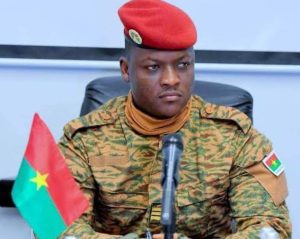
This coup was justified as a necessary correction to restore effectiveness against insurgent threats.
Since the coup, Traoré has entrenched himself in power, repeatedly delaying elections and consolidating authority over the security and political apparatus.
In May 2024, the junta leader, who promised to improve the country’s dire security situation within “two to three months” and restore civilian rule within 21 months, extended his rule by five years.
7. Niger — July 26, 2023
President Mohamed Bazoum was detained by the presidential guard, with Abdourahamane Tchiani declaring a military takeover.
Officers cited deteriorating security and governance failures, framing the coup as essential to stabilize the nation.
While initially framed as a temporary measure, the military has maintained authority, restricted political freedoms, and delayed any scheduled electoral processes, signaling that the promise of a swift return to civilian rule is unlikely.
8. Gabon — August 30, 2023
Following a disputed election that declared Ali Bongo Ondimba the winner, the military dissolved state institutions and annulled results.
The officers justified their takeover as correcting a flawed electoral process and ending the long-standing rule of a single political family.
In the aftermath, the junta suppressed political opposition and manipulated the constitution to entrench their power. In April 2025, Brice Oligui Nguema, a military officer who had been named interim president following the coup, was elected a civilian president with nearly 95% of the votes.
9. Madagascar — October 14, 2025
The elite CAPSAT unit intervened after months of social unrest and widespread protests over service delivery, corruption, and governance failures.
President Andry Rajoelina, whom the same elite unit installed after a military coup in 2009, was removed, with the military portraying its action as a necessary step to restore order amid institutional breakdown.
In the weeks after the takeover, the junta consolidated control, suspended certain civil liberties, and began a transitional administration. Although Col. Michael Randrianirina, the commander of the elite army unit who led the coup had signaled that there may be an election between the next 18 months and two years, there is significant skepticism about the military’s willingness to relinquish power in practice.
10. Guinea-Bissau — November 26, 2025
Soldiers seized power just before provisional presidential results were due, suspending the electoral process and detaining President Umaro Sissoco Embalo. The army claimed to act to prevent electoral manipulation and stabilize the country.
Critics note that prior to the takeover, the main opposition had been barred from participating in elections, highlighting how weakened democratic structures and political exclusion contributed to the military’s intervention.
FURTHER READING
General Horta Inta-A was named as the head of a one-year transitional government at about noon on Thursday, but if history is any guide, the military is likely to stay in power for more than a year.
Philip Ibitoye is a Special Correspondent with EKO HOT BLOG. Click here to find daily analysis and critical insight on trending issues in Lagos and other parts of Nigeria.
Click here to watch the video of the week below: