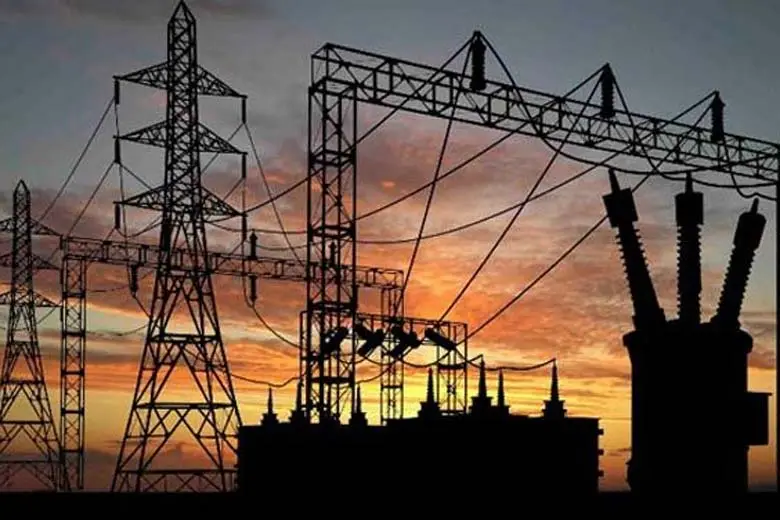
Many Nigerians are spending Christmas Day with little or no electricity, following a big drop in power supply across the country in the days leading up to the festive season.
EKO HOT BLOG observed that the situation has affected households that depend solely on public electricity, reviving familiar concerns about Nigeria’s long-standing struggle with unstable power supply.
EDITOR’S PICKS
In a country where electricity has remained unreliable for decades, festive periods are often marked by attempts to improve supply to ease public frustration. This Christmas, however, the power supply declined instead. Distribution companies, better known as DisCos, initially offered little explanation as outages persisted across several parts of the country.
Some explanations began to emerge last week, days before Christmas. Nigeria National Grid, an X account that monitors the performance of the national grid, disclosed that there had been a significant reduction in load allocation to distribution companies nationwide, largely due to constraints affecting electricity generation companies (GenCos).
“MAJOR REASON FOR DROP IN POWER SUPPLY NATION WIDE: GenCos are experiencing gas supply constraints affecting their optimal output and general operational frequency.,” the account said on Tuesday, December 16.
MAJOR REASON FOR DROP IN POWER SUPPLY NATION WIDE:
GenCos are experiencing gas supply constraints affecting their optimal output and general operational frequency.
— Nigeria National Grid (@NationalGridNg) December 16, 2025
The explanation was later reinforced by distribution companies. The Enugu Electricity Distribution Company (EEDC) said gas supply shortages led to low system frequency, forcing the Transmission Company of Nigeria to implement load shedding, which reduced power allocation to DisCos. The Eko Electricity Distribution Company (EKEDC) similarly apologised to customers, citing reduced load allocation from the national grid and intermittent supply.
But public concern grew as the outage and silence from the Federal Government, particularly the Minister of Power, Adebayo Adelabu, persisted for nearly two weeks. During this period, many Nigerians took to social media to express frustration over prolonged outages and the lack of official communication.
“This lack of light is making me so sad and affecting my Christmas cheer,” an X user, Chigozie Obi, wrote.
This lack of light is making me so sad and affecting my Christmas cheer sigh
— Chigozie Obi (@ChigozieObi_) December 22, 2025
Consequently, the Nigerian Independent System Operator (NISO) and the Minister of Power on Tuesday, December 23, — two days before Christmas — confirmed that disruptions to gas supply, including damage to key gas infrastructure, were responsible for the decline in power generation. Adelabu said repair works were ongoing and assured Nigerians that electricity supply would improve within 48 hours from Tuesday.
Despite the assurances, many Nigerians are spending Christmas without power. The outage will likely limit the ability of households — without alternative sources of electricity — to enjoy television entertainment typically associated with the festive season, particularly for children. The lack of electricity has also affected access to chilled drinks and other basic comforts, especially as many parts of the country experience high temperatures during the holiday period. These complaints have featured prominently in online discussions as Nigerians share their experiences.
What in tha heat is going on??!!
— Johnny Drille (@Johnnydrille) December 24, 2025
I never see this kind heat for December for my life.
— Miss B 💕 (@BlehisBack) December 24, 2025
The power situation has coincided with the peak of the “Detty December” season, lowering excitement. On social media, some small business operators and residents have complained that unreliable electricity has made the period more difficult, even as demand for entertainment and leisure activities rises.
So sad💔
For the pass 5month now, Our transformer got spoilt in my shop area. I can’t sell cold soft drinks unless I used ice block. And it’s draining. 😩
No road, No light. https://t.co/cvngLgnuqa
— IYACAKE (GENIUS CAKES)👨🍳 (@IyaCakeNmore) December 24, 2025
As uncertainty over public power supply continues, more Nigerians are exploring self-generated electricity options. Solar power installations, though costly, are becoming increasingly attractive to households and businesses seeking a more predictable source of power.
FURTHER READING
The shift mirrors what has already occurred with public water supply, where many Nigerians have resorted to drilling boreholes and digging wells due to unreliable government provision. With electricity following a similar path, questions are increasingly being asked about whether Nigeria is moving toward a future in which citizens are left to provide essential services for themselves.
Philip Ibitoye is a Special Correspondent with EKO HOT BLOG. Click here to find daily analysis and critical insight on trending issues in Lagos and other parts of Nigeria.
Click here to watch the video of the week below: