
In the past few weeks, Nigeria’s highly anticipated tax reform laws have become the centre of a constitutional and legal controversy, not over the content of the policy itself but over what was officially published and whether it truly reflects what the National Assembly passed, was assented to by the President and gazetted.
Allegations of discrepancies between the versions debated in the legislature and those appearing in the Federal Government’s Official Gazette have sparked public debate and concern among legal experts, civil society and taxpayers alike.
EDITOR’S PICKS
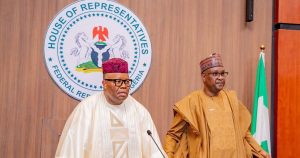
On Friday, December 26, 2025, the National Assembly (NASS) shocked observers when it ordered the re-gazetting of the four disputed tax reform Acts, effectively acknowledging irregularities in the documentation published in the Gazette.
However, legal commentators, including human rights activist, Chidi Odinkalu, have been quick to argue that this move may fall outside the Assembly’s constitutional authority, raising fundamental questions about legislative power, the rule of law and the proper path to correcting a flawed legislative record.
The @nassnigeria has now conceded that the #ForgedTaxLaws were truly forged. Their response is to claim powers to "regazette" the duly passed version.
The records shd be clear: The @nassnigeria has no power to order a "regazetting" of an already gazetted document claiming to be… pic.twitter.com/IwZMl6YFJq
— Chidi Anselm Odinkalu, CGoF (@ChidiOdinkalu) December 26, 2025
What NASS Has Ordered And Why It Raises Eyebrows
According to a statement issued by the House of Representatives spokesperson, Akin Rotimi, the leadership of both chambers directed the Clerk to the National Assembly to re-gazette the Nigeria Tax Act, 2025; Nigeria Tax Administration Act, 2025; Joint Revenue Board (Establishment) Act, 2025; and Nigeria Revenue Service (Establishment) Act, 2025, and to issue Certified True Copies (CTCs) of the versions “duly passed by both chambers.”
The directive comes amid growing public commentary about alleged “alterations” made after the bills were passed by lawmakers and before being assented to and gazetted. Lawmakers who raised the alarm claim the gazetted copies contain provisions that never existed in the legislative text they approved, prompting questions about where the discrepancies arose and whether they stemmed from administrative lapses or something more serious.
NASS describes the re-gazetting order as an administrative step intended to “authenticate and accurately reflect the legislative decisions of the National Assembly” and stresses the process is carried out in conformity with the Constitution, the Acts Authentication Act and parliamentary practice. The leadership asserts that the move does not admit any legislative defect and urges the public to allow institutional processes to proceed without speculation.
Legal Experts Say: That’s Not How It Works
Despite NASS’s framing, legal experts have criticised the re-gazetting directive as legally questionable, if not outright invalid.
Odinkalu stated that the National Assembly lacks the power to order the re-gazetting of a law that has already been promulgated and gazetted as a duly passed Act. He described such a step as potentially “heaping unlawfulness upon criminality.”
According to Odinkalu, there are only two lawful pathways if the legislature truly believes the gazetted documents are materially different from the versions passed:
- Repeal and Replace: The Assembly can table the gazetted legislation before both chambers, formally repeal it through the proper legislative process, and then pass the authentic version — which would then be sent to the President for assent and gazetting.
- Judicial Challenge: Alternatively, NASS (or any aggrieved party) can go to court to have the gazetted laws struck down, after which the correct versions could be enacted and gazetted.
In either case, Odinkalu emphasises, “those who forged the law should be identified and brought to account. The people deserve that.”
This critique taps into a deeper constitutional principle: once a bill is passed by the National Assembly and assented to by the President, it becomes law and is formalised through gazetting — a function that, under the constitution, is part of the executive’s administrative role, not a legislative one.
By ordering a re-gazette, critics argue, NASS risks stepping into territory not reserved for the body.
Meanwhile, the chairman of the Presidential Committee on Fiscal Policy and Tax Reforms, Taiwo Oyedele, has maintained that the gazetted laws are not fake.

FURTHER READING
On Friday, he reiterated that the tax laws will go into effect on January 1, 2026, as expected.
Philip Ibitoye is a Special Correspondent with EKO HOT BLOG. Click here to find daily analysis and critical insight on trending issues in Lagos and other parts of Nigeria.
Click here to watch the video of the week below: