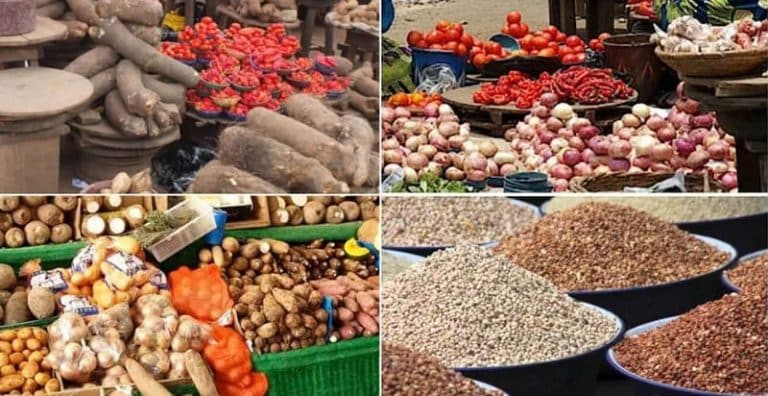
A market survey across the Federal Capital Territory (FCT), Abuja, suggest a modest easing of food prices after the festive season, offering temporary relief to households strained by months of high inflation.
Findings by the News Agency of Nigeria (NAN), supported by official data from the National Bureau of Statistics (NBS), point to a seasonal correction driven largely by increased supply and weakened post-Christmas demand, rather than a fundamental shift in the country’s cost-of-living dynamics.
EDITOR’S PICKS
Seasonal Relief Reflected in Prices and Data
The NBS reported that Nigeria’s food inflation declined in December 2025, with a month-on-month rate of -0.36 per cent, down from 1.13 per cent in November.
This reversal was attributed to falling prices of staples such as tomatoes, garri, eggs, beans, onions, pepper, plantain and vegetables. Market observations across Garki, Nyanya, Gwagwalada, Dei-Dei, Apo Resettlement, Karu and Lugbe corroborate this trend, particularly for perishable items.
In several markets, the price of tomatoes and pepper dropped sharply, in some cases by more than half compared to festive-period levels, while yams, beans and sweet potatoes also became cheaper. Rice prices, however, remained largely stable, underscoring the uneven nature of the decline. Notably, some items such as Irish potatoes recorded significant increases, highlighting persistent volatility within the food market.
Uneven Gains Across Markets and Commodities
Despite the general downward movement, the survey reveals sharp disparities across locations and food categories. Wuse Market, for instance, continued to record higher prices than many other markets, even though slight reductions were observed.
Similarly, while beef and live chicken prices fell in some markets, frozen fish prices remained unchanged, and brown beans rose in price in places such as Orozo Market.
These variations reflect differences in supply chains, transportation costs, and local demand patterns. Traders largely attributed the price moderation to reduced consumer spending in January and improved harvest supply, rather than policy-driven interventions.
For many consumers, the relief remains relative, as lower prices have not translated into significantly improved purchasing power.
Sustainability Questions Amid Structural Challenges
Traders, consumers and agricultural experts caution that the current decline may be short-lived. Farmers’ groups warn that without sustained interventions such as improved security, support for dry-season farming, better transport infrastructure and stable foreign exchange conditions, food prices could rise again during off-season periods.
FURTHER READING
Beyond prices, low and irregular incomes remain a central concern. With wages lagging inflation and minimum wage implementation uneven across states, many households are still unable to fully benefit from cheaper food items. The market survey therefore paints a mixed picture: while prices have eased, the underlying pressures driving food inflation in Nigeria remain largely unresolved, raising questions about how durable the current relief will be.
Philip Ibitoye is a Special Correspondent with EKO HOT BLOG. Click here to find daily analysis and critical insight on trending issues in Lagos and other parts of Nigeria.
Click here to watch the video of the week below: