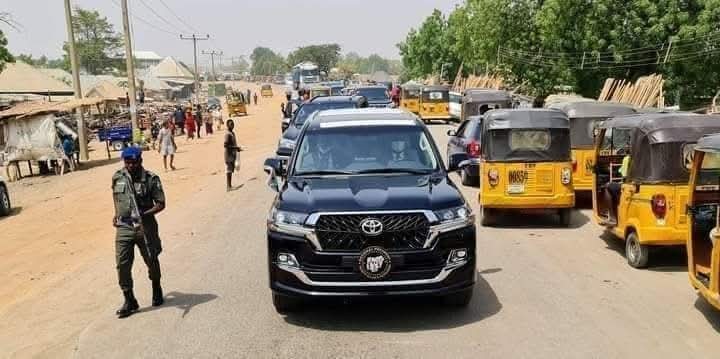
Provisions for vehicles in the 2026 budget of the federal government and some states have raised eyebrows across Nigeria, with critics questioning the priorities of public spending at a time of economic hardship.
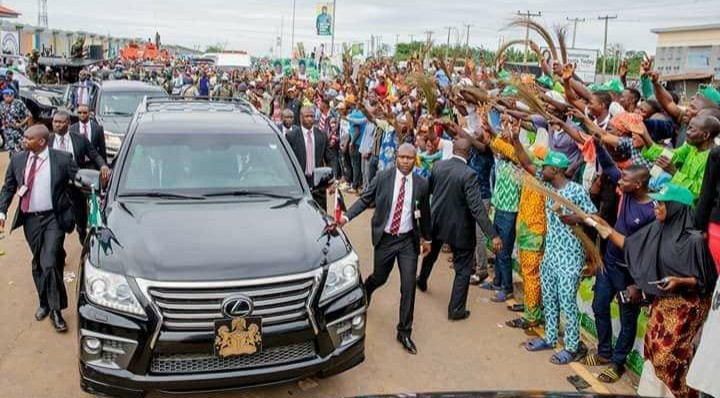
The 2026 federal government budget earmarks at least ₦11.2 billion for car purchases, including ₦89.5 million for SUVs for the President and Vice President, ₦1.75 billion for EFCC pickups and buses, and ₦5.6 billion for “multipurpose vehicles” at Office of the Senior Special Assistant to the President on Millennium Development Goals (OSSAP-MDGs).
Nigeria’s budget problem isn’t just about low revenue. It’s about choices.
In a year where over 60% of Nigerians are projected to live in poverty, billions still find their way into routine government comforts with little scrutiny. pic.twitter.com/zSXQSc64v9
— gst (@wearegst) January 29, 2026
Crime scene in Ekiti State’s 2026 budget:
₦68 million for capital projects in primary health for 3.5 million people.
Ekiti State Teaching Hospital will spend ~30% of its capital projects (₦100M) on 5 cars.
26 legislators will spend ₦1.2 billion their vehicles and furniture. https://t.co/CDl9hfNiBK pic.twitter.com/QU65WZJVTz
— gst (@wearegst) January 29, 2026
EDITOR’S PICKS
In Ekiti State, the Teaching Hospital will spend approximately 30% of its capital projects budget — ₦100 million — on just five cars. Meanwhile, 26 legislators have allocated ₦1.2 billion for their vehicles and furniture.
Observers note that “operational vehicles” has increasingly become code for executive luxury, a concern that echoes a similar controversy from Nigeria’s colonial past.
A 74-Year-Old Debate
In 1952, a proposal to buy a new car for Northern Region’s Lt. Governor, Sir Bryan Sharwood-Smith, sparked heated debate in the Northern House of Assembly that bears striking resemblance to today’s concerns.
The controversy erupted when lawmakers discovered that £2,000, approximately ₦150 million in today’s value, had been set aside in the budget to purchase a new official car for the Lt. Governor.
According to The Northern Advocate, Hon. Yahaya Gusau of the Committee of Supply led the opposition, describing the purchase as an unnecessary luxury at a time when public resources were scarce.
In 1952, a proposal to buy a new car for the Northern Region’s Lt. Governor, Sir Bryan Sharwood-Smith, sparked a heated debate in the Northern House of Assembly.
The controversy began when lawmakers discovered that £2,000 (approximately ₦150 million in today’s value) had been… pic.twitter.com/AhH1FSGT5h
— archivi.ng (@StartArchiving) January 29, 2026
The Case For and Against
The debate revealed sharp divisions among lawmakers over the appropriate use of public funds.
Hon. Mahamadu Sani Dingyadi defended the spending, arguing that an officer of the Lt. Governor’s rank deserved a strong and suitable vehicle. He warned that a breakdown of the old car would cause embarrassment when citizens gathered to receive the Lt. Governor, only to be told he was stranded on the road.
Another lawmaker, Hon. Mohammadu Lapai of Niger Province, offered a middle ground. He supported buying a new car but insisted that the old, unserviceable vehicle be sold, with the proceeds returned to the regional treasury.
In response to the backlash, a government spokesperson urged members not to view the purchase as personal indulgence. The car, he argued, was necessary for urgent official duties, while the old car would be reassigned for other government use.
At the time, Sharwood-Smith had just taken over from Sir Eric Westbury Thompstone as the region’s Lt. Governor.
Then and Now
The 1952 debate over £2,000 and today’s multi-billion naira vehicle allocations reveal a persistent tension in Nigerian governance: balancing the dignity of office with prudent use of public resources.
What has changed dramatically, however, is the scale. While colonial-era lawmakers fought over a single vehicle for the region’s highest official, contemporary budgets routinely allocate billions for fleets of luxury vehicles across multiple government agencies.
FURTHER READING
But as Nigeria grapples with inflation, unemployment, and infrastructure deficits, the question raised by Hon. Gusau in 1952 rings louder than ever: Is this truly necessary?
Philip Ibitoye is a Special Correspondent with EKO HOT BLOG. Click here to find daily analysis and critical insight on trending issues in Lagos and other parts of Nigeria.
Click to watch the video of the week below: