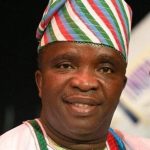
- Amid a wave of departures to the All Progressives Congress (APC), several lawmakers from the Peoples Democratic Party (PDP) and Labour Party (LP) have vowed to remain with their platforms, citing loyalty to their founding principles and constituents.
- The ruling APC has officially consolidated a two-thirds majority in the National Assembly, now controlling 241 seats in the House of Representatives and 80 in the Senate, providing the party decisive leverage over constitutional amendments.
- The refusal to defect comes at a volatile time for the opposition, following the exit of former presidential candidates Atiku Abubakar and Peter Obi to the African Democratic Congress (ADC) in a bid to form a new coalition for 2027.
As political alignments for the 2027 general elections intensify, the All Progressives Congress (APC) has effectively secured a “supermajority” in both chambers of the National Assembly.
Eko Hot Blog reports that this consolidation of power follows months of internal crises, leadership tussles, and litigation within opposition parties, which have driven many lawmakers into the arms of the ruling party.
EDITOR’S PICK
- 540 Candidates Cleared as Lagos APC Moves to Elect LGA Executives
- Court Sentences Pastor to Death for Killing UniUyo Student
- Lagos Teacher Questions Lack of Recognition for One-Day Governor Mentors
With 80 of 109 Senate seats and 241 of 360 House seats now under APC control, the opposition’s capacity to resist executive-backed legislation has reached an all-time low.
However, a core group of opposition lawmakers is resisting the tide. Joshua Gana, representing Niger State’s Lavun/Mokwa/Edati Federal Constituency, has declared himself an “irredentist” member of the PDP.
Gana, whose family helped found the party in 1998, emphasized that true leadership involves rebuilding a party during its most challenging storms rather than seeking personal electoral survival through defection.
Other PDP members echoed this sentiment, arguing that moving a mandate to another party without the explicit solidarity of the voters who granted it would be a breach of trust.
The Labour Party is facing a similar test of resolve.

Despite the recent move by Peter Obi to join the ADC as part of a broader anti-Tinubu coalition, some LP representatives, such as Obinna Onwusibe of Abia State, have tersely affirmed their commitment to staying put.
This internal stability is being tested against a backdrop of “legislative arithmetic” that increasingly favors President Bola Tinubu’s administration, leaving the remaining 119 opposition members in the House to navigate a severely diminished sphere of influence.
As the National Assembly prepares to resume plenary on March 10, 2026, the focus remains on whether this pledged loyalty will hold or if the allure of the ruling party’s dominance will trigger a final exodus.
For now, the “loyalist” faction of the opposition maintains that they are the necessary foundation for any future democratic challenge.
They argue that a one-party dominance is unhealthy for Nigeria’s democracy and that maintaining their current platforms is the first step toward presenting a credible alternative in 2027.