- Senate Explains Delay On Bill To Criminalise Dual Party Membership
- Adaramodu insists House must complete process before Senate debate
- Proposed law seeks fines, jail terms for offenders
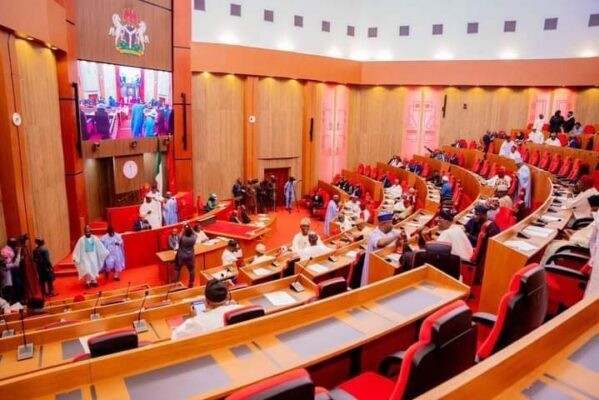
The Nigerian Senate has said it cannot take a position on the proposed amendment to the Electoral Act seeking to criminalise dual party membership until the bill is formally transmitted from the House of Representatives.
EKO HOT BLOG reports that Chairman of the Senate Committee on Media and Publicity, Yemi Adaramodu, stated that the upper chamber is yet to receive the legislation and therefore cannot deliberate on it.
EDITOR’S PICKS
- Judge Frees 37 Inmates Over Prolonged Detention in Akwa Ibom
- Trump Threatens Iran Over Energy Attacks
- Tinubu Excludes Kemi Badenoch from UK State Visit Itinerary
“Even if any amendment is coming, we are running a bicameral legislature. So, we can’t comment on it until it gets to us,” he said.
Adaramodu explained that due legislative procedures must first be completed at the House of Representatives before the Senate can consider the proposal. He noted that the process requires the bill to pass first and second readings, undergo a public hearing, and be approved before transmission to the Senate for concurrence.
The proposed amendment to the Electoral Act 2026 seeks to prohibit individuals from belonging to more than one political party and to void any instance of dual membership.
It also prescribes stricter penalties for offenders, including a fine of ₦10 million, a prison term of up to two years, or both upon conviction.
In addition, the bill provides that any individual found to hold dual party membership would lose recognition across all political parties until their status is regularised.
The proposal is aimed at addressing concerns over persistent political defections, manipulation of party membership registers and weak enforcement of party discipline across the country.
Although existing laws discourage multiple party affiliations, enforcement has largely remained administrative, with no clear criminal sanctions.
For the amendment to become law, it must be passed by both chambers of the National Assembly of Nigeria and subsequently transmitted to the President for assent.
The Senate, however, maintained that until the bill is formally received, it cannot take any official position on the matter.
FURTHER READING
- AUATON Calls on Lagos Assembly to Address Ride-Hailing Challenges
- Two Students, Teacher Escape Death in Onipanu Road Accident
- Anthony Joshua Resumes Training Camp Ahead Of Summer Return